.jpg)
,url-https%3A%2F%2Fassets.waybird.com%2Fcdn-cgi%2Fimage%2Fwidth%3D12%2Cformat%3Dauto%2Fhttps%3A%2F%2Fassets.waybird.com%2Fimages%2Fmap%2Fpin-primary-outlined.png(105.837962,21.013821),url-https%3A%2F%2Fassets.waybird.com%2Fcdn-cgi%2Fimage%2Fwidth%3D12%2Cformat%3Dauto%2Fhttps%3A%2F%2Fassets.waybird.com%2Fimages%2Fmap%2Fpin-primary-outlined.png(107.054702,20.955173),url-https%3A%2F%2Fassets.waybird.com%2Fcdn-cgi%2Fimage%2Fwidth%3D12%2Cformat%3Dauto%2Fhttps%3A%2F%2Fassets.waybird.com%2Fimages%2Fmap%2Fpin-primary-outlined.png(103.843086,22.337045),url-https%3A%2F%2Fassets.waybird.com%2Fcdn-cgi%2Fimage%2Fwidth%3D12%2Cformat%3Dauto%2Fhttps%3A%2F%2Fassets.waybird.com%2Fimages%2Fmap%2Fpin-primary-outlined.png(107.590858,16.465049),url-https%3A%2F%2Fassets.waybird.com%2Fcdn-cgi%2Fimage%2Fwidth%3D12%2Cformat%3Dauto%2Fhttps%3A%2F%2Fassets.waybird.com%2Fimages%2Fmap%2Fpin-primary-outlined.png(108.337952,15.879223),url-https%3A%2F%2Fassets.waybird.com%2Fcdn-cgi%2Fimage%2Fwidth%3D12%2Cformat%3Dauto%2Fhttps%3A%2F%2Fassets.waybird.com%2Fimages%2Fmap%2Fpin-primary-outlined.png(105.794941,10.043519),url-https%3A%2F%2Fassets.waybird.com%2Fcdn-cgi%2Fimage%2Fwidth%3D12%2Cformat%3Dauto%2Fhttps%3A%2F%2Fassets.waybird.com%2Fimages%2Fmap%2Fpin-primary-outlined.png(109.193026,12.246477),url-https%3A%2F%2Fassets.waybird.com%2Fcdn-cgi%2Fimage%2Fwidth%3D12%2Cformat%3Dauto%2Fhttps%3A%2F%2Fassets.waybird.com%2Fimages%2Fmap%2Fpin-primary-outlined.png(103.997737,10.26418),url-https%3A%2F%2Fassets.waybird.com%2Fcdn-cgi%2Fimage%2Fwidth%3D12%2Cformat%3Dauto%2Fhttps%3A%2F%2Fassets.waybird.com%2Fimages%2Fmap%2Fpin-primary-outlined.png(106.613735,8.70192),url-https%3A%2F%2Fassets.waybird.com%2Fcdn-cgi%2Fimage%2Fwidth%3D12%2Cformat%3Dauto%2Fhttps%3A%2F%2Fassets.waybird.com%2Fimages%2Fmap%2Fpin-primary-outlined.png(105.068433,20.657215),url-https%3A%2F%2Fassets.waybird.com%2Fcdn-cgi%2Fimage%2Fwidth%3D12%2Cformat%3Dauto%2Fhttps%3A%2F%2Fassets.waybird.com%2Fimages%2Fmap%2Fpin-primary-outlined.png(108.0717219,16.0544563),url-https%3A%2F%2Fassets.waybird.com%2Fcdn-cgi%2Fimage%2Fwidth%3D12%2Cformat%3Dauto%2Fhttps%3A%2F%2Fassets.waybird.com%2Fimages%2Fmap%2Fpin-primary-outlined.png(109.0928764,13.0881861),url-https%3A%2F%2Fassets.waybird.com%2Fcdn-cgi%2Fimage%2Fwidth%3D12%2Cformat%3Dauto%2Fhttps%3A%2F%2Fassets.waybird.com%2Fimages%2Fmap%2Fpin-primary-outlined.png(104.9784494,22.8025588)/auto/600x400?access_token=pk.eyJ1IjoidGltYnVrdHV0cmF2ZWwiLCJhIjoiY2poMGw1eHpkMmRkbDJ6bW8xYWZ5OGpjYyJ9.PYvAO7lUJ40SOpGvwmQLqw&attribution=false&logo=false)


Planning Guides
Vietnam Travel Guide: Where to Go, When to Visit & How to Plan Your Trip
Start planning your adventure to this Southeast Asian jewel
Vietnam
From the quiet beauty of Sapa and the wave-lapped coast to the many vibrant places to visit in Hanoi, Vietnam rewards the curious.

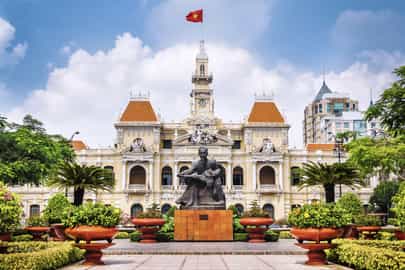
Long, thin and incredibly geographically diverse, there are few countries in the world that compete with Vietnam when it comes to versatility. Complex yet charming, laidback yet feisty, staggeringly beautiful yet poignantly historical, the country has an expert way of matching exactly what you’re looking for, without you really knowing it. From teeming markets and buzzing trading quarters to neon-lit cities and hundreds upon hundreds of mopeds, a holiday may be fast-paced and action-packed; but then there’s the whitewashed sands, ethereal bays, graceful architecture, and wonderfully laidback people... Accommodation can range from stylish city abodes to palatial retreats with whisper-quiet spas – and a traditional junk or rice barge thrown in too – and honeymooners, families and travellers all have the world at their feet. Then there’s the multitude of cultures and UNESCO World Heritage Sites, the tranquil backwaters of the Delta, the hilltop tribes, and the food. Oh, the food. Entwined firmly in Vietnamese life, it’s some of the freshest and most fragrant on the planet, be it a bowl of steaming pho in the market, or your own rice-paper rolls after a cookery lesson…

The sensory overload of scenery, history, food, culture, life – but one that’s balanced with a laidback charm and effortless attraction.

With top spots in the north, south and central regions (and a very long, narrow country!) it’s worth spending some time planning your route and balancing it with the weather. And that’s where we come in…

The weather. Each part of the country has its own unique climate systems and patterns and the sun almost never shines in all of them at the same time. Not a problem in the slightest, but just something to bear in mind if you’re looking for wall to wall rays.
Start with a recommended trip or create one from scratch
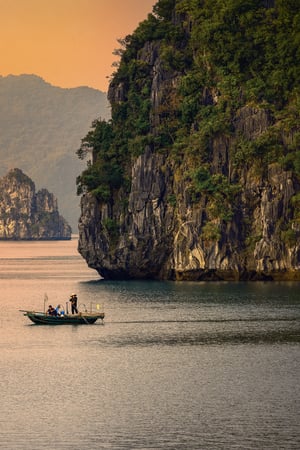
11 nights from $6.3K per person
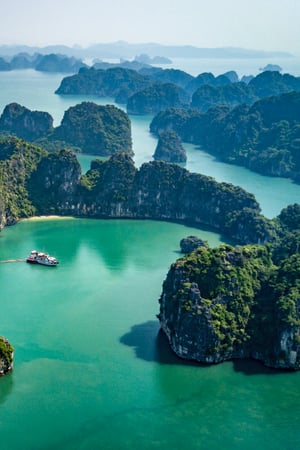
11 nights from $6K per person
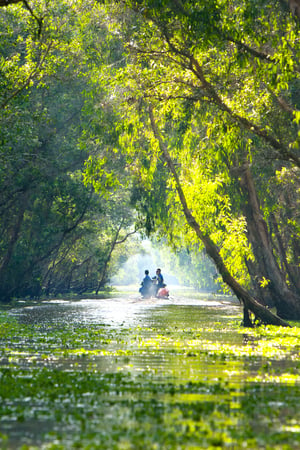
12 nights from $6.8K per person

11 nights from $6.7K per person

18 nights from $10.8K per person
Get advice and suggestions to make this your perfect trip.
or call us on: +1 (646) 542 0667
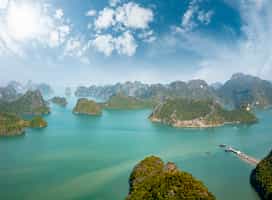
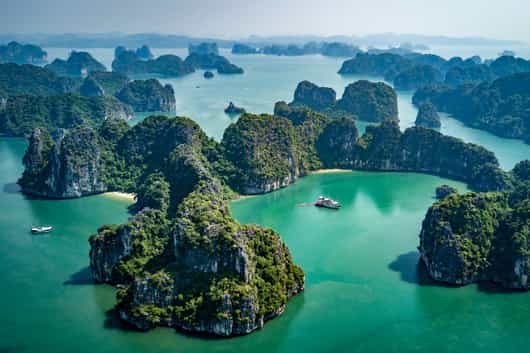
From the many dazzling places to visit in Hanoi to the emerald hills of Sapa and sparkling Halong Bay, Vietnam is blessed with highlights galore.
It can definitely be said that the weather in Vietnam is as diverse as its landscape. Although there is no singular season where every region will be perfect, we're here to help you plan your trip to catch the best of the weather. Thanks to its long, winding coastline, Vietnam receives a monsoon in the south from May to September, while the central coast gets its monsoon from October to April. July and August are the most temperate months across the board; while March to May is ripe for trekking in the north and brings clear skies to Halong Bay and the southern beaches. The central coast is stunning from May onwards, the ideal time to visit Hoi An, while exploring the north becomes difficult from June. October brings sunny scenery to Mai Chau Valley and Hanoi is a hubbub of activity, while December is a fantastic time to see Ho Chi Minh City in full swing. Vietnam has a steadfast calendar of festivals so plan ahead if you'd like to experience any in particular or give them a miss - Tet takes place from the end of January to February and most of the country is on the move so many restaurants and museums close.

Dry Season — one of the best times to visit
Northern Vietnam is in its dry season with cool temperatures, though Halong Bay can experience fog affecting cruise visibility. Southern Vietnam enjoys prime dry season weather with low humidity and sunny skies.
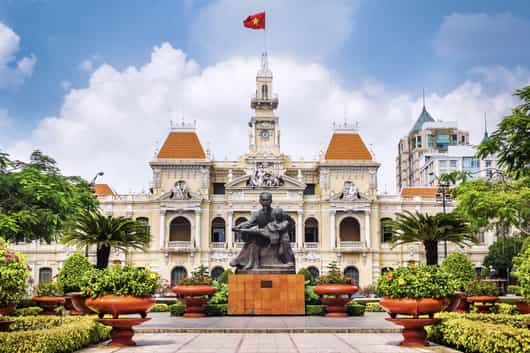
Enjoy the historic sights and buzzing atmosphere of Ho Chi Minh City. The weather is pretty idyllic for on-foot exploration.
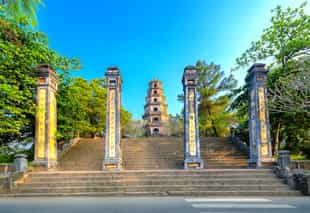
Central Vietnam is coming out of its rainy season and, while crowds are still lower than normal, this is an ideal time to explore Hue’s historic sights or take a boat ride down the Perfume River.
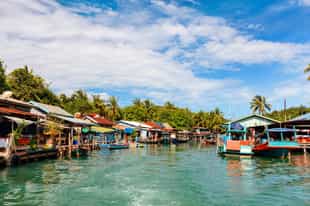
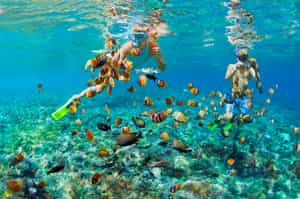
Head south for gorgeous beach weather and crystalline waters, perfect for diving off Phu Quoc or Con Dao.
Dry Season — one of the best times to visit
Northern Vietnam remains cool and dry, ideal for Halong Bay cruises when fog clears. Central Vietnam offers pleasant, dry conditions perfect for Hoi An and Hue exploration.
Depending on the year, Tet (Lunar New Year) will likely take place in late-January to mid-February. We would avoid travelling in the week before and after as many businesses close and local travel makes for crowded sights.
As spring emerges in a flurry of snow-white plum blossoms, trekking conditions improve in Sapa, making for a truly photogenic time to head north.
Beaches and islands in the south remain picture-perfect with calm and balmy waters and visibility of up to 25 metres.
Dry Season — one of the best times to visit
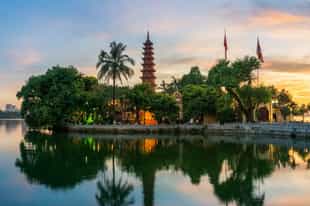
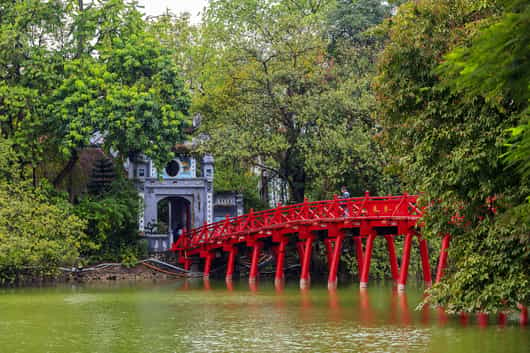
The weather in Hanoi is quite idyllic, perfect for wandering between historic spots, bustling markets and boulevards lined with blooms.
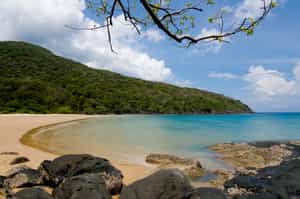
Central Vietnam really hits its stride with quiet, golden beaches to laze upon and the pretty streets of Hoi An to explore.
While misty mornings remain, Halong Bay boasts sparkling waters to cruise upon and plenty of outdoorsy activities to enjoy.
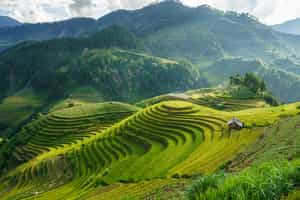
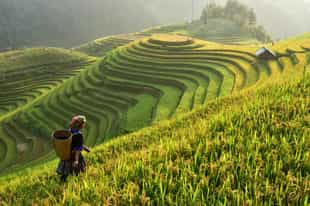
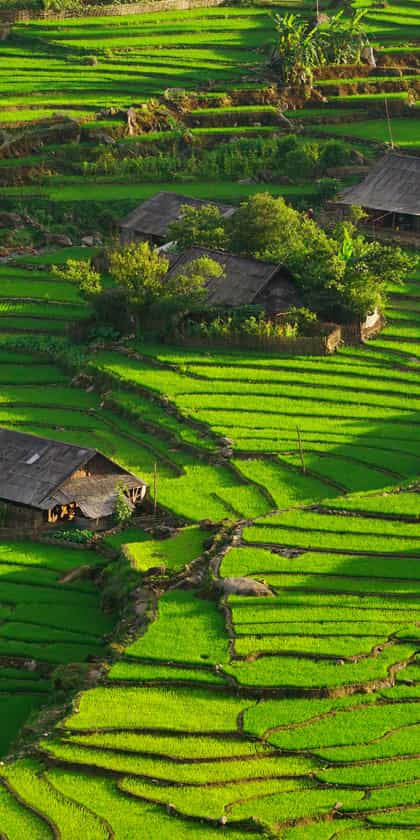
Sapa and the surrounding regions are enjoying peak spring weather – hiking conditions are just right, the views are pristine and rice terraces form giant reflecting pools. Have your camera to hand!
Dry Season — one of the best times to visit
Northern Vietnam remains cool and dry, ideal for Halong Bay cruises when fog clears. Central Vietnam offers pleasant, dry conditions perfect for Hoi An and Hue exploration.
In April, the stars align and most of Vietnam experiences delightful weather, making it the perfect time to explore multiple destinations all in one trip.
Cooler but far less busy, this is a wonderful time to cruise the waters of Halong Bay, seeing it at its most photogenic.
The beaches and islands of the south are ideal, offering calm seas and plenty of sunshine.
Mixed Season — a good time to visit
Central Vietnam remains dry and hot, with temperatures often intense. Southern Vietnam's wet season is underway with regular afternoon downpours, though mornings usually remain clear.
The north begins to experience heavy rainfall, so the sun-kissed beaches of Central Vietnam become the place to be. A lesser-known destination, Quy Nhon promises amazing snorkelling too.
Before the rains start in earnest, this is a rather pleasant time to explore the streets, museums and markets of Ho Chi Minh City.
Buddha’s Birthday is usually celebrated in May (although it can fall in April) with nationwide temple ceremonies and beautiful lotus creations.
Wet Season — a good time to visit
Northern Vietnam is fully into summer with regular rainfall and high humidity. Central Vietnam enjoys some of its best weather with dry, warm conditions. Southern Vietnam sees consistent afternoon rains, though Phu Quoc remains relatively dry.
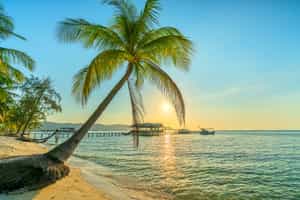
Barbecues on the beaches of Central Vietnam are an absolute winner, enjoyed along with a fresh fruit cocktail and sunsets to die for.
Hue is at its sunny best, making wandering a pleasure as you discover the city’s royal relics and fascinating history.
Enjoy the vivid sights and peaceful quarters of Hoi An as the sun continues to shine on this corner of Vietnam.
Wet Season — a quieter time to visit
Northern Vietnam experiences peak summer heat and humidity with frequent storms. Central Vietnam continues its dry season with hot temperatures ideal for beach activities.
Peak turtle nesting season begins on Con Dao, one of the most significant sites in Asia, where you can witness hawksbill and green sea turtles laying their eggs.Though you’ll have to contend with the rain.
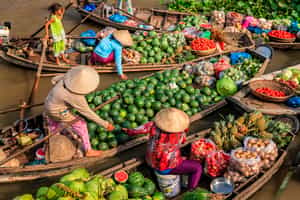
The Mekong Delta is in the midst of high water season and on a luxury cruise, you’ll enjoy lush landscapes and the spoils of floating markets.
The snorkelling and swimming conditions remain superb in coastal areas like Quy Nhon with sizzling temperatures and crystalline waters.
Wet Season — a quieter time to visit
Northern Vietnam remains hot and wet with the monsoon continuing. Central Vietnam enjoys continued dry conditions before the September shift, offering ideal beach weather.
Taking place around mid-August, Vietnam’s second most important Buddhist celebration, Vu Lan Festival is marked with special ceremonies at pagodas throughout the country.
The south experiences various levels of rain during August, but Ho Chi Minh City’s museums, restaurants and the famous Cu Chi Tunnels make for a diverting interlude.
Enjoy a cruise along the Mekong Delta, which is fringed with greenery and thronging with floating markets – seeing the variety on offer is truly amazing.
Wet Season — a quieter time to visit
Central Vietnam's typhoon season begins, with increasing rainfall and storm risk around Hoi An and Danang. Southern Vietnam remains wet but sees gradual improvement.
In early September, witness Sapa’s terraced hillsides turn a brilliant shade of gold, a truly photogenic scene against the backdrop of misty mountains and blue skies.
Still a time of transition, hiking in the north is lovely towards the end of the month.
Enjoy a scenic cruise on the Mekong Delta, taking in the lush landscapes and perusing boats overflowing with fresh fruit and veg.
Wet Season — a quieter time to visit
Northern Vietnam enters its dry season with cool, clear weather returning. Central Vietnam is at peak typhoon risk with significant rainfall likely. Southern Vietnam's wet season is ending with increasingly sunny days.
The Mid-Autumn Festival transforms Hanoi into a sea of lanterns – lion dances, mooncake giving and a fizzing sense of excitement adds to the atmosphere.
Sapa is where you want to be with scenic hiking trails beneath blue skies, or a cable car ride up Fansipan Mountain for the ultimate view.
This is a magnificent time for cruising around Halong Bay, enjoying cave explorations, kayaking adventures and swims in the turquoise water.
Dry Season — a good time to visit
Northern Vietnam enjoys crisp, dry conditions ideal for Sapa visits. Central Vietnam remains vulnerable to storms and heavy rainfall, though conditions improve late month.
The islands off Southern Vietnam are back with a bang. Dive amongst dugongs, dolphins and sea turtles in Con Dao’s balmy waters.
Enjoy sailing across Halong Bay, its jade-hued water glinting in the sunshine and limestone karsts practically touching the sky.
Explore the Mekong Delta, stopping to cycle through the countryside or sample new flavours at its floating markets.
Dry Season — one of the best times to visit
Northern Vietnam offers dry conditions, though Sapa and the mountain areas are cold. Central Vietnam is experiencing declining rainfall, though stormy weather remains possible, particularly early in the month.
Hanoi is enjoying lovely weather once again, perfect for exploring its lakes and parks, pagodas and restaurants.
Halong Bay may be shrouded in fog but that just adds to its ethereal atmosphere – and makes for cooler conditions whilst exploring.
Diving off Vietnam’s southern coast and islands is world-class, with sea turtles, dugongs and dolphins in attendance.

Vietnam has three main international airports in Ho Chi Minh City, Hanoi and Da Nang and the number of direct fights has increased steadily in recent years. However, the majority of travellers choose to take the cheaper option of an indirect flight with a stopover in Bangkok, Singapore or Hong Kong. Vietnam Airlines has direct flights from London to Ho Chi Minh City and Hanoi at around 12 hours flying time. If you’re travelling from North America, a stopover flight is your only option as there are no direct flights at present. The same often applies to travellers from Australia as there are very few direct flights, although Vietnam Airlines offers routes between Ho Chi Minh City and Melbourne or Sydney. The popular choice of combining a visit to Vietnam with other Southeast Asian countries has become easier and less pricey thanks to good-value regional air deals.
As you begin planning your trip, it’s best to visit a doctor as early as possible, preferably two months before you depart. Although there are no required vaccinations for entering Vietnam, typhoid and hepatitis A jabs are recommended and it’s a good idea to make sure you’re up to date with boosters for tetanus and polio. If you’re travelling to rural areas with a higher risk of malaria, it’s worth taking preventive tablets to ensure a worry-free trip. A rule of thumb is to avoid drinking the tap water and having ice in your drinks with the exception of a few high-end hotels and restaurants. In terms of general safety, Vietnam is known to be open and safe for visitors. However, petty crimes are becoming more common on a small scale so it’s best to keep an eye on your valuables and be aware of your surroundings in the bigger cities and tourist hubs.
Money The Vietnamese dong isn’t available outside of the country but US dollars can be used so it helps to take a few small bills until you are able to draw money from an ATM, which there are plenty of. Tipping isn’t expected on your travels but it’s definitely appreciated if you feel comfortable doing so. Gratuities suggestions: Private guide: $10 per person per day Private driver: $5 per person per day General staff: $10 per person per day Waitstaff in a city restaurant: 10% (large group may incur automatic service charge - please check)
Insurance It is a condition of booking that you carry the correct comprehensive travel and medical insurance to cover yourself, as well as any dependents/travelling companions for the duration of your trip. This insurance should include cover in respect of, but not limited to, the following eventualities: Compulsory Insurance: a. Emergency evacuation expenses b. Medical expenses c. Repatriation expenses Recommended Insurance: a. Cancellation or curtailment of trip b. Damage/theft/loss of personal luggage, money and goods
Most passport holders will need a visa to enter Vietnam. Please ask your travel specialist whether a single or multiple entry visa is needed. Your travel specialist can also arrange the visa for you, if you prefer. In order to initiate the e-visa process, we will need the following: 1. A colour photo of your passport details page 2. A recent headshot photograph of you (no glasses or hats) 3. A photograph of two blank pages in your passport. The cost will be $60 per person (single entry) or $90 per person (multi-entries) and it will be completed in about 10 business days. We will then include it with your Final Documents email so that all your documents are in one place. The team in Vietnam is very familiar with the e-visa process, and can take that stress away if you'd like to simplify the process. If you choose to do it yourself, please be aware that there are many scam visa websites, your name must be entered exactly as your passport reads, and you are liable for any mistakes. Please use this one when applying for your evisa: https://evisa.xuatnhapcanh.gov.vn/trang-chu-ttdt Single-entry tourist visas are generally valid for 30 days from your date of arrival, although longer durations can be arranged.
All foreign passport holders are required to complete a pre-arrival declaration of their personal information prior to entry. This needs to be done 2 - 3 days before arrival via the following link: https://prearrival.immigration.gov.vn/
To help ensure a smoother arrival experience, we strongly recommend that travellers have the QR code ready upon arrival.
Some might say the weather in Vietnam is as varied as its scenery, and what you pack boils down to when and where you’re going - check out our guide on when to go! Here are a few handy essentials to start you off: - Light and cool clothing including modest items - Beachwear (if you’re travelling to the coast) - Warmer items and rain coat - Comfortable and sturdy footwear - Mosquito repellent with DEET - Torch - Electrical adaptors ((electricity runs on 220 volts and round or flat two-pin plugs are most commonly used) - Camera - Photocopies of passport and visa details - Leech socks and gaiters

We’re big believers in leaving a positive impact in the countries in which we operate. We’re proud to donate $50 for every booking to projects focusing on female empowerment, tech education, conservation, and so much more.
Our dream is to empower our guests to travel with a purpose.
So far, we’ve donated $107,000 to projects across the globe.


Why travel with Timbuktu?

We've been crafting one-of-a-kind journeys since 2014 — over 2,500 trips across 40+ countries, each one built from scratch around your interests and dreams.

Our team only recommends places they've slept in, eaten in, and happily keep going back to. Condé Nast Traveler named 11 of them Top Travel Specialists in 2026, and Travel+Leisure made three A-List Advisors.

Travel+Leisure's readers voted us the World's No.1 Tour Operator in 2024 and No.2 in 2025 — the travel industry's biggest readers' award, judged by people who actually travel.

$50 from every booking goes to female empowerment, tech education, and conservation projects across the countries we love. We have donated $78,000 so far – and it's going up!

Your travel specialist is with you the whole way, dreaming up the trip, building the itinerary, checking you in, and answering the 2am question from the other side of the world..

We are rated 4.9 out of 5 from 1007 verified Feefo reviews. And these are the words of people who actually went, not us talking about ourselves.
11 Condé Nast Traveler Top Travel Specialists 2026

No. 1 & No. 2 Tour Operator in Travel + Leisure's Best Awards 2024 & 2025

Best Booking Platform in Women's Health Travel Awards 2025

Travel Specialist voted as Latin America A-List Travel Advisor 2025

"Timbuktu can take relatively complex and slightly amorphous travel plans and transform them into a well-organized, perfectly tailored trip."