
We're one of the World's Best Tour Operators!
Named three years running in Travel+Leisure World's Best, including No.1 in 2024
Synonymous with everything and everyone from Matisse and Picasso to Grace Kelly, Carey Grant and Slim Aarons’ indolently glamorous scenes at the Hotel du Cap-Eden-Roc’s swimming pool, the French Riviera just has something about it. From humble beginnings, the Riviera today stretches from Hyères to the Italian border, oscillating beautifully and brilliantly between the ritz and glitz of Cannes and Monaco and their superyachts and designer dens, Nice's Baroque old town and Belle Époque buildings, and the medieval hill villages of Eze, Mougins and Saint-Paul-de-Vence. Add to that some of the most astoundingly gorgeous hotels, restaurants, rooftop bars and people you’ve ever seen, and you’ve got a heady playground to explore and enjoy, the glittering Mediterranean your ever-present companion.
Part of Italy until 1860 and annexed by France just 166 years ago, the architecture of Nice is more than reminiscent of Italy with its Baroque churches, beautiful terracotta facades and remains of Roman Baths at the Musée d’Archéologie. But then comes the unmistakable French-ness: the colourful Vieille Ville or Old Town, full of higgledy-piggledy buildings and sun-drenched squares lined with cafés and croissants; the Cours Saleya Market that fills every morning with flowers and food stalls; and the unmistakable scent of socca, a Nicois snack of chickpea pancakes sprinkled with olive oil and black pepper. And of course, there’s the Promenade des Anglais, the long seafront walkway that, despite being built by the English in the 1820s, is the place for that most French of pastimes: a gentle, après dinner stroll.
.jpg)
Encircled by Vauban's magnificent 17th-century sea walls and overlooking Port Vauban, the largest marina in Europe, Antibes is a little more down to earth than the rest of the Riviera… the relaxed little sister who doesn’t take herself too seriously perhaps? The covered market on Cours Masséna, stalls overflowing with cheese, olives and Provençal herbs, attracts locals by the bucket-load and the tiny terrace cafés tucked between the stalls feel a world away from the marina. For culturalists, Château Grimaldi, now the Musée Picasso after his famous four-month residency in 1946, is an excellent afternoon and if you’re looking for some well-earned beach time, head south of town. There’s Cap d'Antibes, a pine-fringed headland of coastal paths and crumbling Belle Époque villas, and Juan-les-Pins, just around the headland, with its sandy beaches and eponymous jazz festival.
.jpg)
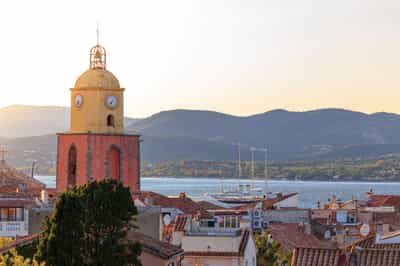
There might be shopping, parties, beach clubs and more rosé than you could possibly imagine, but St Tropez still has a great deal of charm. On Tuesday and Saturday mornings, the Place des Lices hosts a market of flowers, food and local hats; locals still play pétanque in the square; and the Musée de l'Annonciade has a wonderful Post-Impressionist collection to spend a few hours with. Don't leave without seeking out a tarte tropézienne, a cream-filled brioche invented in 1955 and named, reportedly, by Brigitte Bardot herself. And when you need a break from the marina, duck into La Ponche, the old fishing quarter tucked just behind the port, where the streets are narrow enough to touch both walls and the mornings are blissfully quiet.
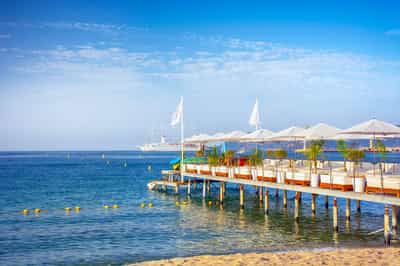
Best known for the star-studded film festival on the Croisette every May, Cannes is synonymous with a dizzyingly well-heeled crowd and that fabulous, palm-lined promenade. But, away from the pizzazz, there’s actually quite a lot to do in the other eleven months of the year. In Le Suquet, the lively old quarter, the narrow streets offer up tiny restaurants and views of the Mediterranean from the top of every staircase. Back down at sea level, take your position on the Croisette for the best people watching in Europe before dipping into the boutiques of the Rue d’Antibes and seeking out still-warm flatbreads and tapenade at the Marché Forville. For a change of pace entirely, take the ferry (and a picnic) to the Lerins Islands of Sainte-Marguerite and Saint-Honorat, sparkling, traffic-free gems of pristine forests, clear waters and, on Saint-Honorat, a community of 5th Century Cistercian monks.
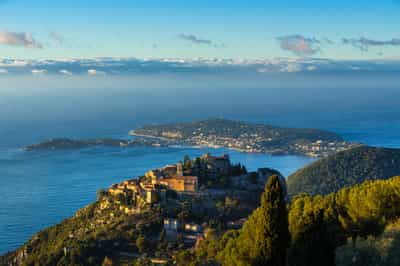
Just a short, hairpin-bend drive back from the coast, the hill villages of the Riviera's hinterland or ‘arrière-pays niçois’ feel like an entirely different country. Saint-Paul-de-Vence is the best known: ramparts guarding a warren of art galleries, the Fondation Maeght's Miró sculptures, and La Colombe d'Or, where Picasso and Chagall are said to have settled their bar tabs with paintings that still hang on its walls. Èze clings to its rock in a way that seems faintly implausible, all cactus gardens and views over a cobalt sea. Gourdon does much the same trick 760 metres up, looking clean across to Corsica on the clearest days. Then there's Grasse, which smells like nowhere else on earth (three centuries of perfumers will do that), distilling jasmine and rose into scent, the harvest in full, heady swing each August. Tourrettes-sur-Loup, the self-styled Cité des Violettes, throws its own flower festival every March. Bring good shoes and an empty stomach – you'll need it for the socca.


Namibrand, Namibia