Beyond the Big Five: Unique Wildlife Encounters in Botswana
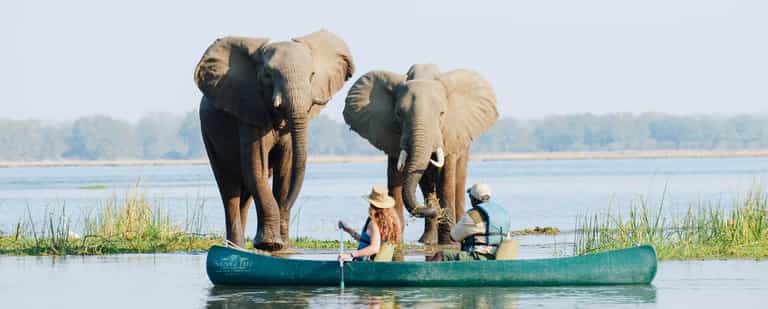
Think Botswana, think elephants. And yes, you’d be right – they’re here in their tens of thousands, splashing through the Okavango and marching across the Chobe floodplains like they own the place (which, let’s be honest, they rather do). But at Timbuktu, we’re absolute suckers for wildlife of the lesser-spotted variety – the ones you won’t find on just any safari.
We’re talking about wild dogs tearing across the savannah in a blur of mottled fur. Meerkats using your shoulder as a personal watchtower. Brown hyenas slinking through the Kalahari darkness. And a certain fish-eating owl that has birders travelling halfway around the world for a glimpse. In Botswana, unique wildlife is all around, you just have to know where to look.
We’ve rounded up our favourite one-of-a-kind wildlife encounters in Botswana, and just when and where to find them. So, whether you’re a returning safari-goer looking to dig a little deeper or planning your first trip and fancy something different, read on.
African Wild Dogs
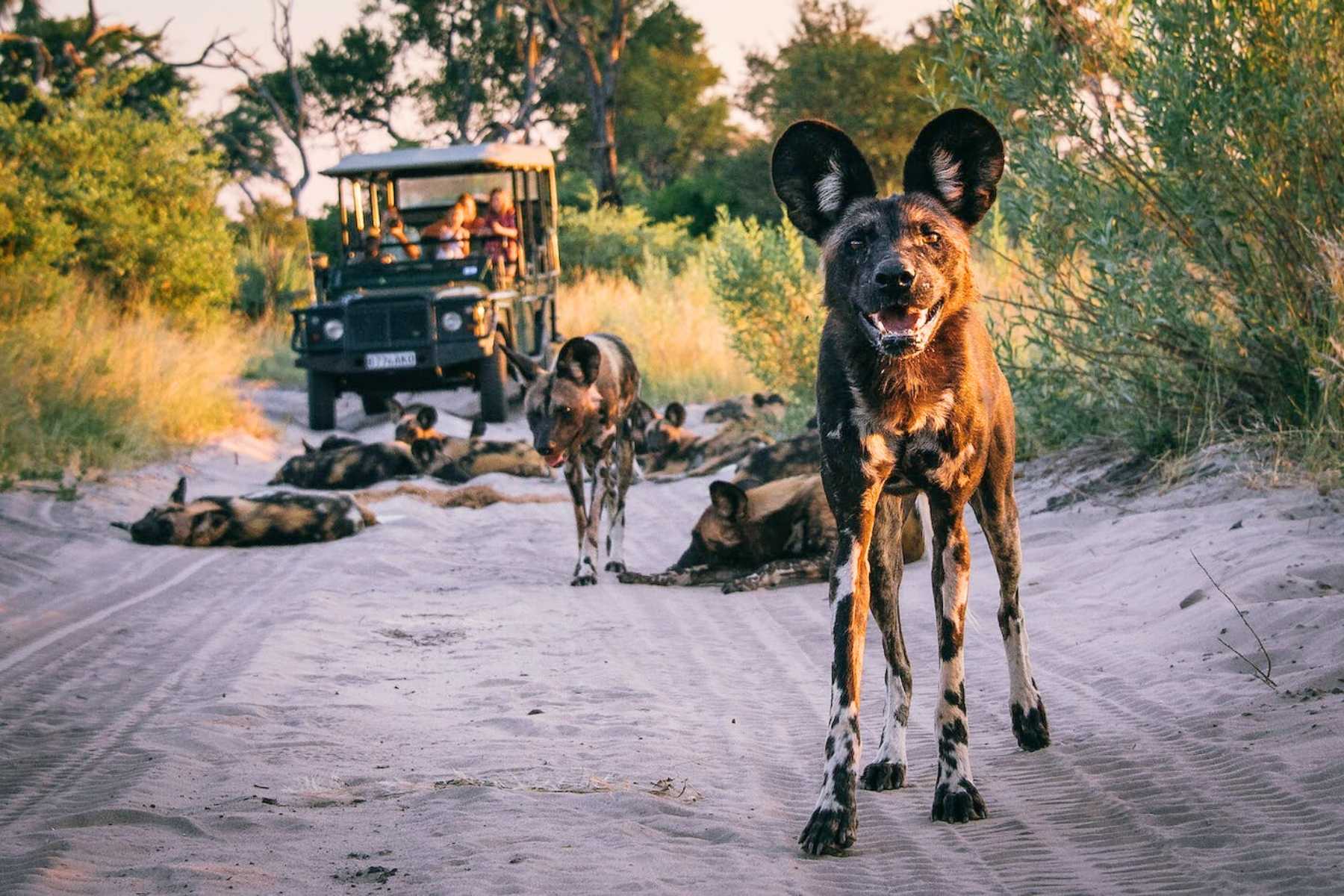
Here’s a little fact that might surprise you: Botswana is home to around 30% of the world’s remaining African wild dogs. That’s roughly 1,300 individuals spread across the northern wilderness – and if you want to see them, there’s no better place on the continent than the Kwando-Linyanti region.
These aren’t your average canines. With their patchwork coats (no two are alike), satellite-dish ears, and an 80% hunting success rate – the highest of any African predator – wild dogs are endlessly fascinating to watch. They’re also fiercely social, with pack members caring for the sick and elderly and letting pups eat first at every kill. It’s touching stuff, really.
The Kwando Reserve, a vast 232,000-hectare concession with just two camps, is widely considered the single best location in Africa for wild dog sightings. Packs have denned here consistently since 1997, and both Lagoon Camp and Lebala Camp employ dedicated trackers alongside their guides – a rarity in Botswana that makes all the difference when you’re following a pack at dawn.
When to go
The denning season from June to September is your golden window. Packs stay close to their dens while pups are young, making them far easier to locate. In Botswana, wild dog safaris enjoy a secondary peak in November and December during impala lambing season, when the hunting intensifies and you might catch pups joining their first chase. Thrilling doesn’t quite cover it.
Where to stay
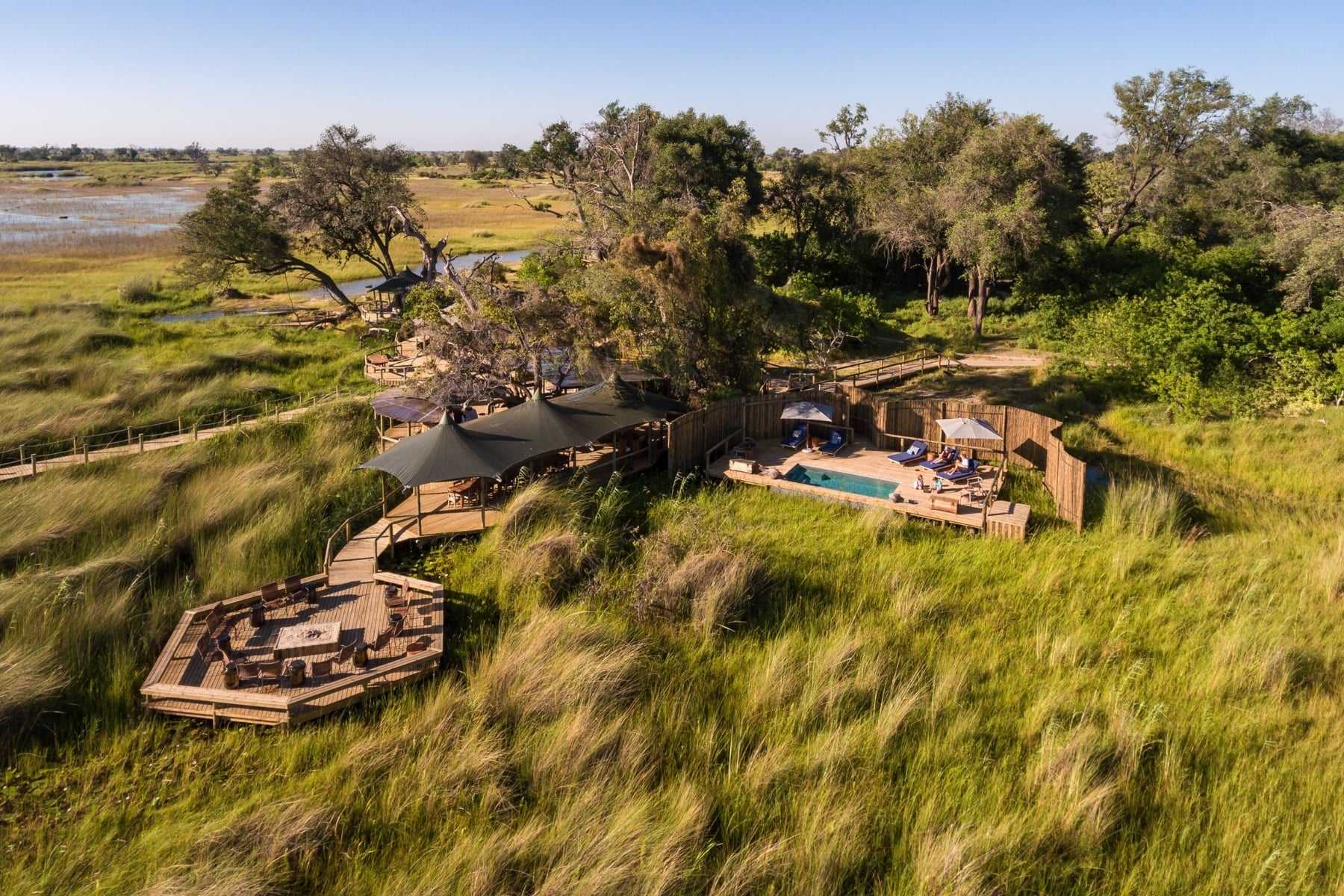
Lagoon Camp and Lebala Camp lead the pack (pardon the pun), but Chitabe in the Okavango Delta is another stellar option – its owners literally wrote the book on wild dogs. Kwara Camp and Little Vumbura also report consistent sightings throughout the season.

Meerkats
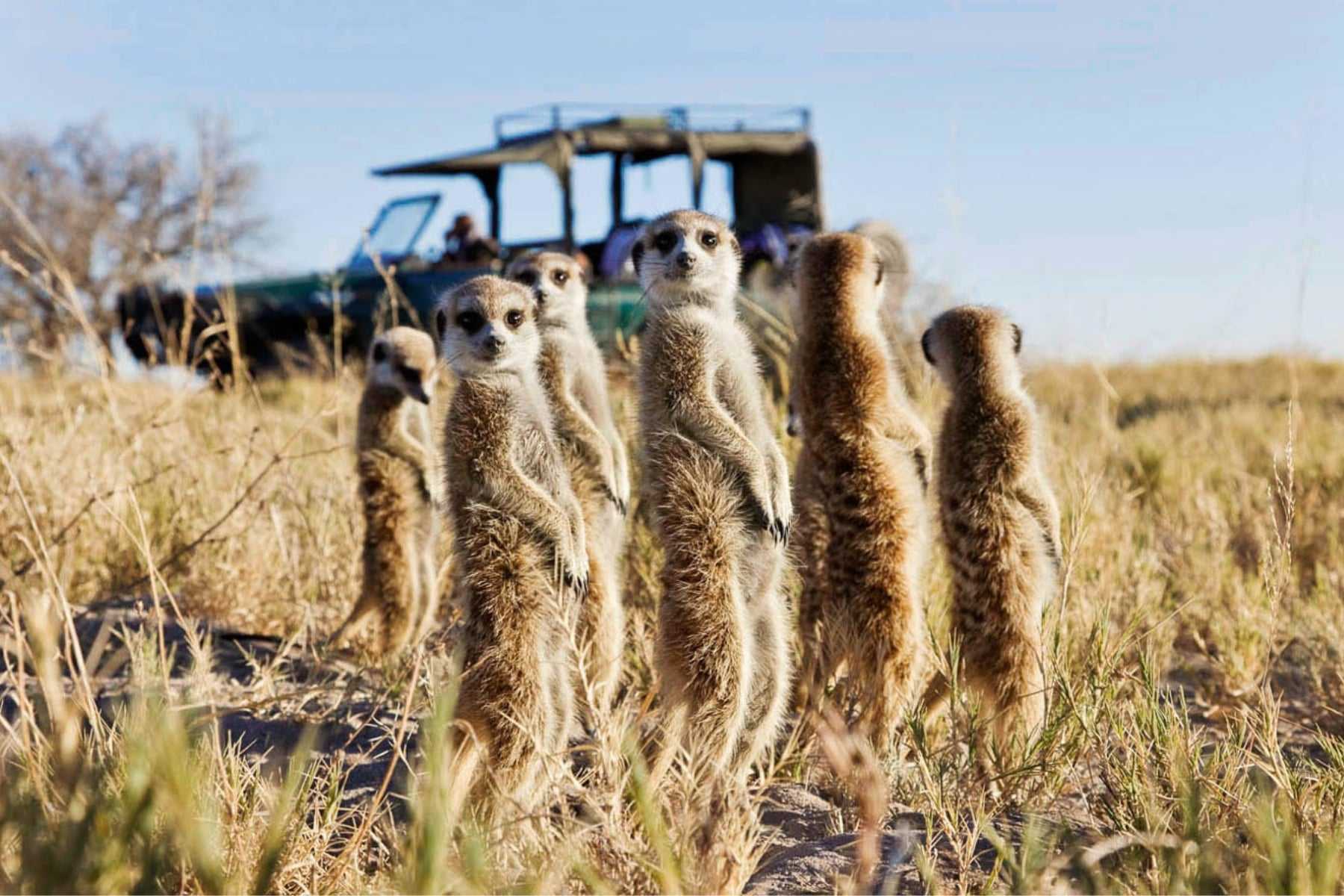
If wild dogs are Botswana’s most dramatic wildlife encounter, meerkats are surely its most charming. And the Makgadikgadi Pans offer something you genuinely won’t find anywhere else: the chance to sit quietly at sunrise as a habituated mob emerges from their burrow, stretches in the early light, and – if you’re very lucky – climbs onto your lap for warmth.
Let’s be clear: these are wild animals, not pets. The habituation programme, pioneered by Jack’s Camp over 15 years ago, has simply made them comfortable around quiet, respectful humans. You can’t touch them, but they can touch you – and there’s something rather wonderful about a meerkat using your head as an elevated lookout post while scanning for eagles. The experience lasts around 50 minutes before the family trots off to forage, leaving you slightly dazed and definitely grinning.
When to go
April through October offers the easiest conditions for locating the habituated families. Mornings are crisp (this is the Kalahari, after all), so bring a fleece – though the meerkats might provide their own warming solution – undoubtedly one of Botswana’s unique wildlife experiences.
Where to stay
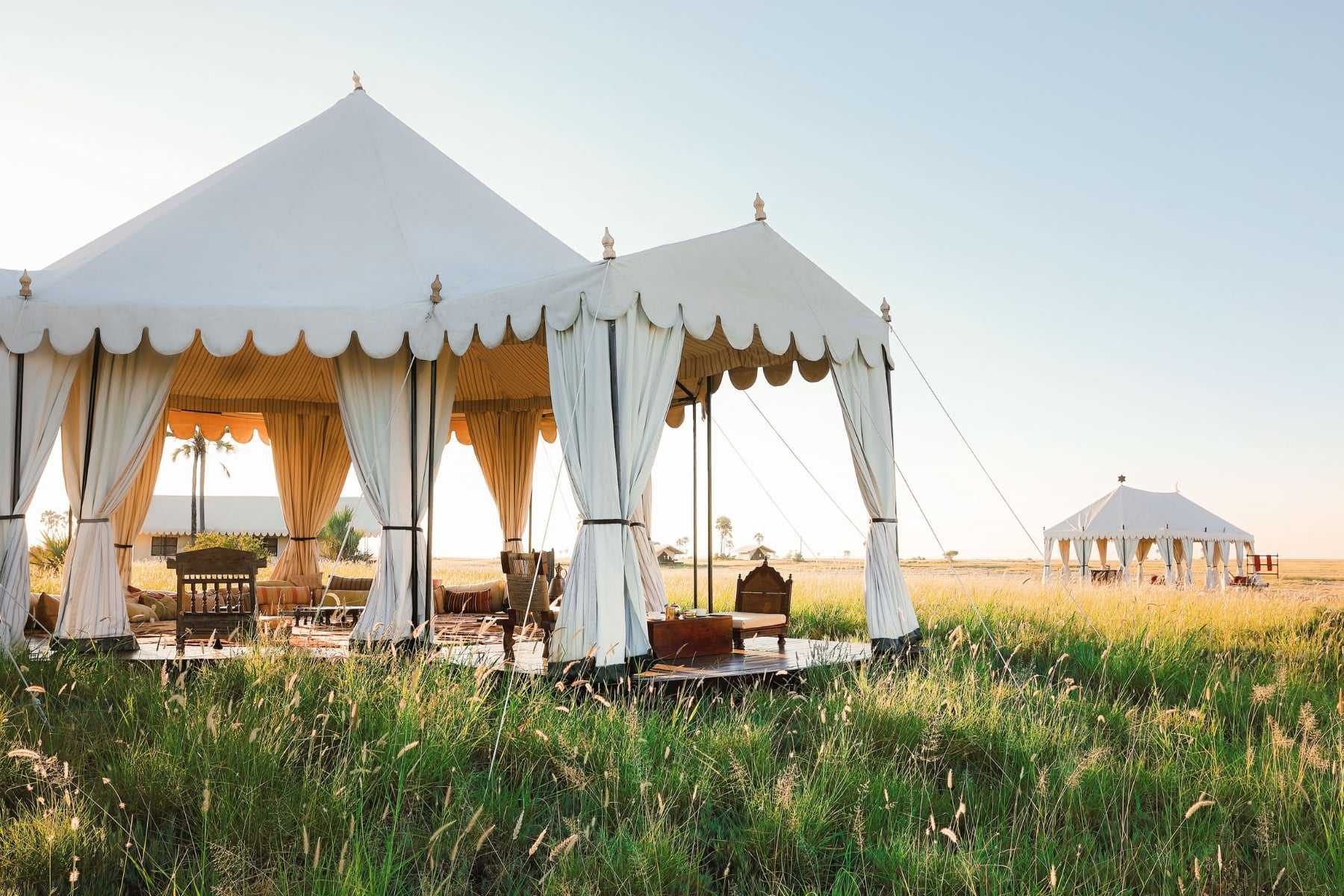
Jack’s Camp is the original and still the benchmark, with San Camp offering a similarly luxe experience. However, Camp Kalahari delivers the same meerkat encounters at a more accessible price point. Guiding is consistently excellent across all three, we promise.

The Zebra Migration
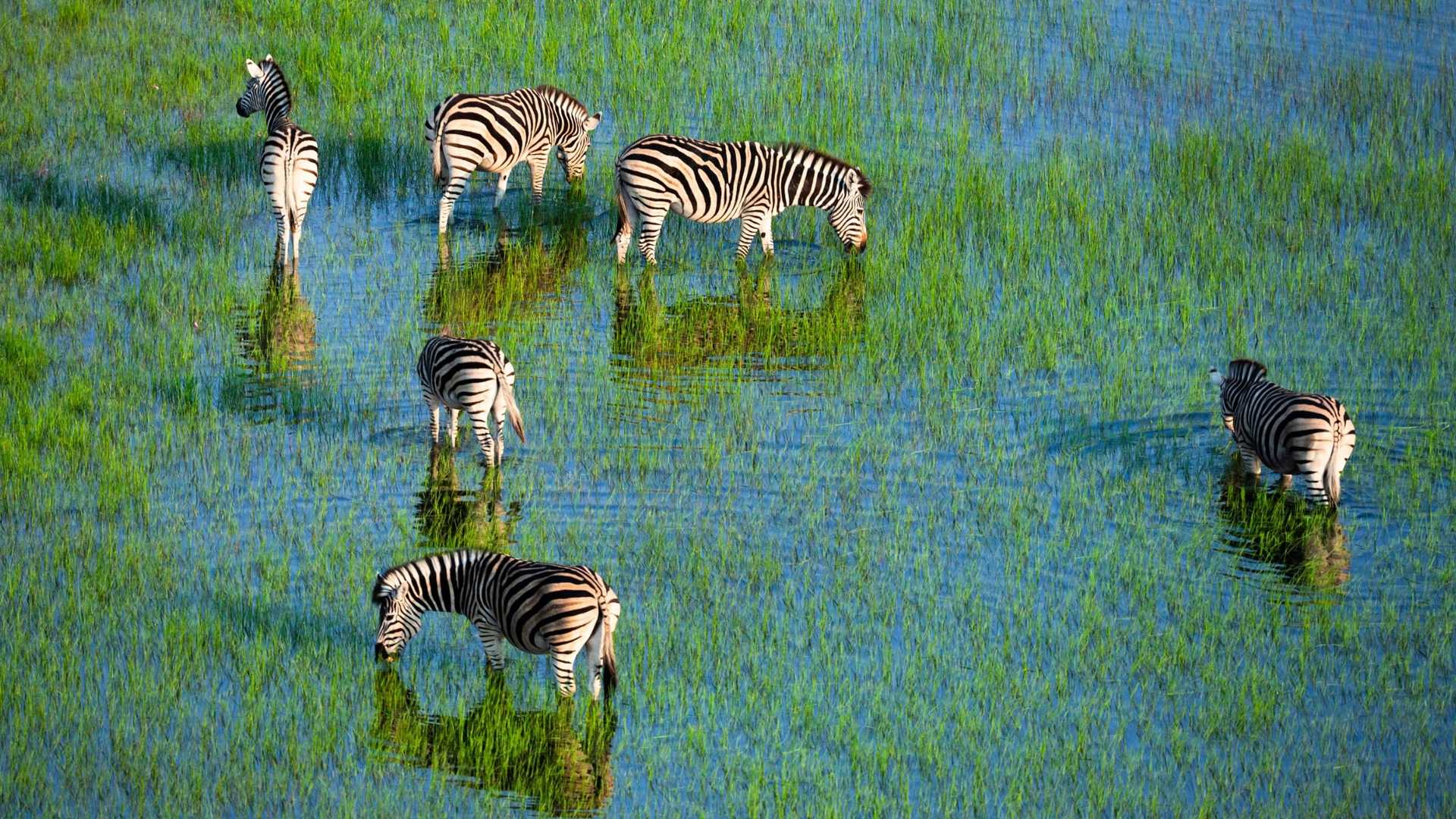
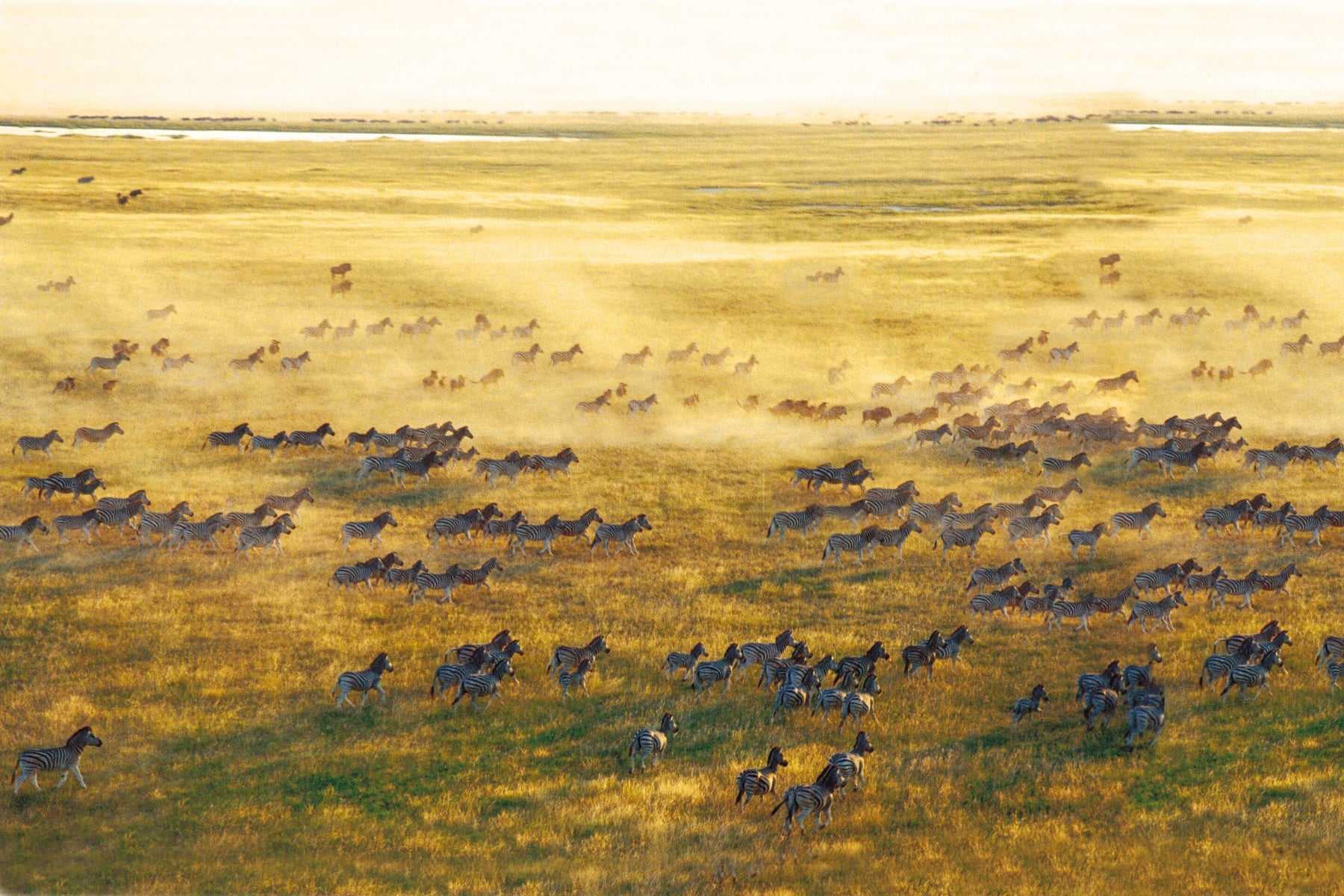
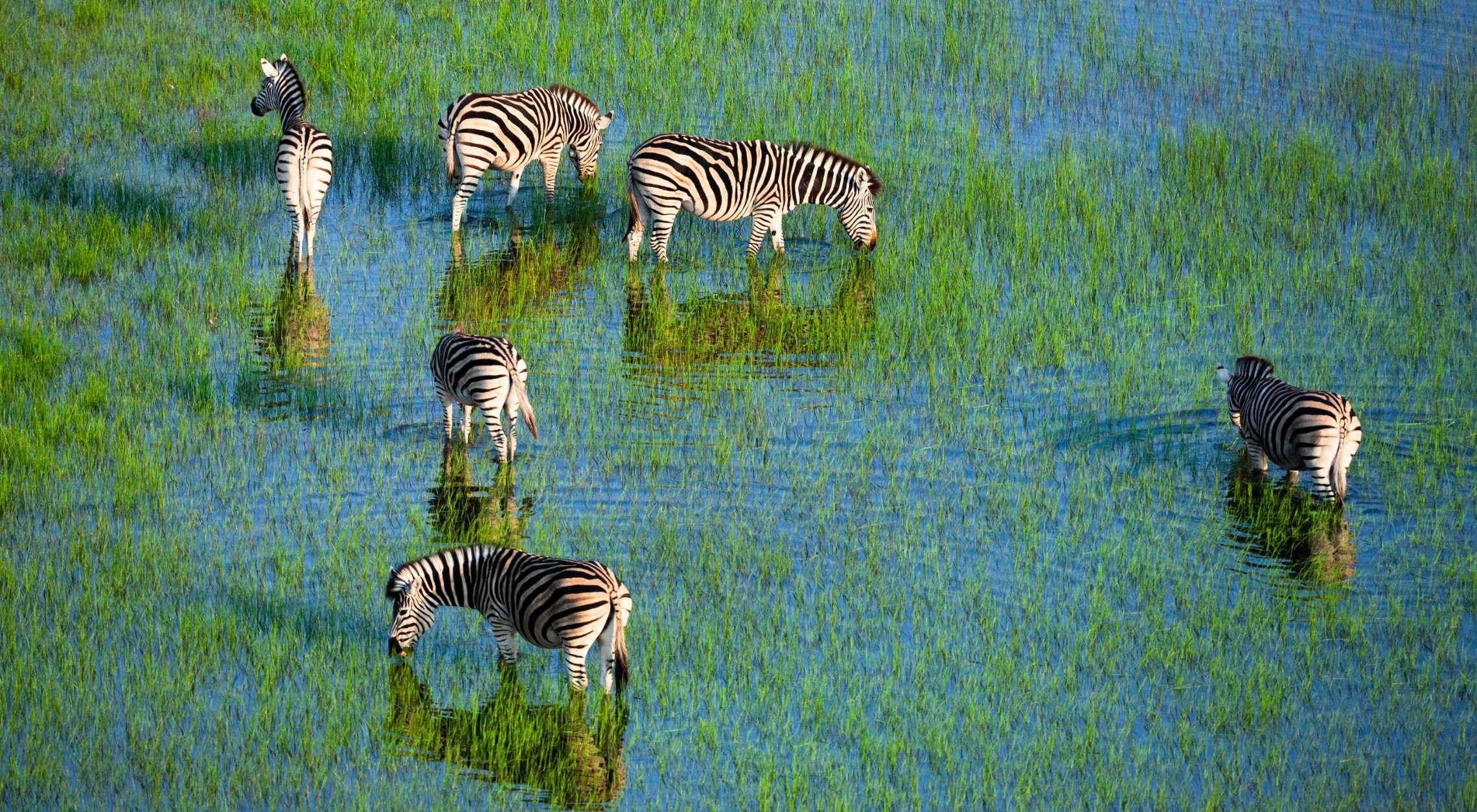
Everyone’s heard of East Africa’s ‘Great’ wildebeest migration, but Botswana has its own mass movement – and it happens to be the longest terrestrial wildlife migration in Africa. Each year, between 25,000 and 30,000 zebras travel over 1,000 kilometres on a round-trip between the Okavango and the Makgadikgadi Pans, following the rains south and then meandering (rather indirectly, it must be said) back north again.
What makes this migration particularly remarkable is that it simply stopped for decades when veterinary fences blocked the ancient routes. When the fences came down in the mid-2000s, the zebras started moving again – despite no living animal remembering the way. It’s the sort of thing that gives you goosebumps. In Botswana, unique wildlife sightings don’t get better than this.
When to go
The herds typically arrive at Makgadikgadi in late December, remaining through February before beginning the return journey. Time your visit for January and you’ll witness the pans transformed – zebras stretching to the horizon, foals finding their legs, and predators inevitably lurking nearby.
Where to stay
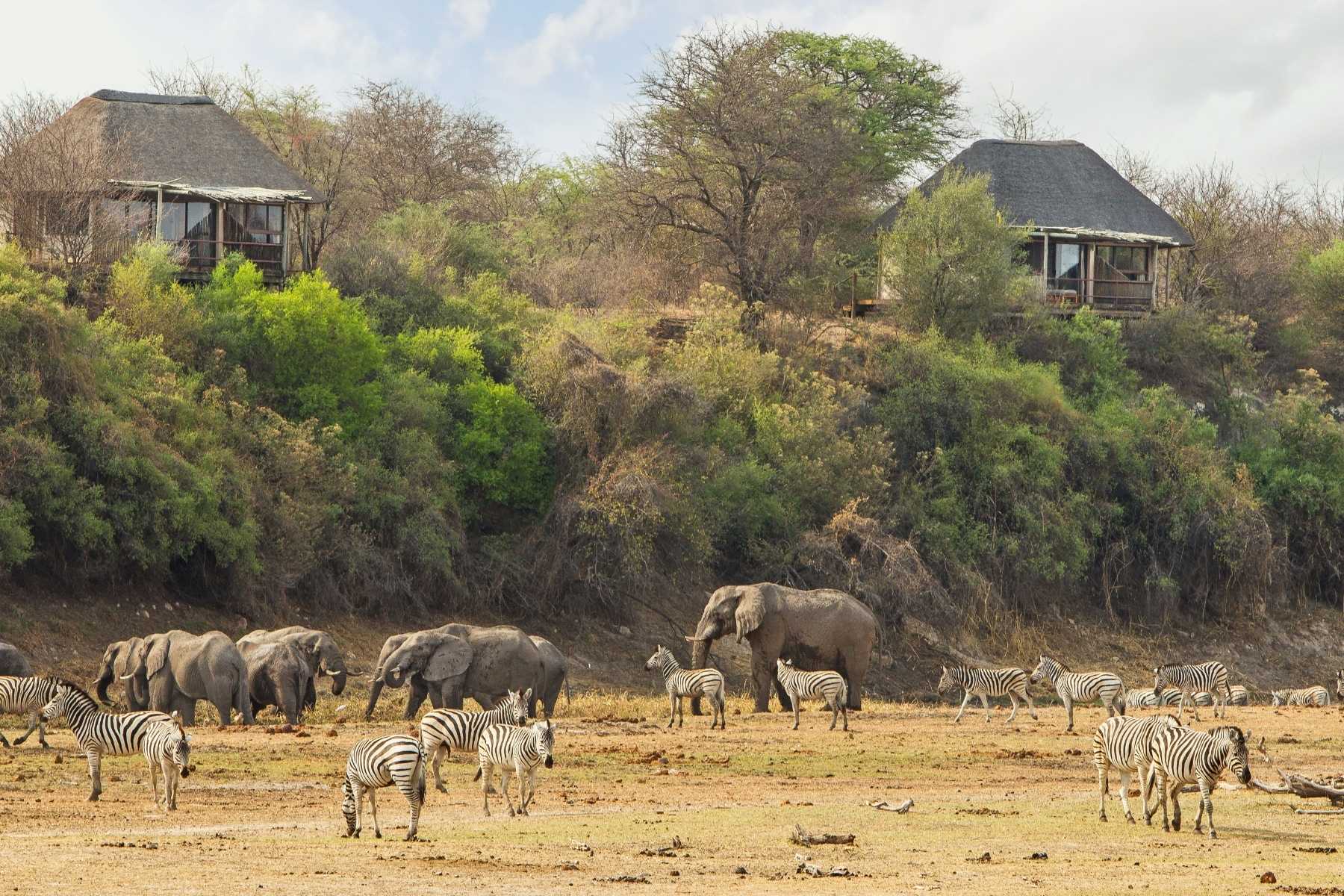
Jack’s Camp and San Camp position you perfectly for the migration, with game drives venturing out onto the grasslands surrounding the pans. Leroo La Tau, perched on a cliff overlooking the Boteti River, offers a different perspective as zebras gather to drink during the dry season.

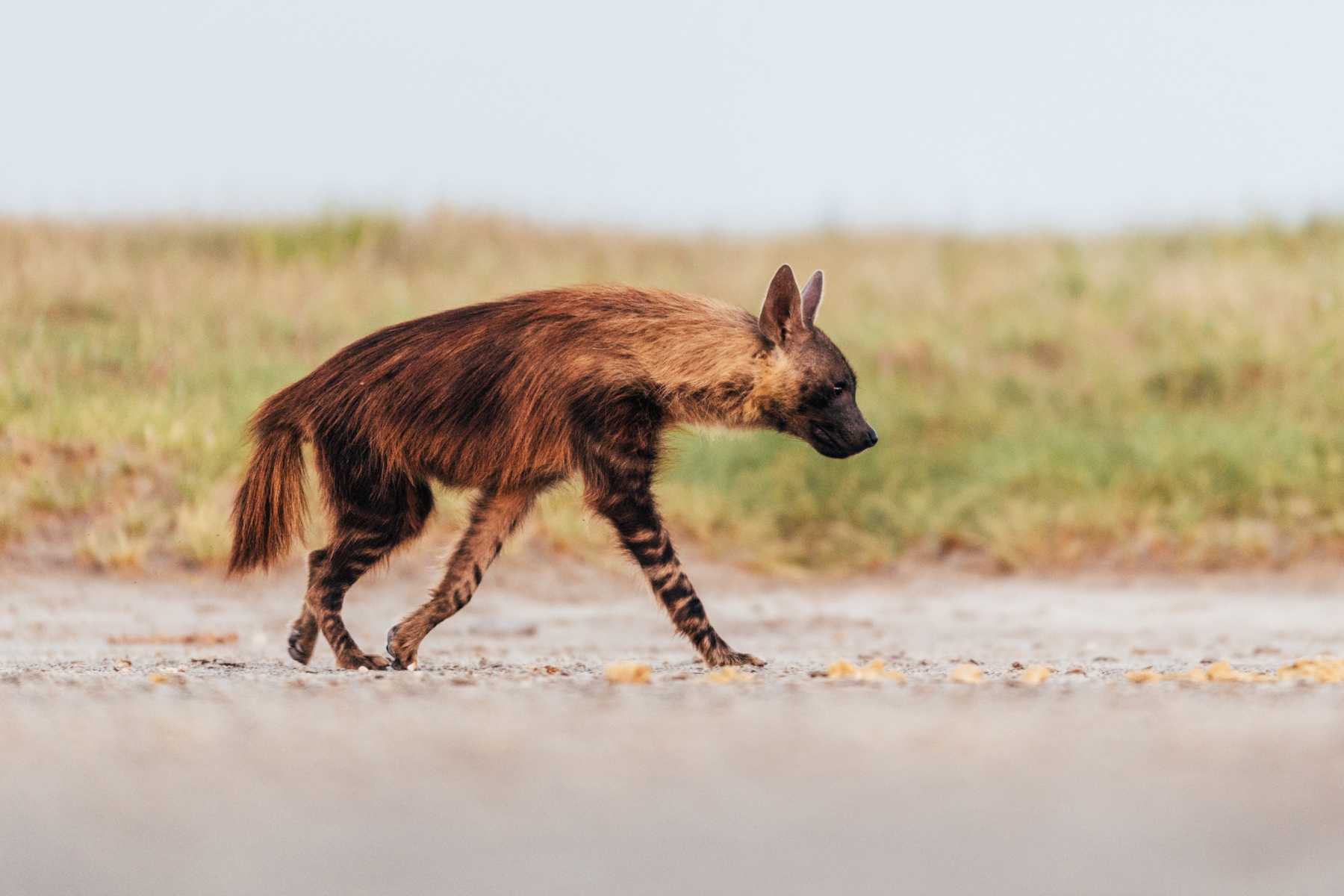
Brown Hyenas & Kalahari Specials
Now we’re getting into properly obscure territory – and we love it. The Central Kalahari Game Reserve and Makgadikgadi Pans are home to species you simply won’t encounter in the Delta or Chobe. Chief among them: the brown hyena.
Unlike their giggling spotted cousins, brown hyenas are solitary, secretive scavengers with shaggy coats and comically large ears. They travel up to 31 kilometres in a single night while foraging, which makes them tricky to find – but camps offering night drives give you a fighting chance. Lebala Camp has even managed to habituate a clan, dramatically improving sighting odds.
The Kalahari also delivers black-maned lions (among Africa’s largest), cheetahs thriving in the open terrain, bat-eared foxes, aardwolves, and – if the safari gods are smiling – the vanishingly rare pangolin.
When to go
Here’s where conventional safari wisdom gets flipped: the Central Kalahari is best during the wet season, from December to May. Rains fill the pans, game congregates, and the normally scattered wildlife becomes remarkably accessible. The Makgadikgadi works year-round for brown hyenas, with night drives essential.
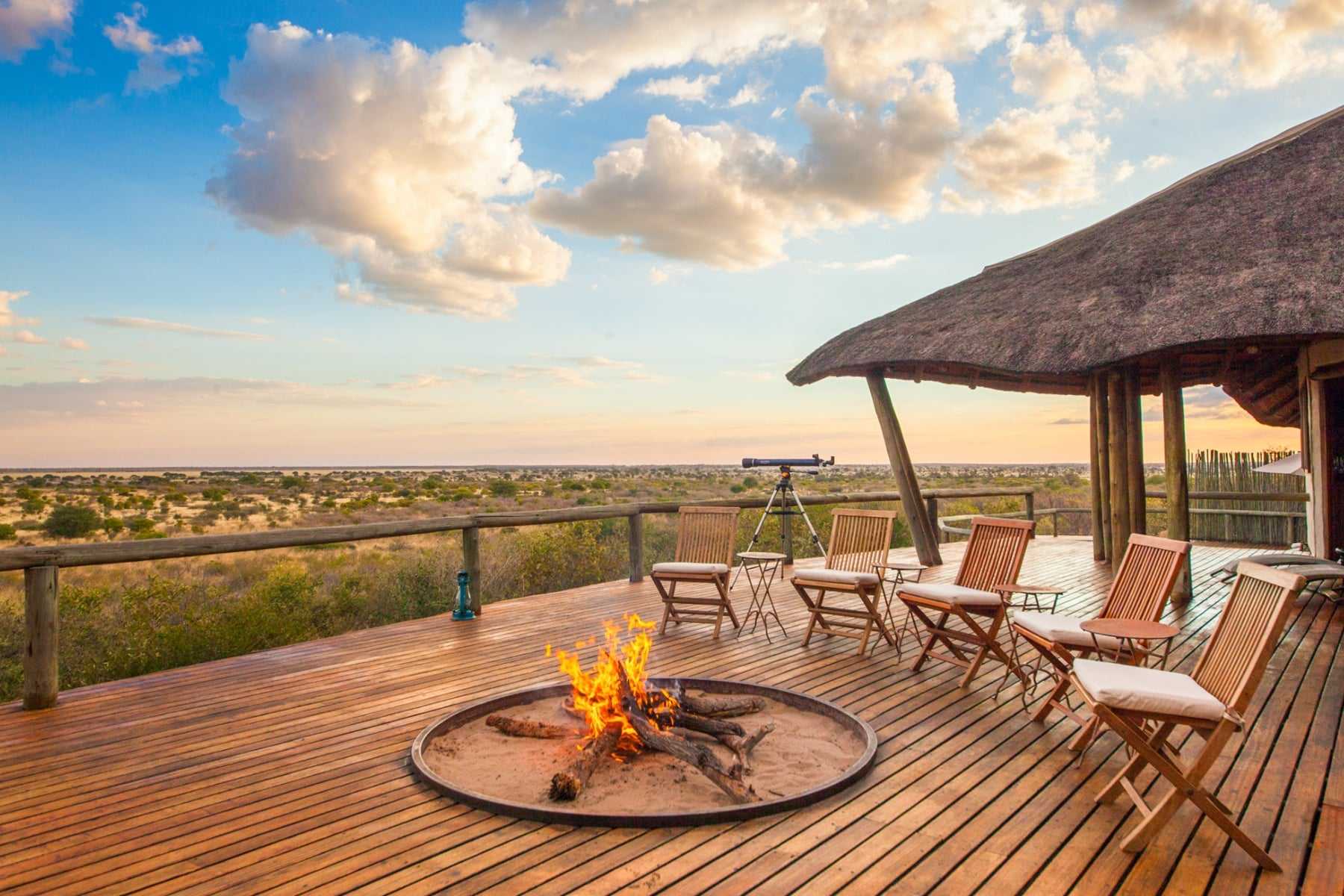
Where to stay
Tau Pan is our pick for the Central Kalahari, offering an intimate camp in a truly remote setting. In Makgadikgadi, Jack’s Camp includes night drives as standard – and their guides know exactly where to look.

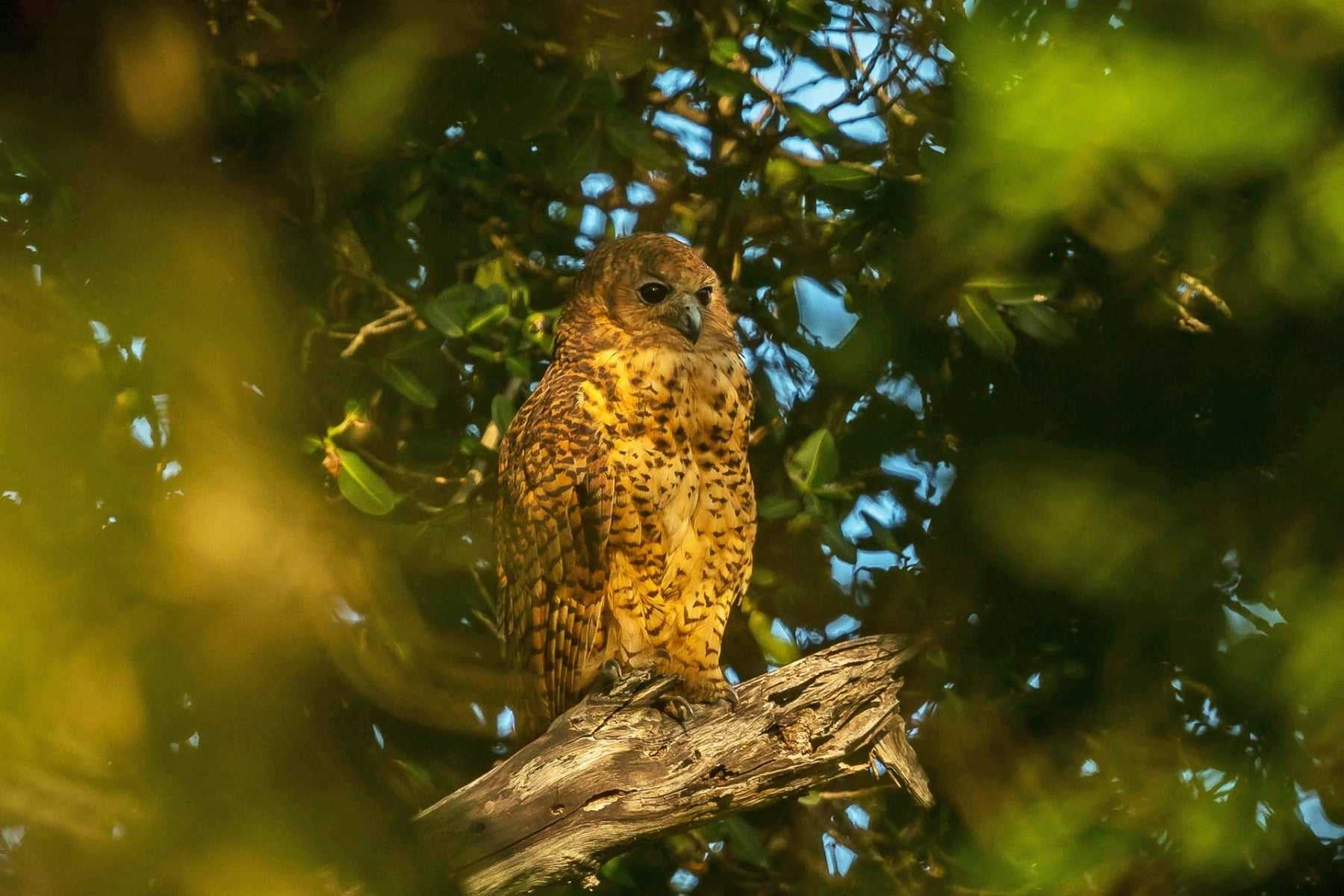
Pel’s Fishing Owl & Delta Birdlife
If you know, you know. Pel’s fishing owl is the holy grail of African birding – a ginger-feathered, fish-snatching enigma with just 100 to 120 breeding pairs in the entire Okavango Delta. Seeing one is a genuine achievement, and birders travel from around the world for the privilege.
Your best bet? Camp Xakanaxa, where a resident breeding pair has nested in the camp’s public area for over three years. It’s an extraordinary opportunity – you might spot them from the bar. Otherwise, scan the riverine forests along permanent waterways, particularly at dusk when they begin to hunt.
But the Delta’s birdlife extends far beyond one famous owl. Wattled cranes – Africa’s tallest crane species – have their largest global concentration here. The near-endemic slaty egret has 85% of its population in the Okavango. And from September to October, southern carmine bee-eaters arrive at Savuti in their hundreds, performing their famous trick of hitching rides on Kori Bustards’ backs to catch flushed insects. It’s absurd and wonderful in equal measure.
When to go
The green season, from November to April, brings migratory species flooding in and residents sporting their breeding plumage. For Pel’s fishing owl specifically, year-round resident populations mean any visit offers a chance.
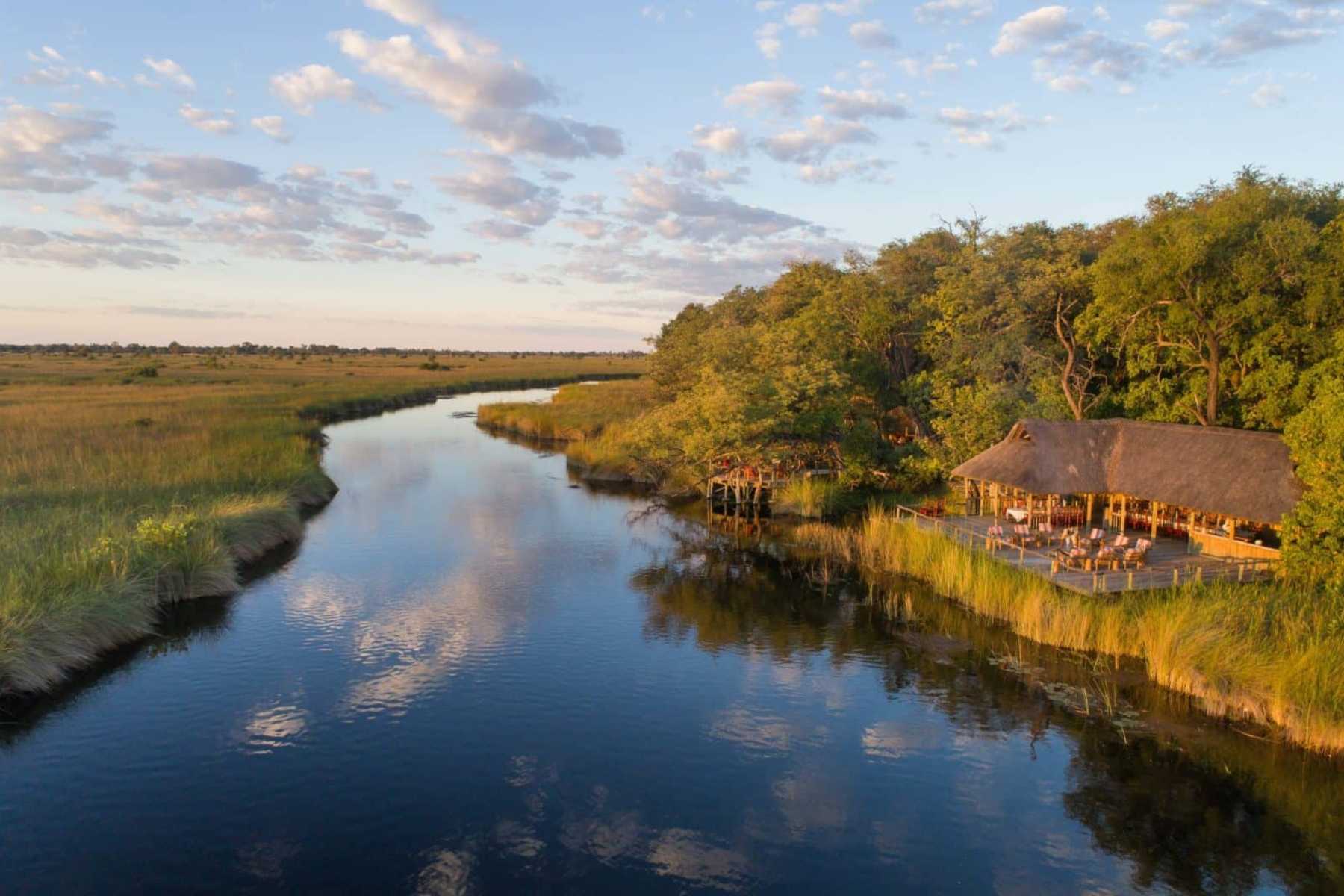
Where to stay
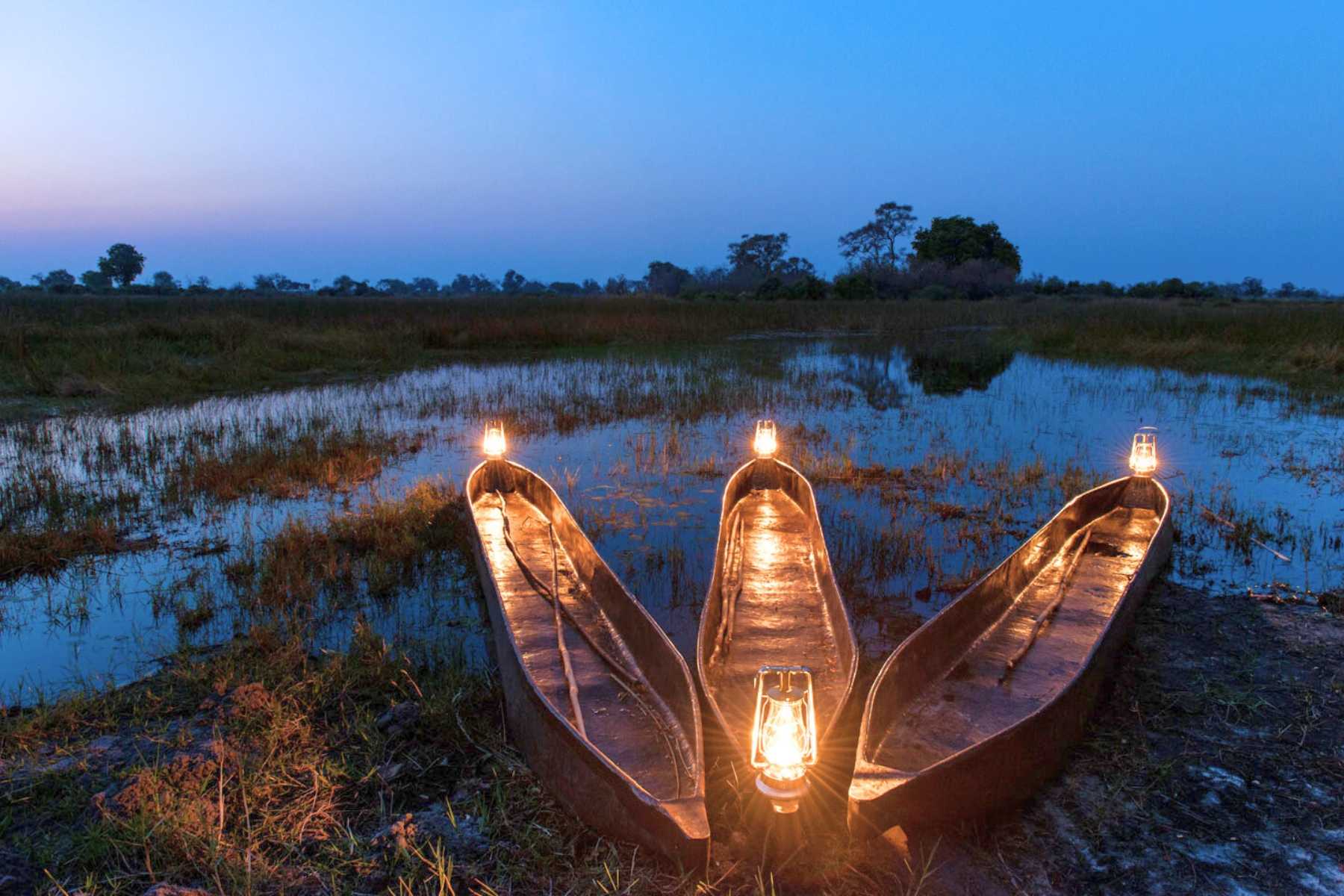
Camp Xakanaxa for that resident pair of owls, or Xigera and Jao for exceptional birding across the board. A mokoro excursion – gliding silently through papyrus channels in a traditional dugout canoe – brings you eye-level with kingfishers, herons, and the occasional swimming elephant.

Sitatunga & Red Lechwe
We’ll round things off with two antelope species that have adapted to the Okavango’s watery world in rather spectacular fashion.
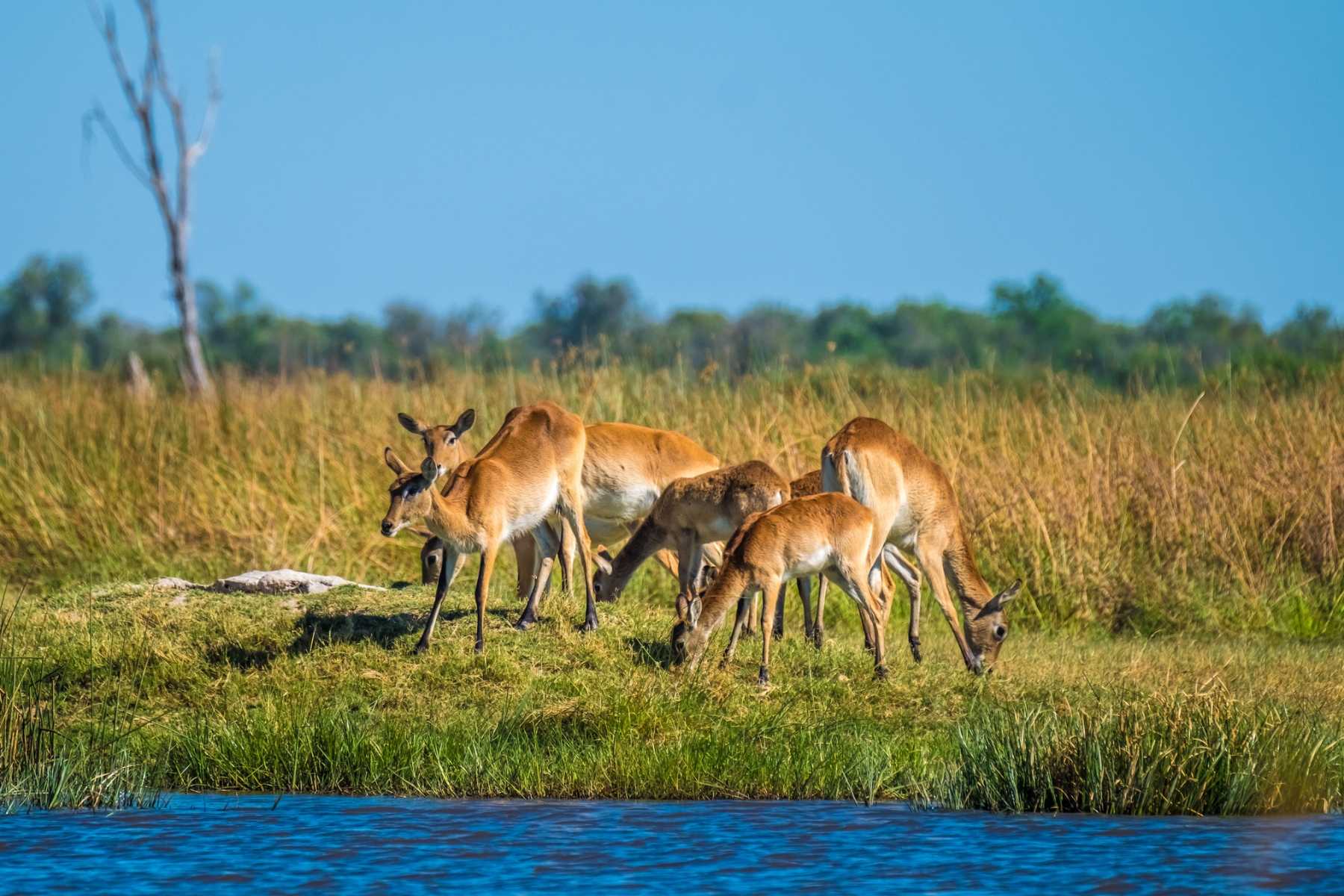
Red lechwe, with their distinctive splayed hooves designed for marshy terrain, form herds numbering in the hundreds across the Delta’s seasonal floodplains. They’re a common sight, but no less beautiful for it – especially when backlit by early morning sun, water spraying as they bound through the shallows.
The sitatunga, however, is something else entirely. This elusive, shaggy-coated antelope has taken water adaptation to extremes: when threatened, it will submerge completely underwater, leaving only its nose above the surface. Finding sitatunga in the Okavango Delta requires patience, good guiding, and a bit of luck. Jao Camp and the western Delta’s permanent wetlands offer the best chances.
When to go
The annual flood peaks between June and August, transforming the Delta into a labyrinth of channels and lagoons. This is prime time for water-based wildlife, with animals concentrated along the waterways.
Where to stay
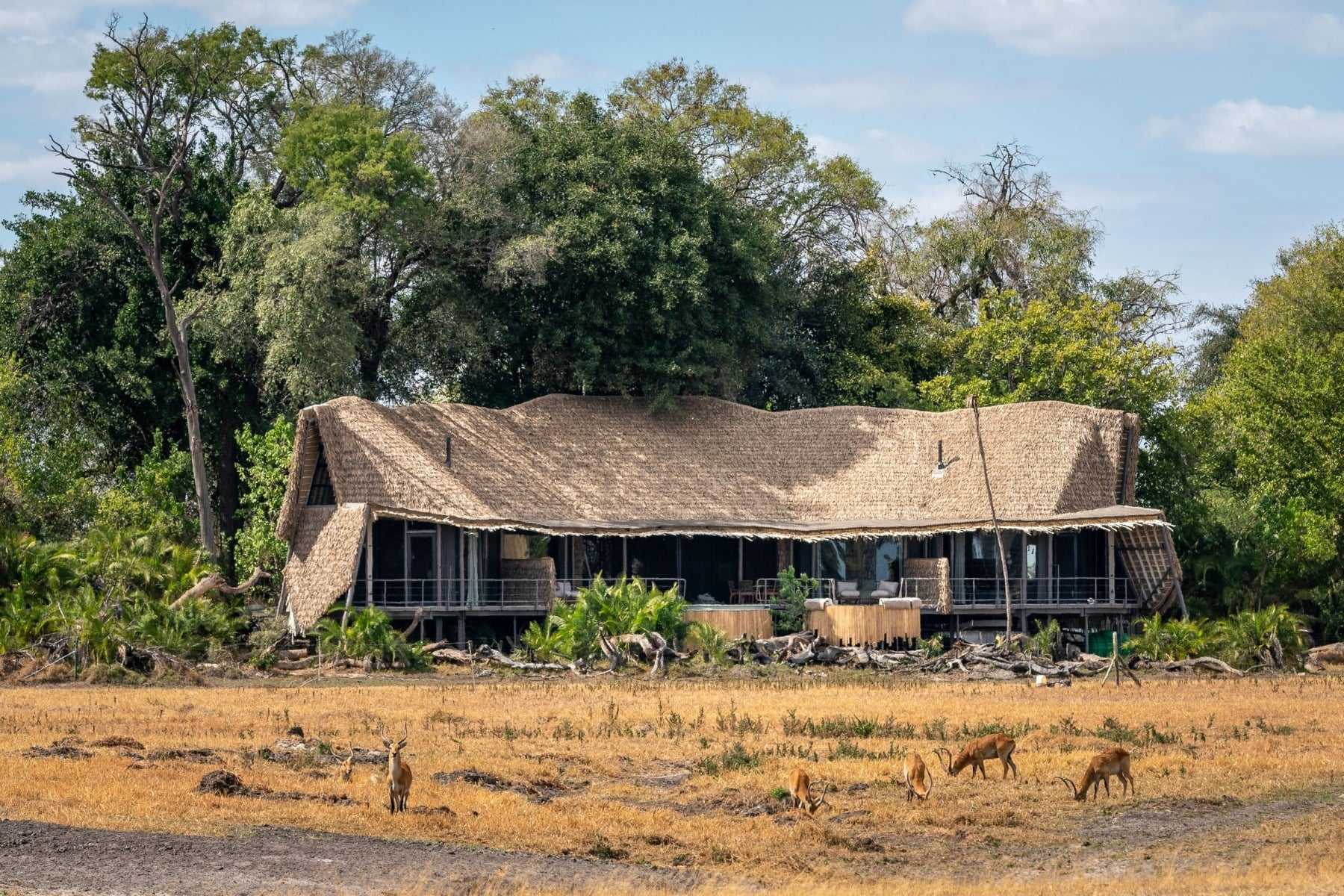
Jao Camp and Jacana Camp excel at water-focused safaris, with mokoro excursions and boat-based game viewing as standard. Pelo Camp, accessible only by boat, immerses you completely in the aquatic landscape.

Putting It All Together
The beauty of Botswana is that you can combine wildly different ecosystems in a single trip. Pair a water-based Delta camp – all mokoro glides and Pel’s fishing owl hunts – with the wild dog territory of Linyanti. Add Makgadikgadi for meerkats and brown hyenas if time allows. Or venture to the Central Kalahari during the green season for black-maned lions and cheetahs against a backdrop of golden grasses.
Night drives, permitted only in private concessions, unlock an entirely different world: honey badgers trundling through the darkness, civets slinking between trees, and the ever-present hope of that pangolin. Walking safaris shift your perspective again, focusing on tracks, dung, and the smaller details that a vehicle blurs past.
Botswana’s Big Five are magnificent – no question. But spend time seeking out the painted dogs, the salt-pan sentinels, and the fish-hunting owls, and you’ll discover a country with wildlife depth that few destinations can match. These lesser-spotted species, it turns out, steal the show.
Ready to plan your Botswana adventure beyond the Big Five? We’re here to help you find the right camps, the right timing, and the wildlife encounters you’ll never forget.
Latest blogs


As seen in