Best time to see the Great Wildebeest Migration
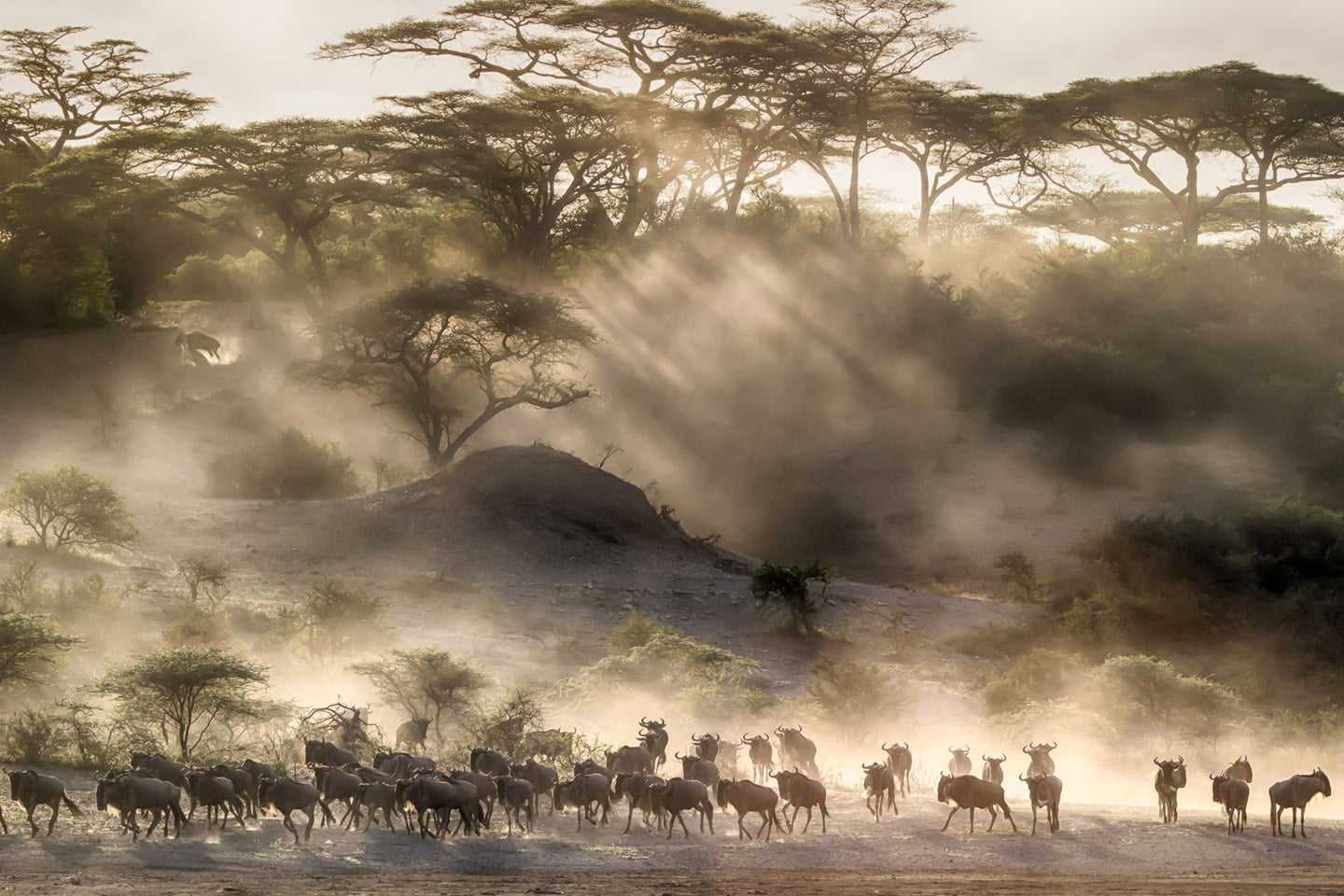
The Great Migration: nature’s greatest show and one of the most mind-boggling wildlife phenomena there is. Well, that’s a given, but what many don’t know is that this extraordinary movement of almost two million hooved beasties is a year-round cycle. So whether you want travel in February or August, watch thundering river crossings or the magic of calving season, there’s a right place and a right time. Read on to find out exactly when is the best time to see the Great Wildebeest Migration, and where you should be…
The Great Migration, month by month, in a nutshell
| Months | Location | What’s happening |
|---|---|---|
| January, February & March | Southern Serengeti (Ndutu and Kusini) | Calving season — around 500,000 calves are born in February alone |
| April & May | Central and Western Serengeti | The herds head north through the Moru Kopjes towards the Grumeti |
| June | Western Corridor | The first dramatic river crossings begin in the Grumeti |
| July, August & September | Northern Serengeti and Kenya’s Masai Mara | The famous Mara River crossings |
| October | Serengeti | The herds begin their return south |
| November & December | Southern Serengeti | The feasting begins on the new grass, and the cycle starts all over again |
Timbuktu top tip: If you’ve got your heart set on the Mara River crossings, plan for August. If you’d rather skip the crowds but still want something truly spectacular, calving season in February is our insider’s pick.
January
In January, the herds of wildebeest gather in the southern Serengeti around Lake Ndutu and Kusini, feasting on the newly-sprouted grasses that follow November and December’s rains. At this time of year, the plains are covered in a thick carpet of juicy green grass – a nutritious feast for the discerning gnu.
Where should I stay? Lemala Ndutu Camp

February
February is calving season and over 500,000 wildebeest calves are born on the southern Serengeti plains between late January and March. That’s around 8,000 every day! After a month of devouring nutrient-rich grass, the female wildebeest are in tip-top shape for birth and gangly babies dot the landscape. A heart-warming spectacle, but similarly heart-breaking as the predators line up for their fill of easy prey…
Where should I stay? Serian’s Serengeti South

March
In March, the last of the calves arrive and the herds drift across the southern plains in search of the juiciest shoots, sometimes wandering as far as the northern reaches of the Ngorongoro Conservation Area (but never into the crater itself). Hungry predators follow their every move…
Where should I stay? Serengeti Safari Camp

April
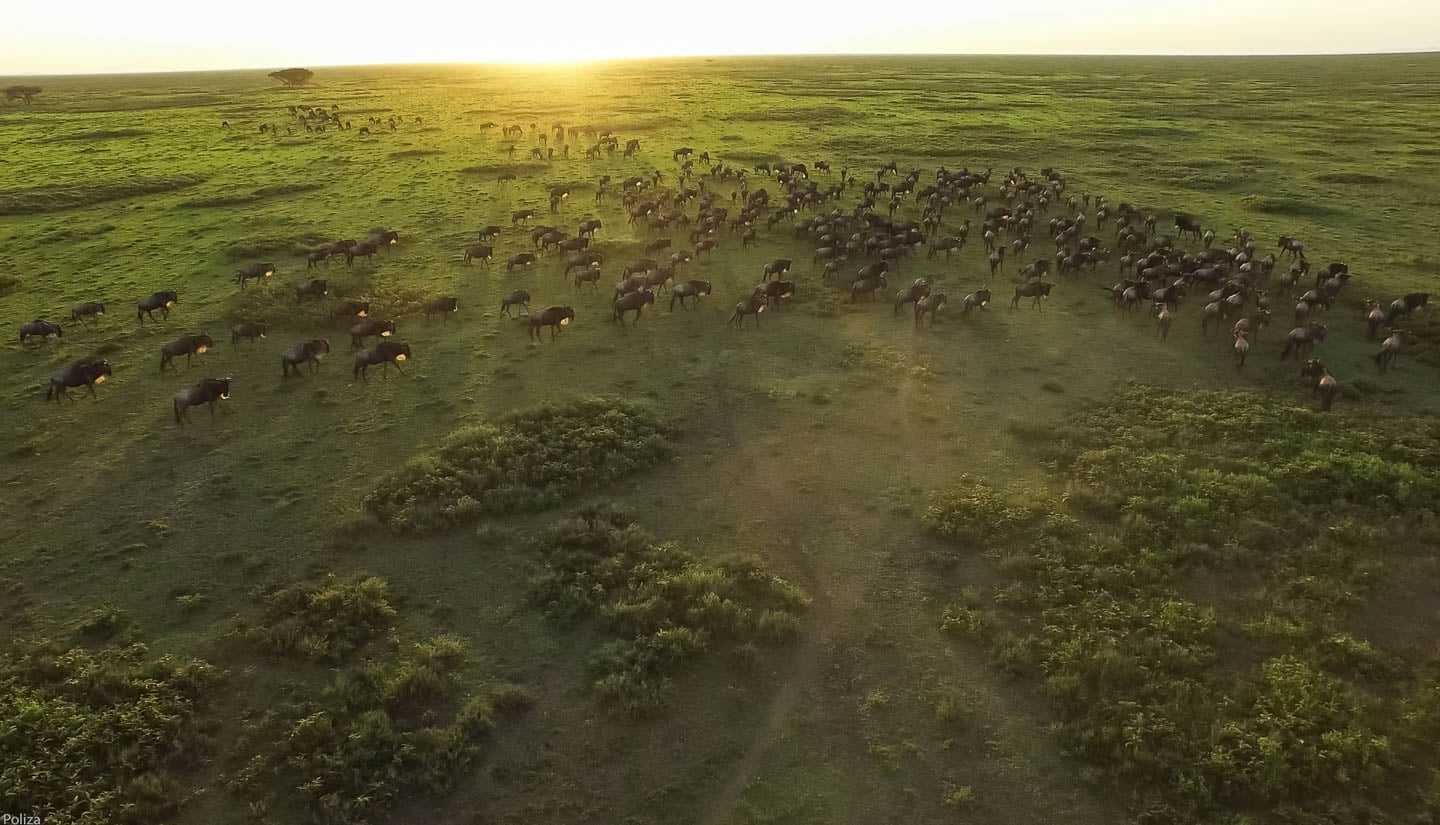
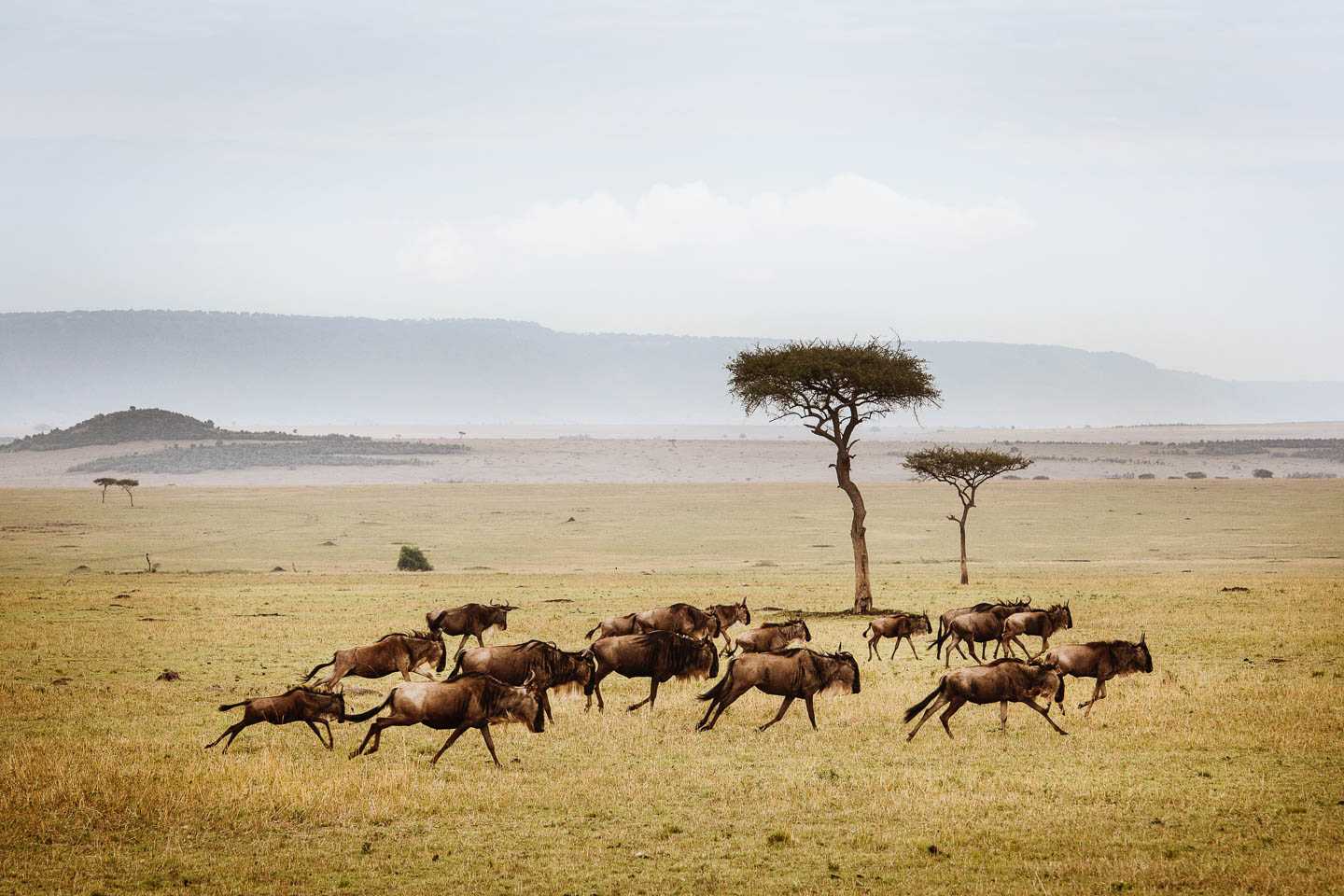
By April, the Great Migration is properly on the move. The herds head north from the depleted southern plains, forming mega-columns that stretch from the Moru Kopjes in the central Serengeti to the Western Corridor. It’s said that these enormous streams can even be seen from space, as the herds follow the rumblings of thunder northwards.
Where should I stay? Asanja Camp

May
In May, the herds congregate on the banks of the Mbalageti and Grumeti rivers in the Western Corridor and face the first real obstacle of the trek: how to get to the other side… A few rogue wildebeest may head even further north of this central region, but the masses remain largely in the west.
Where should I stay? Singita Faru, Faru

June
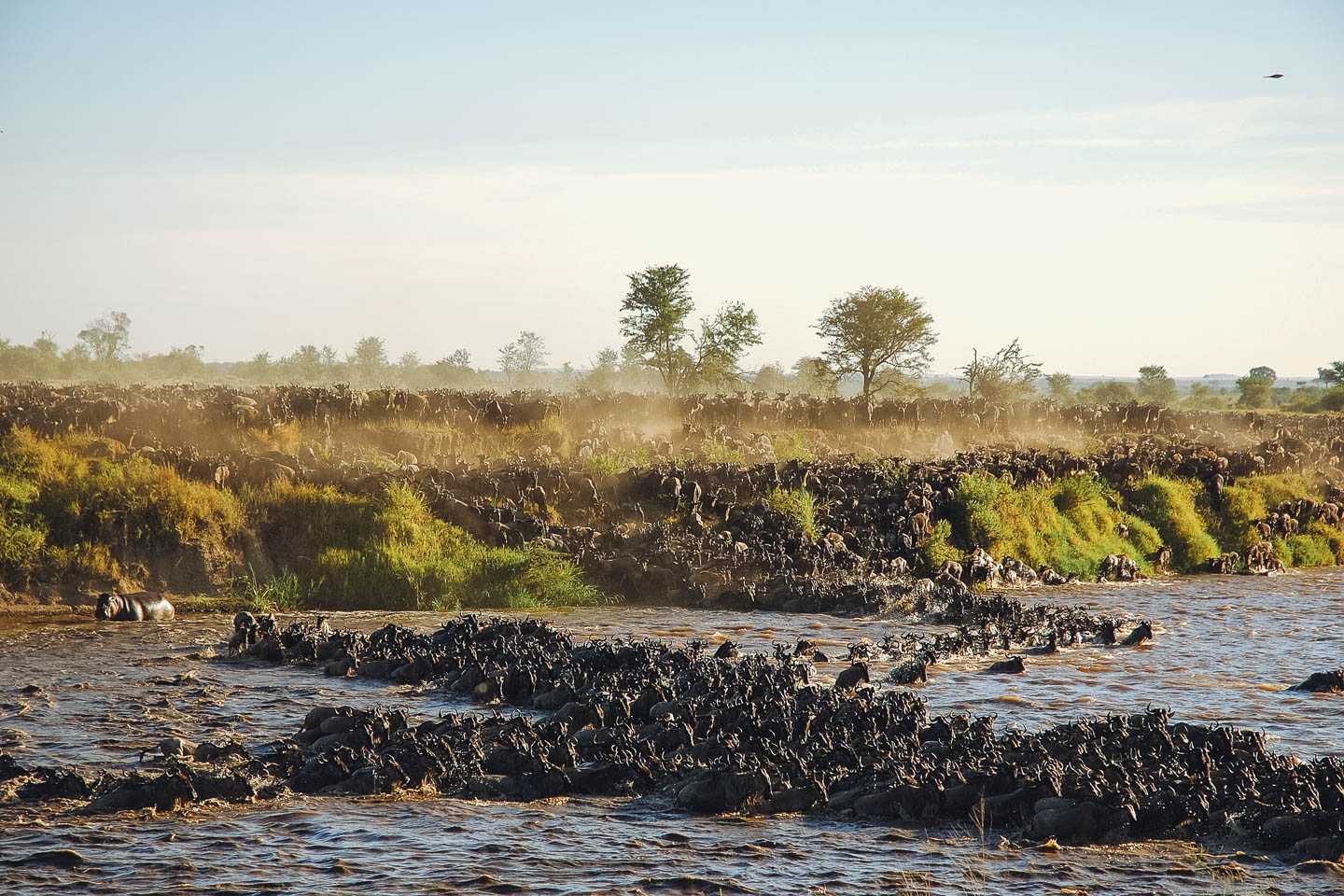
By June, the herds begin to spill across the murky pools of the Grumeti River. Although not quite as dramatic as the northern crossings, there’s plenty of drama in store as the crocodiles prepare for their annual wildebeest banquet. Rutting season is also underway and the plains are alive with testosterone-fuelled males chasing their chosen ladies.
Where should I stay? Ubuntu Migration Camp

July
In July, the herds reach the northern Serengeti and begin the most famous part of the journey: the Mara River crossings. Depending on rainfall, crossings can start as early as June or as late as August and whilst they are never guaranteed, they are always unforgettable. The Mara River itself winds through the north-western Serengeti before twisting into the western Masai Mara in Kenya and viewing is good in both countries.
Where should I stay? Lamai Serengeti Camp

August
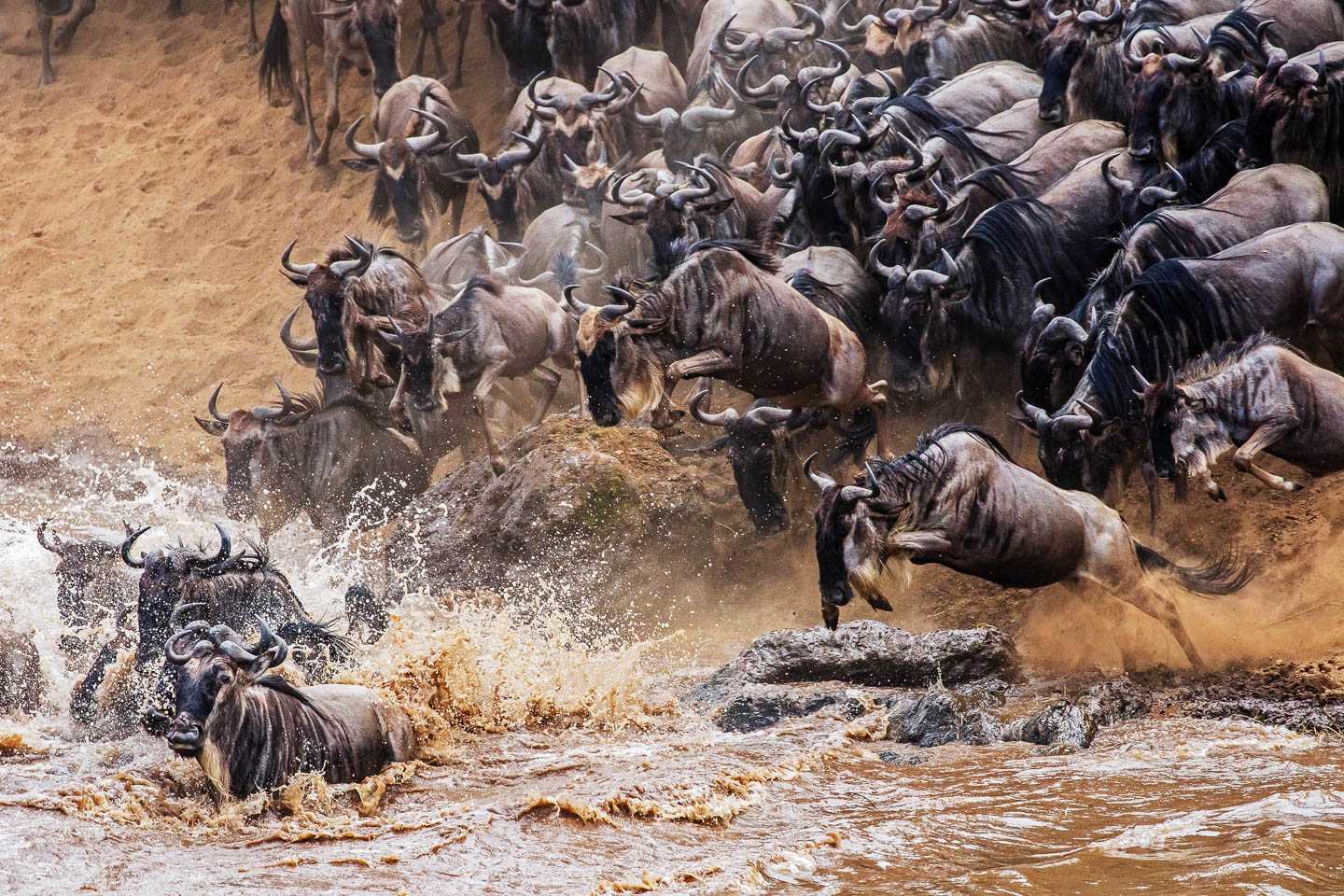
August is the peak of the Mara River crossings. Wildebeest plunge into the water, dodging the snapping jaws of Nile crocodiles whilst lions wait on the far bank. This is the most sought-after time to visit, and the best camps book out 12 months in advance. As well as the cats, marabou storks and vultures flock to the river to feast on the fallen and game viewing is dramatic, bloody, frenzied and sensational (and not for the faint hearted!)
Where should I stay? Olakira Migration Camp

September
By September, most of the herds have crossed into Kenya’s Masai Mara, though many will cross and re-cross the Mara River as they hunt for fresh grass. Dramatic river crossings continue but become less reliable as the month wears on, when the beasties start to settle in the northern Serengeti again.
Where should I stay? Governor’s Camp
October
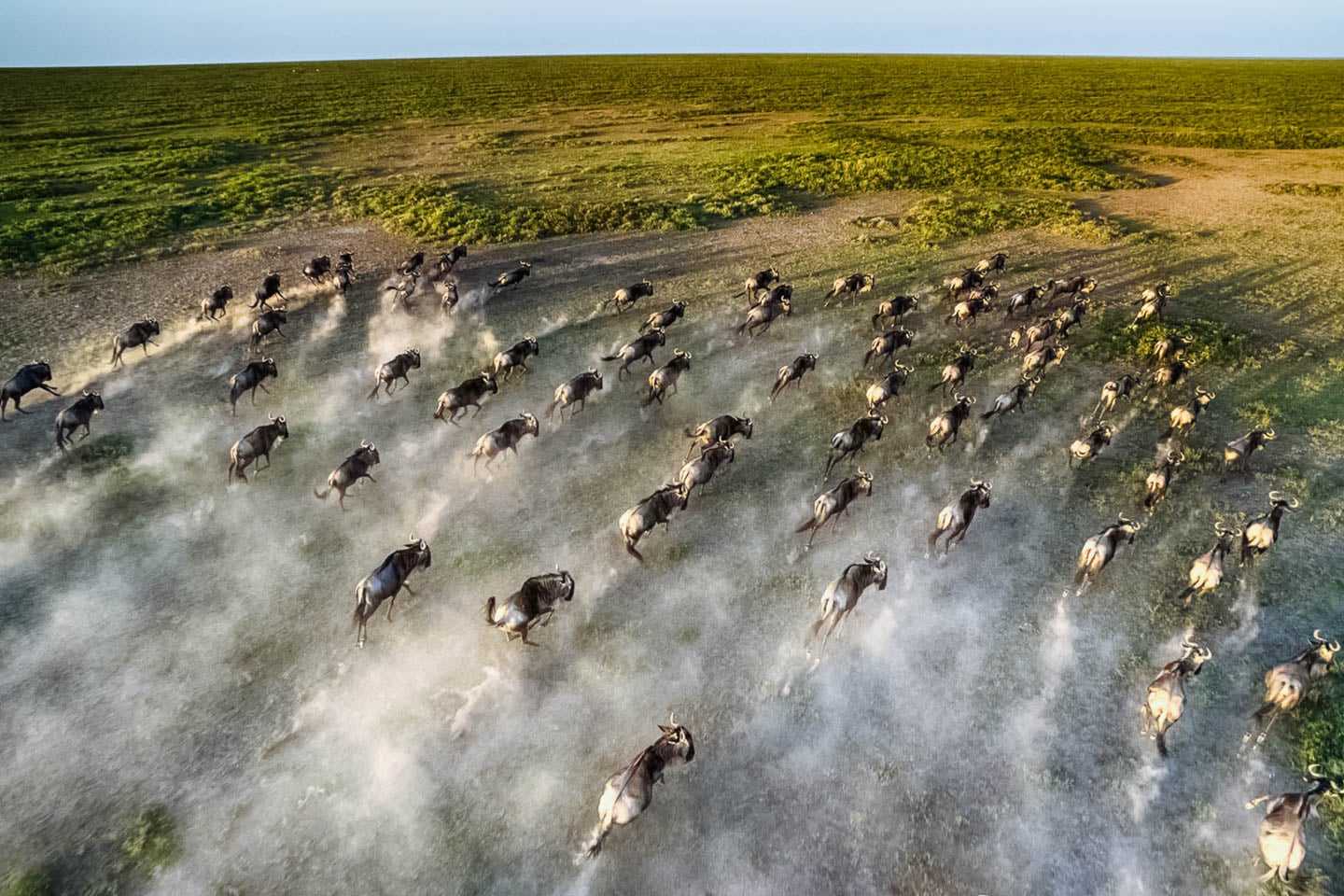
In October, the herds begin the return south through the Serengeti, drawn by the first rains and the promise of juicy new grass. A few late river crossings still happen – and of course, the hungry predators are still hot on their heels – but they thin out as the month goes on.
Where should I stay? Sala’s Camp

November
By November, the herds are heading south in earnest, the urgency of the rains driving them towards the southern Serengeti’s emerging grasses. The eastern Serengeti and central Seronera region offer the best wildebeest viewing this month.
Where should I stay? Namiri Plains

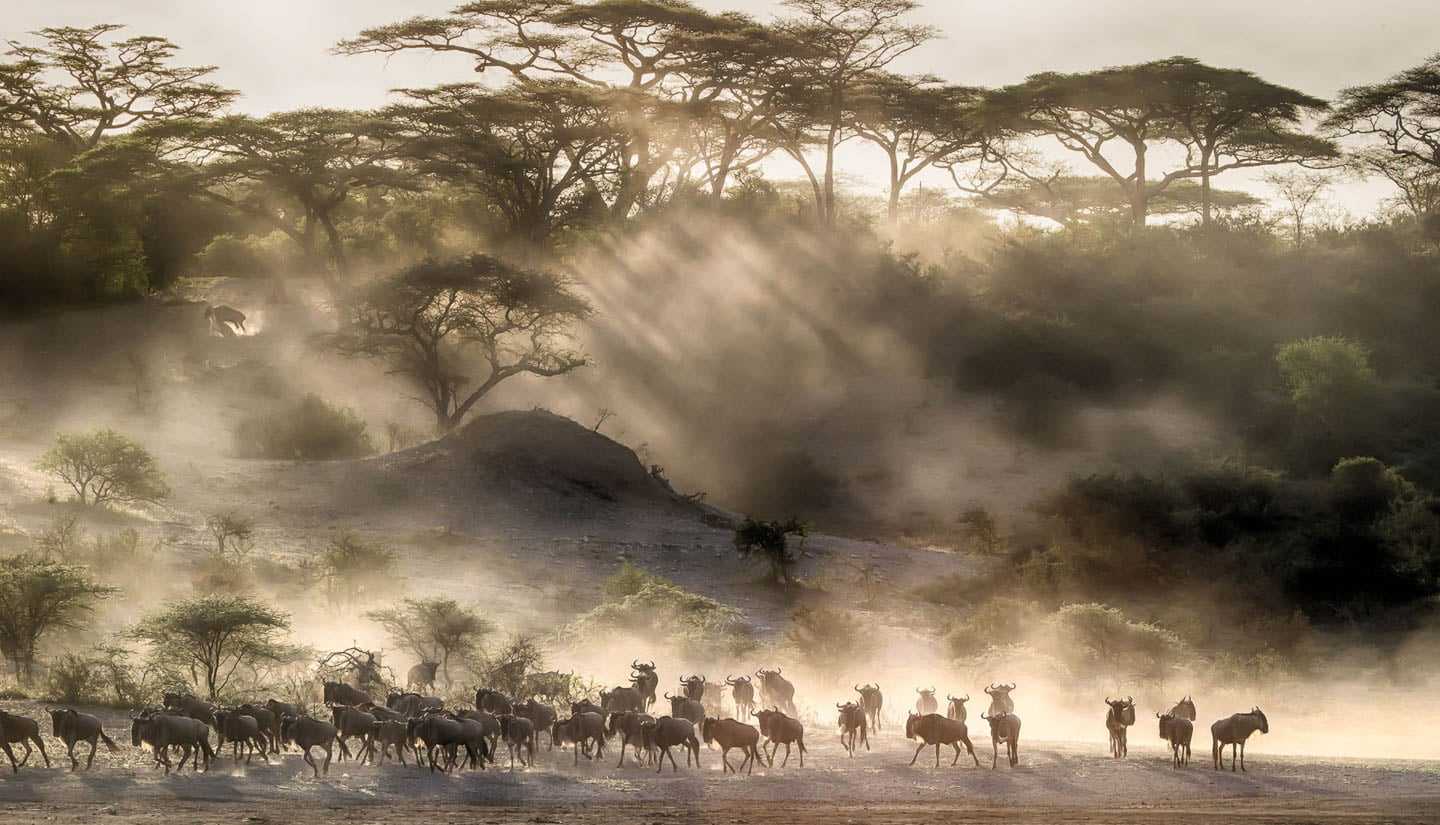
December
In December, the majority of the herds have reached the southern Serengeti plains, where the new shoots provide the perfect nutrition. Feasting begins, the predators are out in force, and the cycle of life begins again….
Where should I stay? &Beyond Serengeti Under Canvas

What people get wrong about the Great Migration
These a few myths that we hear from our travellers all the time:
It’s not a single event. The Migration is a year-round cycle, not a one-week spectacle in August. Every month offers something extraordinary.
The crossings don’t only happen in August. They can start as early as June and continue into October. August is the peak, but not the only window to see the show.
You don’t need to be in Kenya to see the migration. The wildebeest spend roughly nine months of the year in Tanzania’s Serengeti and in fact, Kenya’s window is the briefest of the lot.
Calving season is often skipped (and shouldn’t be). February in the southern Serengeti is one of the most concentrated wildlife spectacles on earth and there are 8,000 calves born every day, with predators in full attendance.
The Great Migration FAQs
When are the Mara River crossings?
The Mara River crossings typically happen from late July through to October, with August and September the most reliable months. Crossings can start as early as June or as late as August depending on the rainfall so sadly, the dates are never guaranteed, but this is the most predictable window we’ve got.
Can you see the Great Migration year-round?
Yes. The Migration is a continuous, year-round cycle rather than a single event and the herds are always somewhere in the Serengeti-Mara ecosystem. What changes is the act of the show: calving in February, river crossings in August, or the long trek south in October and November.
Is Kenya or Tanzania better for seeing the Migration?
Both offer world-class viewing so the answer depends on when you travel. For calving (December to March) and the long journey north (April to July), you want to be in Tanzania’s Serengeti. For the famous Mara River crossings (July to September), Kenya’s Masai Mara is the prime spot. The wildebeest spend the majority of the year in the Serengeti, so Tanzania gives you more flexibility if your dates aren’t fixed.
How early should I book a Migration safari?
For peak July-September dates in the northern Serengeti or Masai Mara, we recommend booking 12 to 18 months in advance. The best camps in the prime river crossing locations are tiny (some have as few as 10 beds), and space goes fast.
What’s the quietest time to see the Migration?
March and April are often overlooked, but they’re some of our favourite months: the herds are moving north, the landscapes are emerald-green from the rains, and many camps run shoulder-season rates. The trade-off is the odd thunderstorm and a few muddy roads, but the rewards are well worth it.
Can anyone predict exactly where the herds will be?
Honestly, no! And anyone who promises otherwise is probably not being entirely truthful. The Migration moves with the rain, and river crossings in particular are unpredictable year to year. The best we (and any good safari planner) can do is position you in the right region at the right time of year. And remember, flexibility is part of the magic.
Latest blogs


As seen in