.jpg)
.jpg)
/16.3339563,3.4439959,3/600x400?access_token=pk.eyJ1IjoidGltYnVrdHV0cmF2ZWwiLCJhIjoiY2poMGw1eHpkMmRkbDJ6bW8xYWZ5OGpjYyJ9.PYvAO7lUJ40SOpGvwmQLqw&attribution=false&logo=false)
Planning Guides
Jonty’s Epic Adventure in Odzala
It’s like another world…
Central African Republic
A place of staggering scenery and wild gorilla encounters, in the Central African Republic, travel is synonymous with adventure.
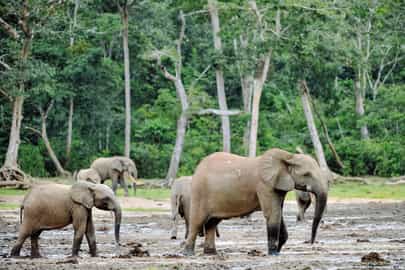
There are certainly no guide books for the Central African Republic (CAR), and travel there definitely isn't for the fainthearted, but take the plunge and you’ll find a staggeringly beautiful country that’s home to some epic wildlife. The CAR’s troubled history is not to be glossed over – it's suffered from a variety of political problems, poaching and civil war, particularly since 2012 – but away from the news headlines are a few particular areas that offer adventurous travellers something to really get excited about. There are forests and UNESCO World Heritage Sites, little-known nature reserves and fascinating communities, but the place for raw, larger-than-life wildlife experiences is undoubtedly Dzanga-Sangha National Park. It may be humid and there may be a good deal of red tape to tackle but if you’re hankering after a good dose of adventure, add the CAR to your list.

For pioneering spirits and Africa aficionados, the CAR is one of the most rewarding, captivating and exciting destinations out there. To visit will undoubtedly leave you speechless – and there’s not many places that can claim that.

We might go as far to say all of it?!

There’s bureaucracy and there’s paperwork; the weather might not play ball and it will be chaotic, crazy and sometimes a little bit nerve-wracking. But it’s all worth it…
Get advice and suggestions to make this your perfect trip.
or call us on: +1 (646) 542 0667
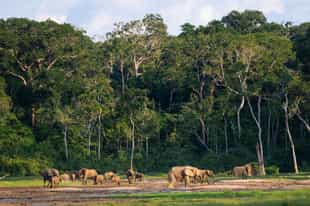
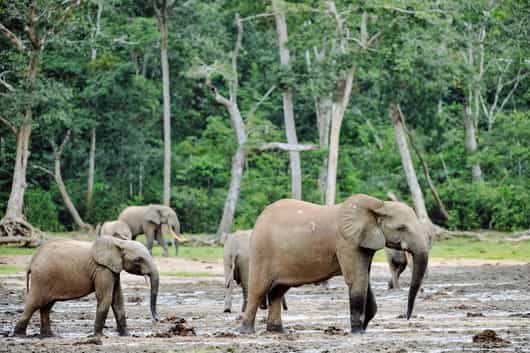
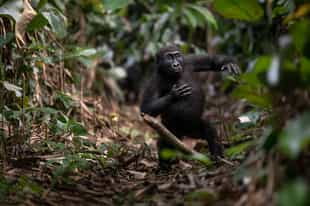
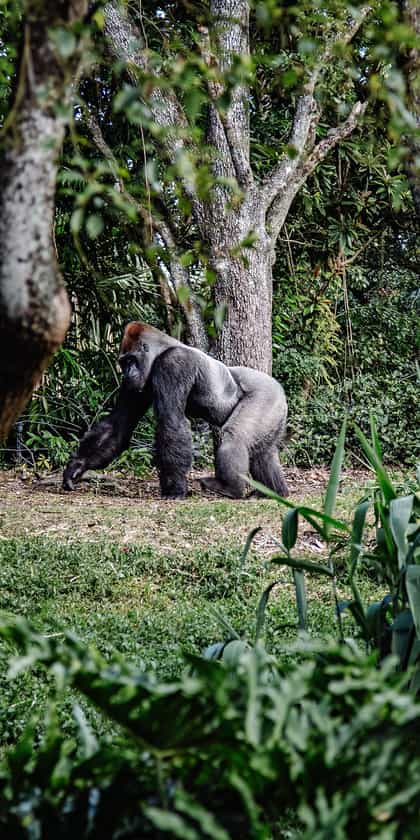
When it comes to where to go on your Central African Republic travels, there’s only one answer: Dzanga-Sangha, a magical realm where western lowland gorillas and forest elephants roam.
The best time of year to visit the CAR is probably between November and March when the rainfall declines and the clear skies make for near perfect photography conditions and wildlife encounters. It’s in these months that the lowland gorillas spend more time on lower ground and are perhaps slightly easier to spot in the thick foliage. As a whole, the country experiences a higher than average rainfall and it’s wise to always be prepared! Most of the rain falls between August and November, and then again in May – the ‘short rainy season’ – but it’s not a strict pattern. June and July are often referred to as the ‘short dry season’ and can also make a good time to visit. The rainforest fruits at this time of year also, making for incredible gorilla viewing. And regardless of what time of year you visit, you will probably experience some quite ferocious humidity – the thick, jungle foliage sees to that!

Dry Season — one of the best times to visit
Dry Season — one of the best times to visit
Dry Season — one of the best times to visit
Wet Season — a good time to visit
Wet Season — a quieter time to visit
Dry Season — one of the best times to visit
Dry Season — one of the best times to visit
Wet Season — a quieter time to visit
Wet Season — a quieter time to visit
Wet Season — a quieter time to visit
Wet Season — one of the best times to visit
Dry Season — one of the best times to visit

While the Central African Republic’s international airport is in the capital, Bangui, our guests travel straight to Dzanga-Sangha from the Republic of Congo. Most often, guests will travel to Sangha Lodge from Odzala via the following route. Every Sunday and Wednesday, a scheduled flight operates from Mboko Airstrip to Kabo Airstrip in the Republic of Congo. Following this, a five-hour boat transfer takes guests up the Sangha River into the Central African Republic. A trusted Congo Conservation Company guide accompanies all transfers and border formalities are managed along the river. Departure happens via the same route, where you’ll travel downstream to Kabo by boat, take a flight to Odzala (available on Sundays and Wednesdays) and arrive in Brazzaville via a charter flight (on Mondays and Thursdays).
Health & Safety Please consult your personal physician and/or a travel clinic preferably 6 weeks prior to your departure. Vaccine requirements vary based on your country of origin and your travel itinerary and your previous vaccination history. It is best to consult with your physician or the CDC website for guidelines. Important vaccinations to consider and which may either be required or recommended are: Hepatitis A & B, typhoid and yellow fever (this must have been received at least 10 days prior to arrival). Please always carry your ‘International Certificate of Vaccination or Prophylaxis (ICVP)’ or ‘Yellow Card’ with you. Malaria We advise that you consult a medical practitioner at least six weeks prior to travel. Malaria is present in CAR and it is strongly advisable to take malaria prophylactics before, during and after your visit. Please consult a medical professional regarding which prophylactics will be suitable for you. In addition to the recommendations of your travel clinic or physician, you may also consider the following proactive preventative measures: ● Apply insect repellent to exposed skin. Recommended repellents contain 20-35% DEET but it is a very virulent repellent, and should be used cautiously. ● Wear long-sleeved clothing and long pants at dawn and dusk, as well as closed shoes. ● Use a mosquito net if your tent or room isn't screened or air-conditioned; and spray insecticide or burn a mosquito coil before going to bed. If you come down with flu-like symptoms either during or within four to six weeks after your visit to a malaria area, seek a doctor's advice immediately and let him/her know that you have been in a malaria area. You can also visit https://www.who.int/news-room/fact-sheets/detail/malaria for more information or see a full map of affected countries here - https://www.who.int/data/gho/data/themes/malaria. Communication CAR country code: +236 Calling overseas from CAR: From a landline dial 00 followed by the country code plus area code and number. e.g. USA: 00 1 910 795 1048 When calling from a cell phone dial + prefix followed by the country code plus area code and number. e.g. USA: + 1 910 795 1048
Money The Central African CFA Franc (FCFA) is the official currency of the CAR. Circulation of the FCFA is in banknote denominations of 500, 1,000, 2,000, 5,000, and 10,000 francs. Please check with your bank for charges and advice when using international ATMs. VISA and Mastercard are the most widely accepted credit cards, while American Express has limited to no coverage. It is advisable to have some cash for smaller shops and for tipping; this will need to be done before entering CAR. IMPORTANT: When bringing foreign currency (e.g. USD, GBP, EUR) into the country, be sure to have the new format with no damage or marks. Gratuities Gratuities are not compulsory or expected; rather it is a reward for excellent service. If you are pleased with the service you receive, you are more than welcome to tip your guide or the staff. Gratuities suggestions: Guides: 20 Euro per guest per day Gorilla trackers: 10 Euro per guest per trek General staff (put in a central box in the camp’s main area): 15 - 20 Euro per guest per night Any gratuities for the general Congo Conservation Company team will be evenly distributed, so it’s best if individual tips aren’t given.
Insurance It is a condition of booking that you carry the correct comprehensive travel and medical insurance to cover yourself, as well as any dependents/travelling companions for the duration of your trip. This insurance should include cover in respect of, but not limited to, the following eventualities: Compulsory Insurance: a. Emergency evacuation expenses b. Medical expenses c. Repatriation expenses Recommended Insurance: a. Cancellation or curtailment of trip b. Damage/theft/loss of personal luggage, money and goods
As a general precaution, we recommend you make several copies of your travel-related documents (passport, traveller’s cheques, credit cards, itinerary, airline tickets, insurance cover, visas, etc). Leave one set at home, and bring another set with you, and place it in a location separate from your originals. Most nationalities do require a visa to enter CAR. Immigration control is very strict, and is known to deny entry to those not meeting the requirements. Passports MUST be valid for at least six months (we recommend nine) from your departure from CAR to home. There must be at least TWO consecutive blank VISA pages in the passport (not endorsement pages). Please do contact the embassy or consultant in your home country to reconfirm visa requirements, as they change often. Visa Central is also a good resource for further information.
Climate The CAR as a whole experiences higher than average rainfall, with most falling between August and November, and around May (the ‘short rainy season’). Regardless of the time of year, Dzanga-Sangha experiences intense humidity. Dress code Generally speaking, light layers of clothing in neutral safari colours of green, khaki and beige are the best items to bring with you. Dark colours such as navy or black can attract tstese flies and are best avoided, as are bright colours like yellow, red and purple. What to pack Lightweight layers: breathable long-sleeve shirts and long trousers, etc. Waterproof sandals and / or boots Rain poncho (dependant on the season) Sunglasses, sunscreen and a hat Well-sealing water bottle Waterproof bag Insect repellent, hand sanitizer / wipes A good pair of Binoculars (8x40/8x42 is recommended) Spare batteries, plug adaptors and charging equipment The camp will have a small medical and first aid kit, but we recommend bringing your own supply of essentials - cough medicine, plasters, vitamins, aspirin and paracetamol, and anything else you use on a regular basis. Electricity The CAR uses 220V, 50Hz AC, and sockets take mostly Type C and E. It is best to bring an adapter/convertor combination. Camera Equipment (for the enthusiasts) • A telephoto lens (200/300mm) • Flash and fast film (400 ASA) for night photography • Lots of film (64,100,200,400 ASA) if using an SLR camera • Spare memory cards for digital cameras • Camera cleaning equipment and a good dust proof bag • Bring spare batteries as although you may recharge your batteries at the camps, charging capacity can be limited. Luggage Please check with your airlines for the specific luggage restrictions relevant to your flight schedule. Many international airlines have a baggage allowance of 20kgs or more per person and commercial airlines generally permit two (2) pieces of checked luggage per person. The carry-on bag must be of such dimensions and weight as set by the airlines. The Congo Conservation Company allows 15kgs per person, including hand luggage. Anything above this amount needs to be requested with the team beforehand. If possible, pack your belongings in a soft bag for ease of transport.
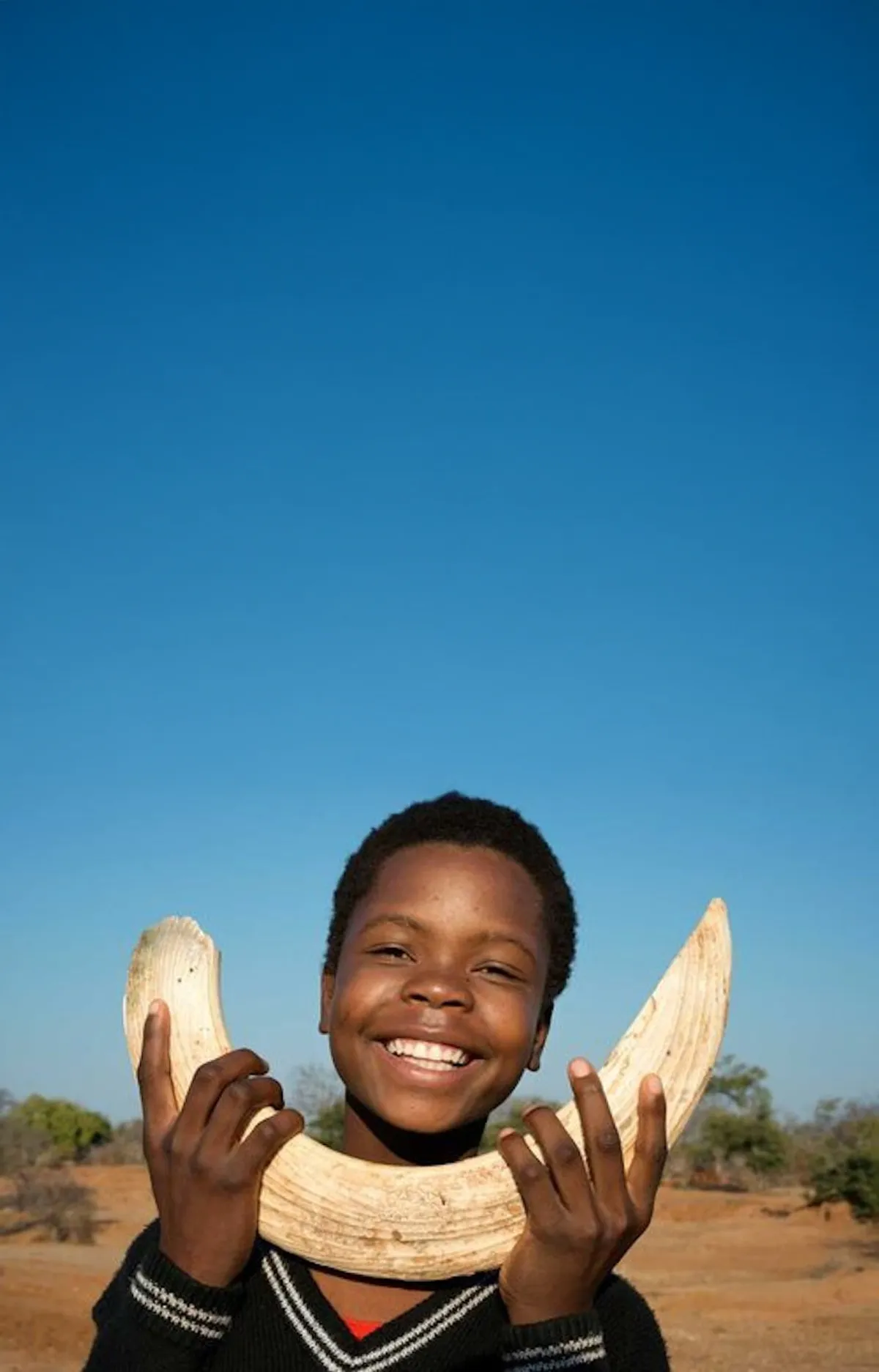
We’re big believers in leaving a positive impact in the countries in which we operate. We’re proud to donate $50 for every booking to projects focusing on female empowerment, tech education, conservation, and so much more.
Our dream is to empower our guests to travel with a purpose.
So far, we’ve donated $107,000 to projects across the globe.


Why travel with Timbuktu?

We've been crafting one-of-a-kind journeys since 2014 — over 2,500 trips across 40+ countries, each one built from scratch around your interests and dreams.

Our team only recommends places they've slept in, eaten in, and happily keep going back to. Condé Nast Traveler named 11 of them Top Travel Specialists in 2026, and Travel+Leisure made three A-List Advisors.

Travel+Leisure's readers voted us the World's No.1 Tour Operator in 2024 and No.2 in 2025 — the travel industry's biggest readers' award, judged by people who actually travel.

$50 from every booking goes to female empowerment, tech education, and conservation projects across the countries we love. We have donated $78,000 so far – and it's going up!

Your travel specialist is with you the whole way, dreaming up the trip, building the itinerary, checking you in, and answering the 2am question from the other side of the world..

We are rated 4.9 out of 5 from 1007 verified Feefo reviews. And these are the words of people who actually went, not us talking about ourselves.
11 Condé Nast Traveler Top Travel Specialists 2026

No. 1 & No. 2 Tour Operator in Travel + Leisure's Best Awards 2024 & 2025

Best Booking Platform in Women's Health Travel Awards 2025

Travel Specialist voted as Latin America A-List Travel Advisor 2025
"Timbuktu can take relatively complex and slightly amorphous travel plans and transform them into a well-organized, perfectly tailored trip."