
We're one of the World's Best Tour Operators!
Named three years running in Travel+Leisure World's Best, including No.1 in 2024
Exactly how you might picture rural Italy, Tuscany’s panoramas will seduce you in a haze of olive groves and world-renowned wine. Florence, the birthplace of the Renaissance, sets the scene with its outstanding art and la dolce vita, before the Val d’Orcia — a UNESCO cultural landscape — ripples to the horizon in a stream of wheat fields and cypress-ruled ridges. Completing the bucolic scene are the hilltop towns of Montepulciano and San Gimignano (and so many more), the vines and villages of Chianti, and ochre-hued Siena and its shell-shaped Piazza del Campo. So far, so painting-worthy. But there’s also Montalcino’s revered Brunello estates where Italy’s most magnificent red wines are aged, and the coastal contrasts: Maremma in the south (long beaches and sunflower meadows) and the Versilia Coast (marble-white sands a stone’s throw from Lucca). And we still don’t think we’ve mentioned everything…
The capital of Tuscany and the cradle of the Renaissance, Florence is one of those cities you think you know… until you stand under the Duomo’s terracotta dome and realise how utterly beautiful it really is. Red tiles and cobbled streets; the Cathedral of Santa Maria del Fiore and the Uffizi; Michelangelo’s David and Botticelli’s Birth of Venus; frescoed chapels and marble courtyards – the art, architecture and history is almost unbelievable. But there’s also the present: the goldsmiths of the Ponte Vecchio, leather artisans rubbing shoulders with ice-cool fashion on the Via de’Tornabuoni, and the buzz of the Mercato Centrale. You could spend weeks here and barely scratch the surface, but if you catch the late-afternoon light shimmering on the Arno, before settling in for a charred bistecca alla Fiorentina in a tucked-away trattoria, you’ll understand exactly why Florence still holds the world in its thrall.
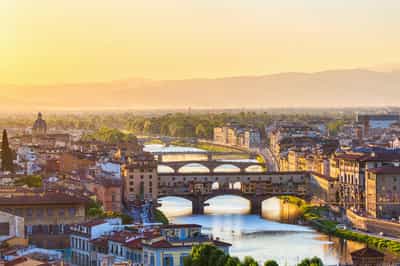
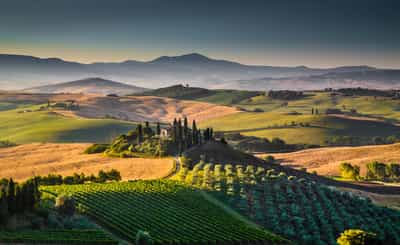
Nowhere feels more quintessentially Tuscan than the Val d’Orcia. A UNESCO World Heritage Site, the valley is an almost impossibly perfect scene of wheat fields, vineyards and scattered Renaissance towns, each more beautiful than the last: Montalcino and its Brunello estates and fortress views; Montepulciano and its barrels of Vino Nobile; and Pienza, designed in the 15th century as the “ideal city” and still known for its pecorino cheese, best tasted warm and freshly cut. The largest of the towns is ochre-hued Siena, one of the most finely-preserved medieval cities in Italy and divided into seventeen neighbourhoods or ‘contrade,’ each with its own coat of arms and traditions, making every wander a foray into a new world.
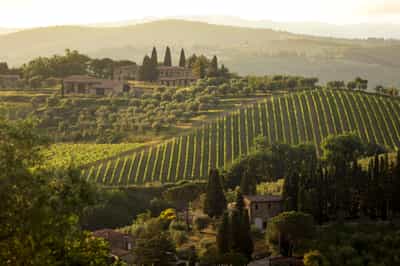
Few Italian wines are as instantly recognisable as Chianti, a bottle generously poured at trattoria tables around the world. And here, between Florence and Siena, is where the story begins. This is the heartland of Chianti Classico, the original zone established in 1716 and still identified by the black rooster seal on every bottle. Sangiovese grapes reign and the vineyards are all about livelihood and legacy, often attached to family-run estates that have been bottling since the 1700s, their cellars cool and barrel-lined beneath stone farmhouses. Villages like Greve, Radda and Castellina offer fabulous tastings in tiny enotecas and in between, you’ll find serious olive oil producers and butcheries specialising in cinta senese pork. The scenery is beautiful (this is Tuscany, after all), but a visit to Chianti is less about view-gazing and more about tasting iconic vintages and understanding this incredible craft.
Beyond the vineyards, Tuscany unfolds into the Tyrrhenian Sea and the gin-clear waters of Isola D’Elba, an island that’s smaller than Sardinia, quieter than Capri and where the locals go for a spot of sea and sand. Pine-laden hills tumble down to the water, while historic villages cling to rugged cliffs. The beaches – all 70 of them – range from pristine stretches of gold to hidden pebbled coves accessible only by boat, the occasional waterfront trattoria serving the morning’s catch. Inland, Monte Capanne rises to just over 1,019 metres with hiking trails that offer up dreamy views of the Tuscan Archipelago (as lovely as it sounds) as you stroll. History buffs can delight in following Napoleon's brief exile here, but Elba today is less about history and more about swimming before breakfast, sailing between hidden bays and devouring plates of fresh seafood.
.jpg)
Once the playground of European aristocracy, this thermal spa town retains all its art nouveau swagger with none of the stuffiness. Picture palm-lined boulevards, Liberty-style architecture dripping with frescoes, and mineral-rich waters that have been drawing the health-conscious (and hypochondriacs) since Roman times. But scratch beneath the genteel surface and you'll find buzzing aperitivo bars, fantastic restaurants that locals actually frequent, and a funicular railway that whisks you up to medieval Montecatini Alto for sunset views. It's wellness with a wink – therapeutic waters by day, Tuscan wines by night.
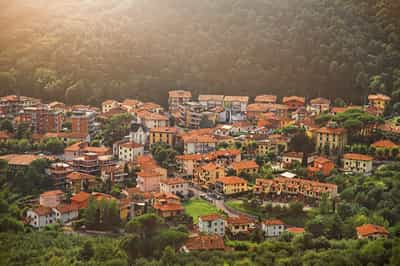
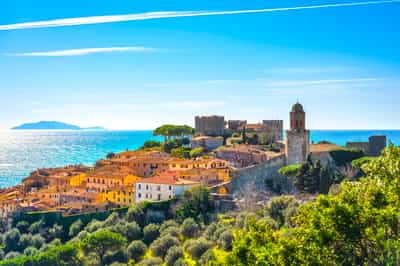
Maremma is the version of Italy that the locals keep for themselves. In fact, the sweep of coast on Italy’s western edge is a bit like Tuscany on a summer holiday, its sleeves rolled up, and much less manicured. Along the coast, the mood is wild and wide with enormous stretches of sand backed by dunes and umbrella pines. At Castiglione della Pescaia, the beaches sit beneath a medieval hilltop town, while further south, Monte Argentario rises in a rocky headland from the Tyrrhenian Sea, the harbour towns of Porto Ercole and Porto Santo Stefano offering the perfect spot for seafood and a glass of Morellino di Scansano. Then, there’s Maremma Natural Park. Stretching for miles along the protected shoreline, it’s patrolled not by lifeguards but by the butteri, Italy's last cowboys, who've ridden these plains since Etruscan times and once famously outperformed Buffalo Bill's troupe in Rome.


Namibrand, Namibia