The Best Places to Stay in Nepal
 With expert insights from Carola Fresno, Travel Specialist
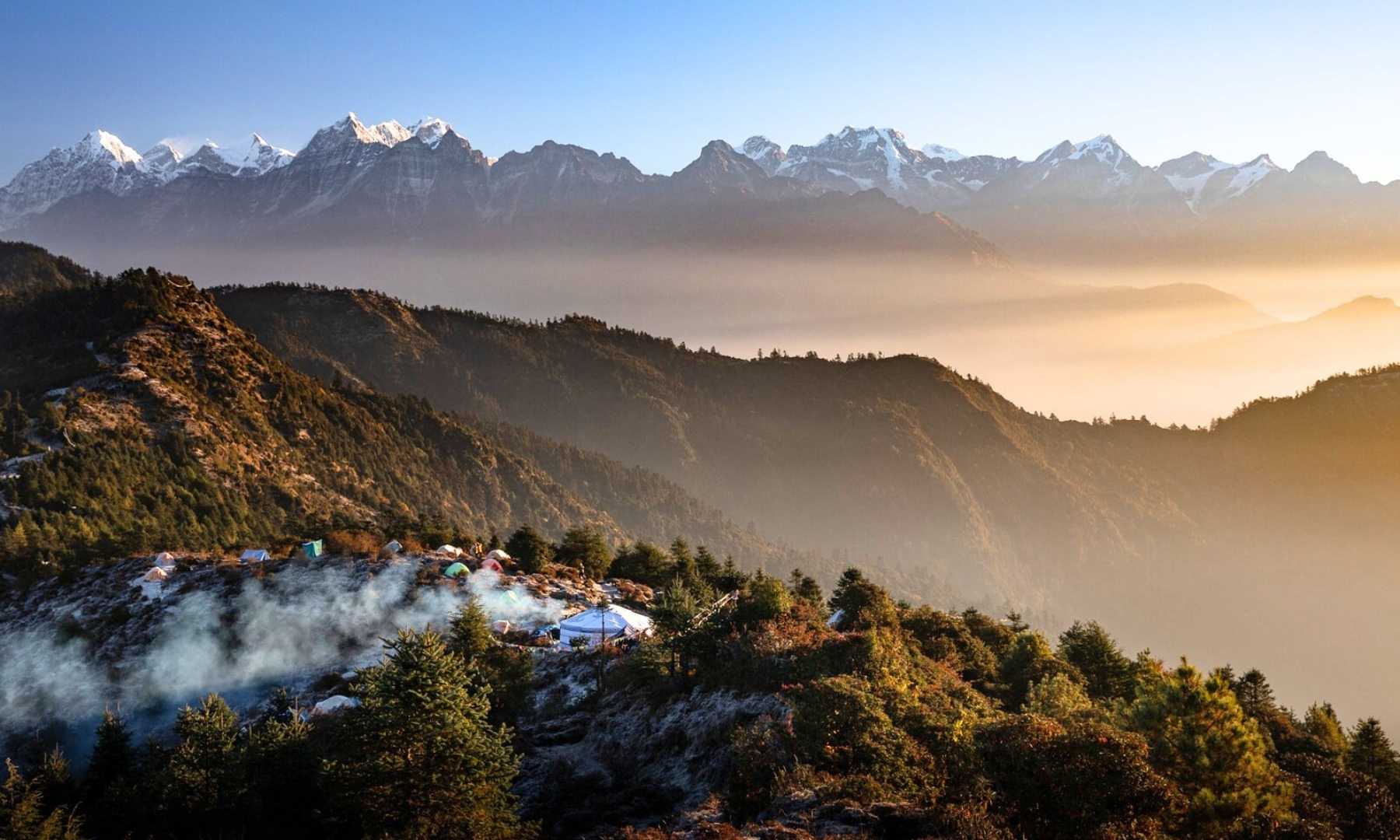
Nepal tends to conjure images of prayer flags, trekking boots, and Everest’s magnificent snow-capped peak – and rightly so. But this Himalayan nation has been quietly raising its hospitality game for years, and the result is a collection of properties that rival anywhere in Asia.
The best places to stay in Nepal fall into four neat categories: heritage hotels in the Kathmandu Valley, eco-luxe jungle lodges in Chitwan, mountain-view retreats in the Pokhara and Annapurna region, and remote design-led escapes in Mustang and the Everest region.
Whether you’re after rescued Newari woodwork, one-horned rhinos, an infinity pool with Annapurna in the frame, or a Bill Bensley-designed lodge at 2,800 metres, here are our ten favourites, what they’re best for and why we keep sending people their way.
| Property | Region | Rooms | Best for | Style |
|---|---|---|---|---|
| The Dwarika’s | Kathmandu | 76 | Heritage and culture lovers | 15th-century Newari palace |
| Nepali Ghar | Kathmandu (Thamel) | 61 | A boutique city base | Rana-era townhouse, modern comforts |
| The Nanee | Bhaktapur | 18 | Slow travel and cultural immersion | Living-museum, no-TV, Vaastu-designed |
| Barahi Jungle Lodge | Chitwan National Park | 35 | Jungle safari, first-timers and families | Eco-luxe thatched river lodge |
| Tiger Mountain Pokhara Lodge | Pokhara | 18 | Annapurna views without the trek | Stone-built ridge cottages |
| The Pavilions Himalayas | Pokhara | Villas | Wellness and sustainability seekers | Solar-powered eco-resort |
| Ghandruk Lodge | Annapurna Region | 18 | Comfort-loving trekkers | Restored 19th-century Gurung house |
| Landruk Lodge | Annapurna Region | 12 | Quieter trekking with peak views | Hillside bungalows facing the peaks |
| Shinta Mani Mustang | Mustang | 29 | Design-led adventure at altitude | Bill Bensley-designed mountain retreat |
| The Happy House | Everest Region (Phaplu) | 10 | Sherpa heritage and off-grid retreat | Restored traditional Sherpa home |
Heritage hotels in the Kathmandu Valley
Most Nepal trips begin and end in the Kathmandu Valley, and the very best heritage hotels in Kathmandu lean into the city’s medieval Newari heritage. From rescued woodwork to UNESCO-listed neighbourhoods on your doorstep, these are the three we keep coming back to.
The Dwarika’s
Location: Kathmandu, near the Pashupatinath Temple
Style: Living homage to 13th-century Newari craftsmanship
Best for: Heritage hotels in Kathmandu, culture-led first nights
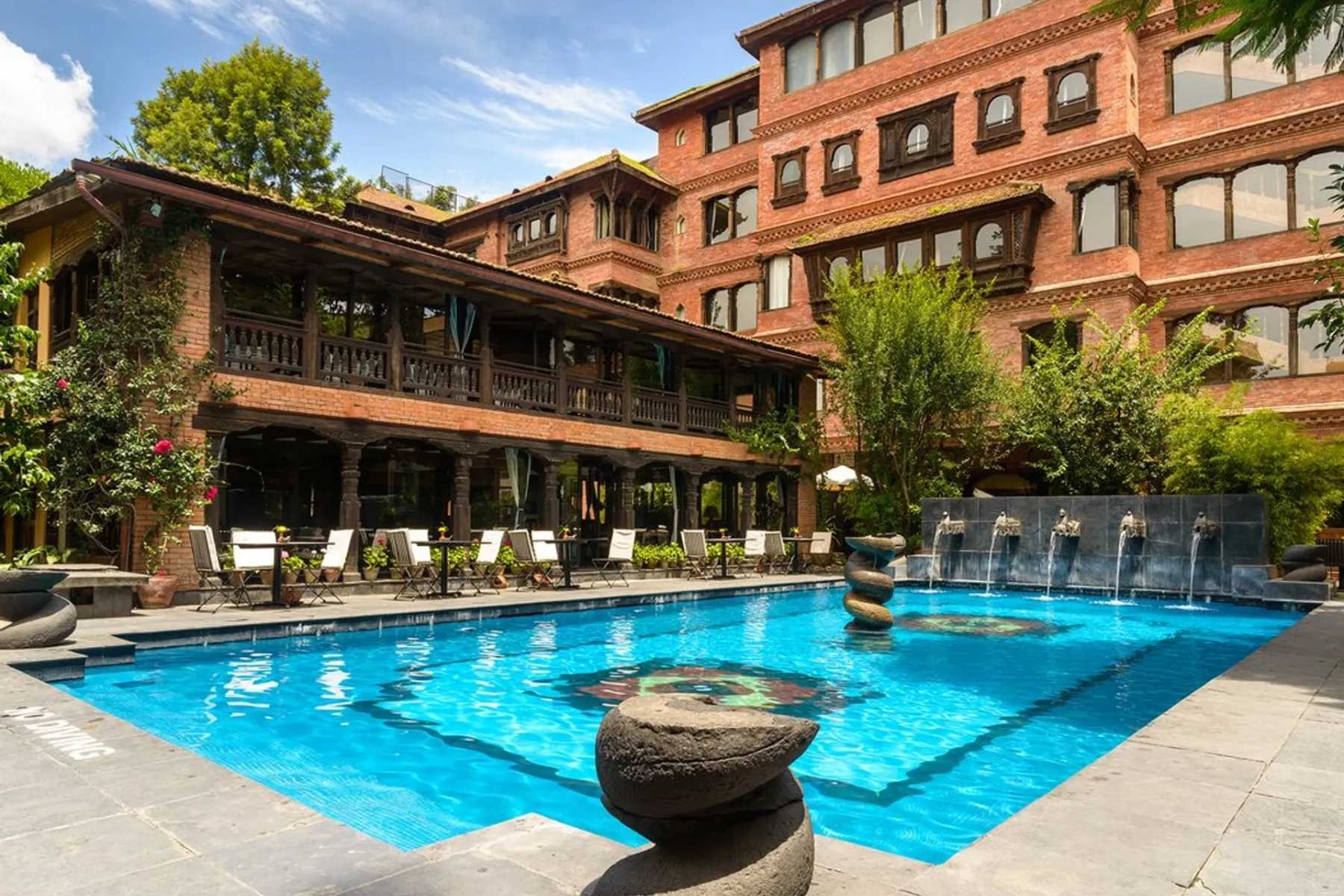
In 1952, a man named Dwarika Das Shrestha watched a group of workmen preparing to burn a pile of historic, 13th-century woodwork from a demolished building in Kathmandu. He bought it on the spot, and then spent the next 30 years rescuing more carved pillars, doorways, and window frames from across the valley to create what is now the 76-roomed Dwarika’s Hotel – a living homage to Nepali culture.
“At The Dwarika’s, you’ll feel like you’ve stumbled across a 15th-century Newari palace (with exceptionally good plumbing), complete with handloomed blankets and antiques as far as the eye can see.”
– Carola Fresno, Latin America & Asia travel specialist
There’s also a Japanese restaurant serving matcha ice cream and a tranquil pool flanked by stone dragons, but the highlight is Krishnarpan restaurant that serves iconic Nepali dishes from all over the country in ceremonial feasts at low-slung tables.

Nepali Ghar Hotel
Location: Thamel, Kathmandu – five minutes from the Garden of Dreams
Style: Restored Rana-era townhouse with 200-year-old wing
Best for: A boutique base in the thick of Thamel
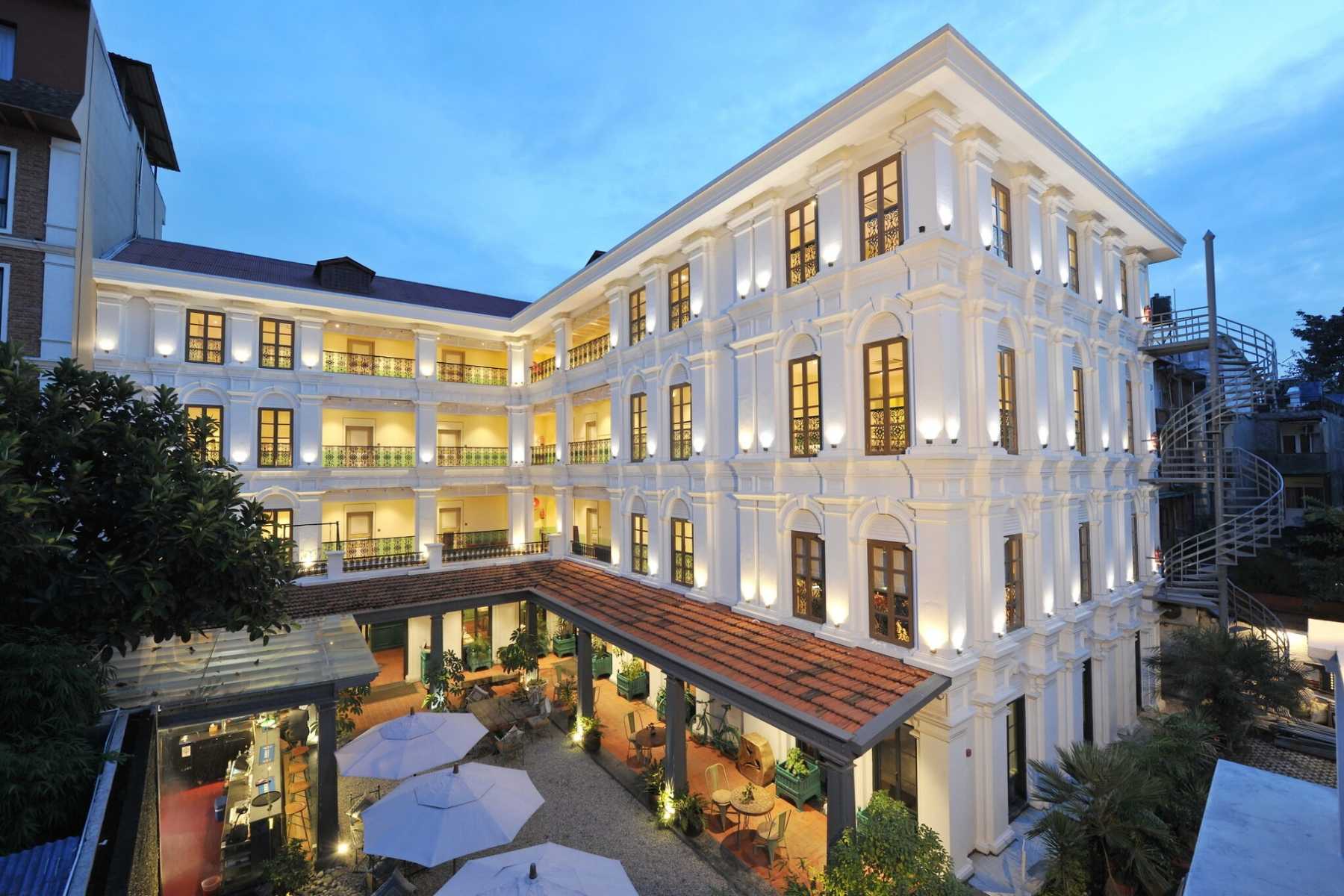
In the thick of Thamel’s buzz, boutique Nepali Ghar is refined to a tee. Once the home of a Brigadier Colonel during the Rana regime, the 200-year-old Seto Ghar wing is a lesson in character with its neoclassical arches and yellow-green cornices, and the 61 rooms blend heritage with modern comforts including pillowtop beds, Netflix and soundproof windows.
“But really, it’s the details that stick: lemongrass diffusers and brass basins in the bathrooms, a team that remembers your name from the moment you arrive, and a rooftop serving Nepali and Mediterranean dishes with temple-studded views.”
– Carola Fresno, Latin America & Asia travel specialist
Its location is also incredibly handy for the Garden of Dreams (five minutes) and Durbar Square (ten), with a meditation hall for when Thamel gets too much.

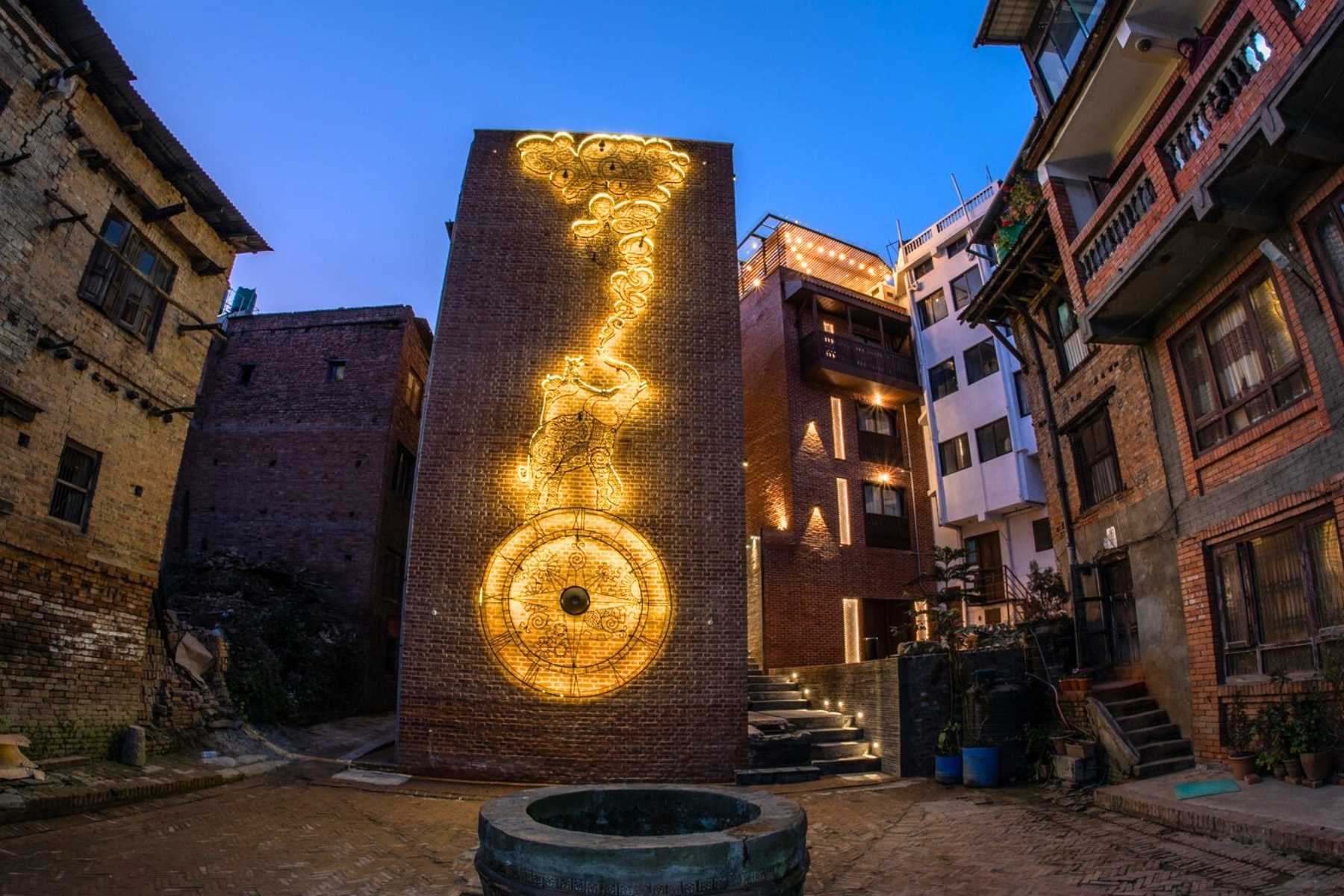
The Nanee
Location: Bhaktapur, three minutes from Durbar Square
Style: Vaastu-designed ‘Museum of Life’ with open courtyard
Best for: Slow travel, design buffs, immersive Newari food
The owners would rather you didn’t call The Nanee a hotel, and actually a “Museum of Life” is indeed a more apt term! Set in medieval Bhaktapur, a three-minute walk from the UNESCO-listed Durbar Square, The Nanee has no perimeter wall: the courtyard is shared with the local community, and that’s entirely the point. The 18 rooms follow ancient Vaastu principles – there are no TVs, although tablets are available if you’re desperate – and the design takes its inspiration from the town’s iconic Nyatapola Temple.
“It’s worth staying for the food alone: local ladies cook lentil pancakes on clay stoves in the Bara Shop, while the Chef’s Table is 10 courses of immersive Nepali cuisine with an entertaining running commentary.”
– Carola Fresno, Latin America & Asia travel specialist

Luxury jungle lodges in Chitwan National Park
Nepal does safaris on top of everything else. Chitwan National Park sits in the lowland Terai region – a world away from the peaks – and offers some of the best one-horned rhino sightings on the continent, along with sloth bears, gharials, and (for the very lucky) Bengal tigers. For luxury jungle lodges in Chitwan, there’s really only one address we’d point you to.
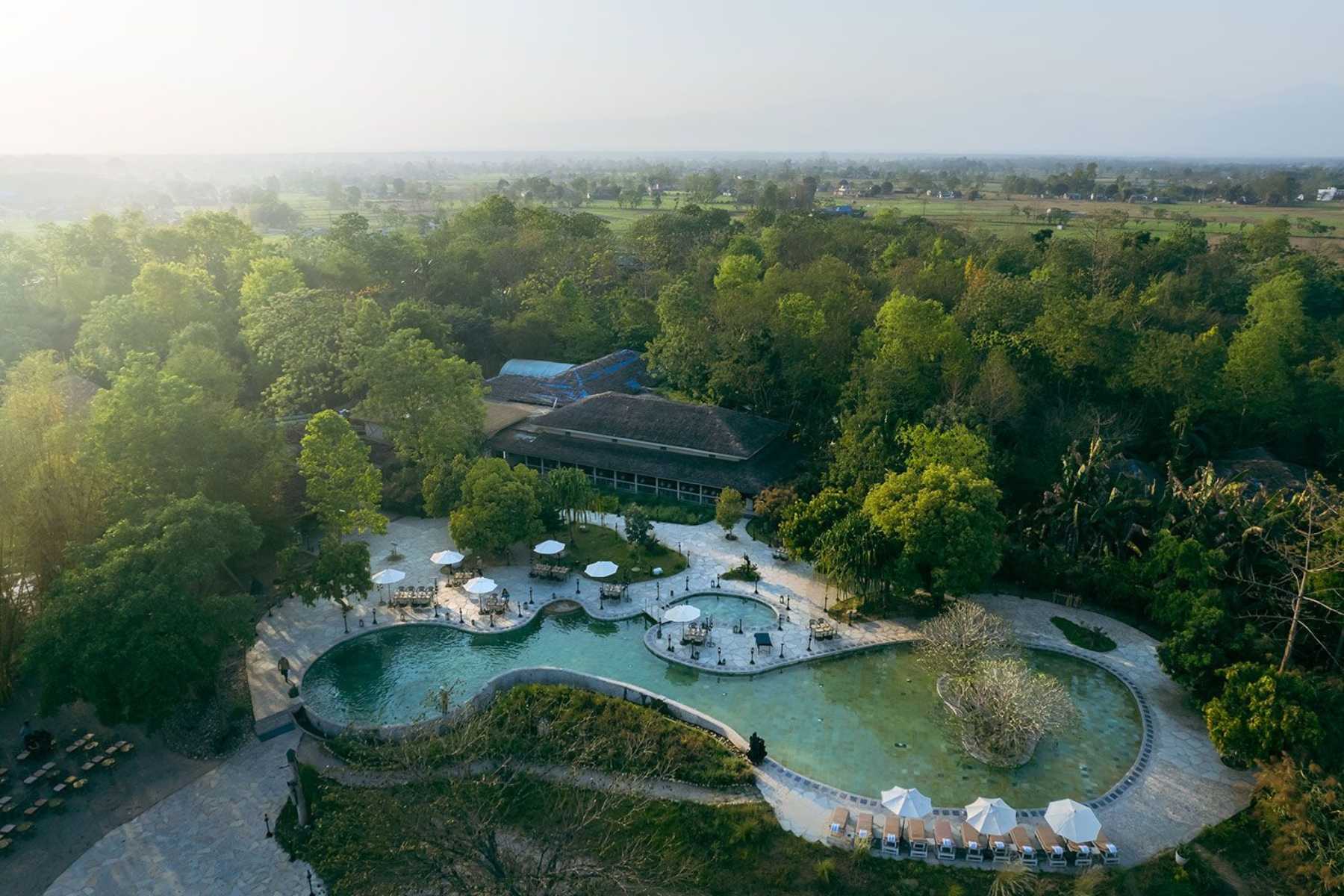
Barahi Jungle Lodge
Location: Chitwan National Park – 100 metres from the park boundary, across the Rapti River
Style: Eco-luxe thatched cottages across 12 hectares
Best for: First-time Nepal safari, families, bush-and-mountain combinations
Ultra-smart, eco-luxe Barahi Jungle Lodge is just 100 metres from Chitwan’s boundary, separated only by the gentle flow of the Rapti River. Sprawled across 12 glorious, emerald hectares, the thatched cottages are the Flintstones with a luxury twist, including hand-crafted bathtubs and private balconies with views over the tangled jungle scenery. There’s a magnificent, Ayurvedic spa for shoulder-loosening massages, but the experiences are what you’re really here for: jeep safaris – beginning with a river boat at dawn – to spy one-horned rhinos and Bengal tigers, treks to thundering waterfalls and local Tharu villages, and sundowners at the confluence of two rivers as jungle sounds fill the air.

Luxury hotels in Pokhara and the Annapurna region
Pokhara is Nepal’s adventure capital and the gateway to the Annapurna massif – and you certainly don’t have to be a hardened trekker to enjoy the views from one of its luxury lodges. Ranging from a lakeside eco-resort to a high-altitude trekkers’ base reached only on foot, with two ridge-top hideaways in between, they make up our favourite Pokhara hotels and Annapurna region lodges.
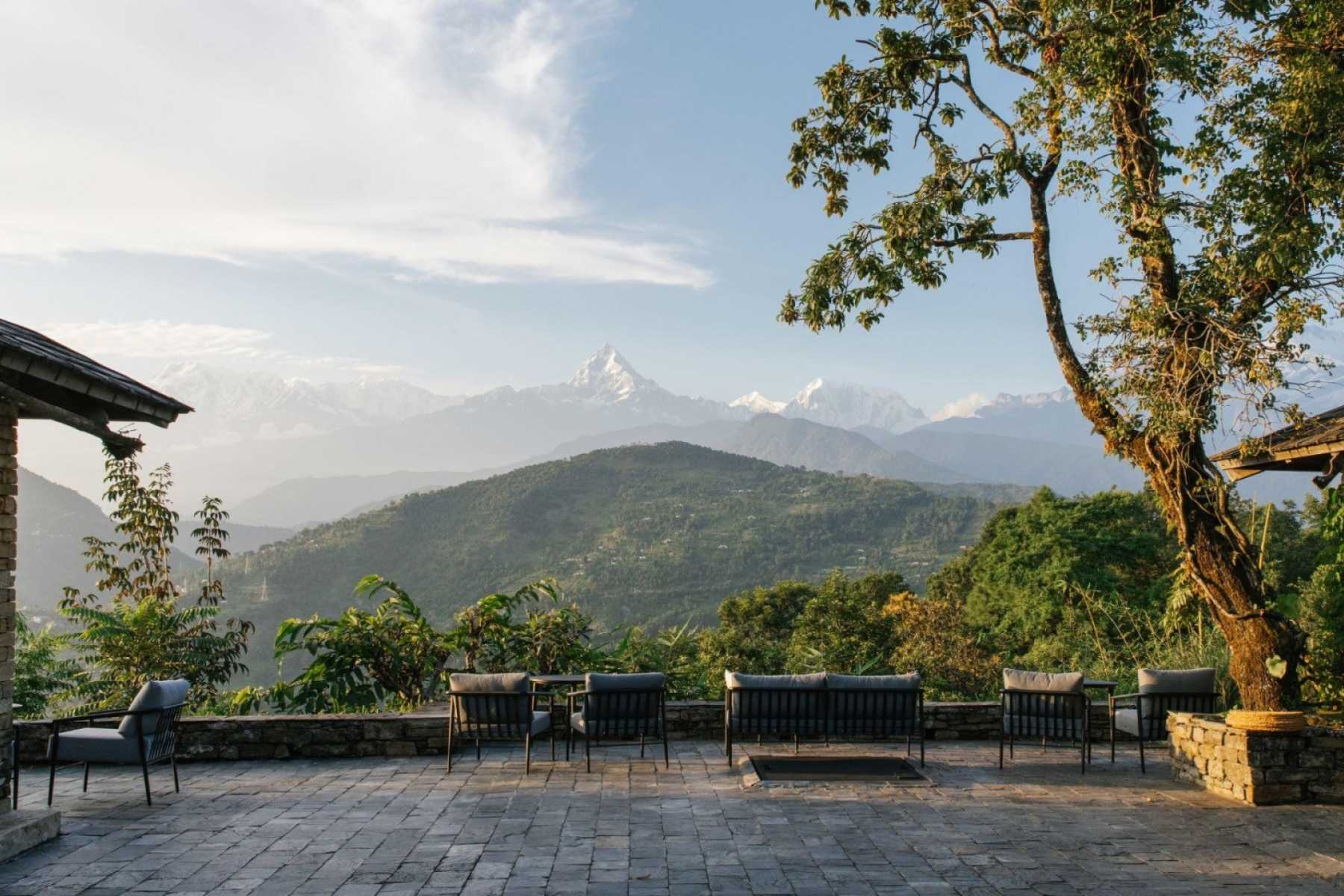
Tiger Mountain Pokhara Lodge
Location: Ridge above the Pokhara Valley, 1,000 feet up, 30 minutes from town
Style: Stone-built cottages arranged like a traditional Nepali village
Best for: Annapurna views without lacing up the boots; post-trek recovery
Opened in 1998 by Sir Edmund Hillary, the visionary behind Tiger Mountain Pokhara Lodge was Lt Col. Jimmy Roberts (visit his namesake library for a good read), a Gurkha officer who pioneered trekking tourism in Nepal. He spotted the ridge on which the lodge sits while organising the Royal Trek for King Charles in 1980 – and the rest is history.
“Arranged like a traditional Nepali village, the 18 stone bungalows are a staggering 1,000 feet above the Pokhara Valley with views of Machapuchare, Dhaulagiri, Annapurna, and Manaslu – and there are no TVs to distract you.”
– Carola Fresno, Latin America & Asia travel specialist
The swimming pool, ingeniously sited to reflect the snow-capped peaks, has earned international recognition and floating in it while gazing at the Annapurnas is exactly as good as it sounds.

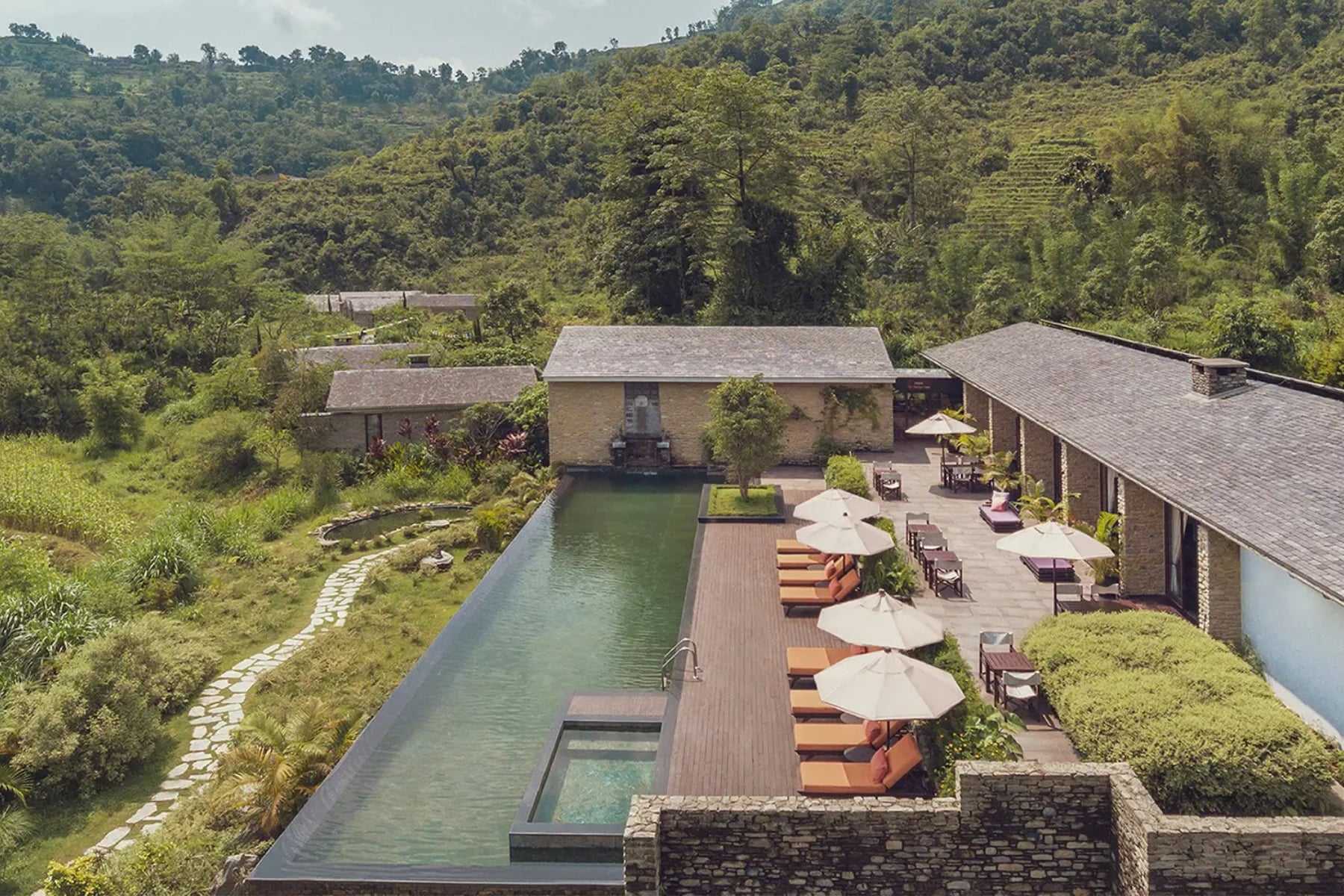
The Pavilions Himalayas
Location: Pokhara – Farm and lakeview properties, reached by dawn paddle across Phewa Lake
Style: Solar-powered eco-resort with private villas
Best for: Wellness, sustainability, and 8,000-metre vistas
Asia’s Leading Green Resort for 10 years running, The Pavilions is Nepal’s first self-sustainable luxury eco-resort. It runs on solar power, harvests rainwater, and converts waste to biogas and yet, it’s nothing less than luxurious with a capital L – think private villas with jacuzzi tubs, a spa stocked with custom Himalayan botanicals, and an infinity pool that gazes over the rice paddies below. The property itself is split into two, with either Farm or Lakeview rooms (reached by a dawn paddle across Phewa Lake), though both offer farm-to-table dining from the organic gardens, daily yoga, and spectacular 8,000-metre vistas of Mount Manaslu. The hotel takes its community work seriously too – 50 to 70% of profits are ploughed back into local projects including schools and training programmes.

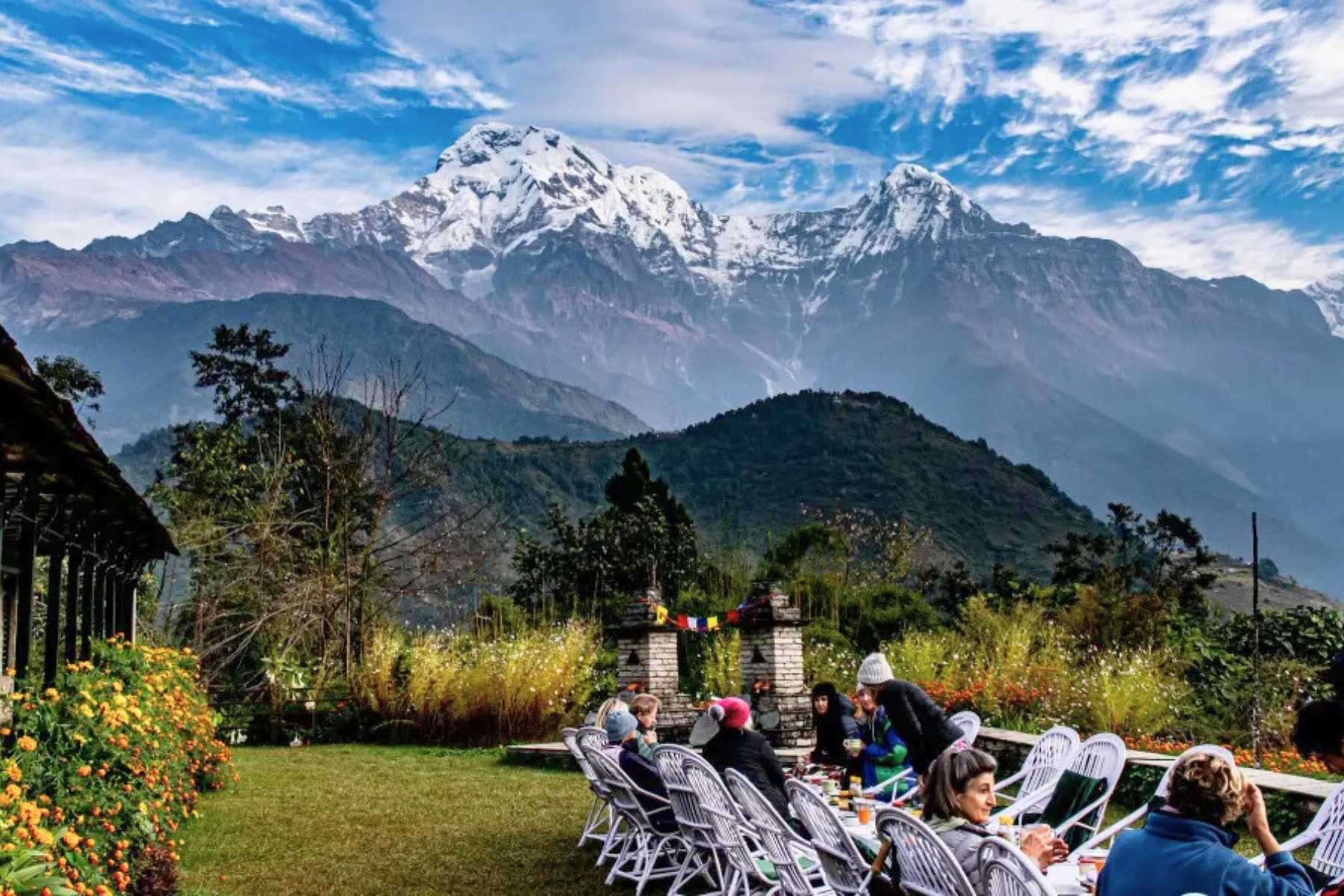
Ghandruk Lodge
Location: Ghandruk village, high in the Annapurna mountains
Style: Restored 19th-century Gurung house with modern wing
Best for: Comfort-loving trekkers, Annapurna Base Camp itineraries
Proof you can trek the Himalayas without roughing it, Ghandruk Lodge is built around a 19th-century Gurung house high in the Annapurna mountains. In the modern bedroom wing, you’ll find 18 en-suite rooms – each the perfect post-trek respite with their immaculate showers, thick blankets, and hot water bottles – and the views of Annapurna South, Machapuchare, and Gangapurna are well worth the journey up. Activities are focused on hiking and walking, always led by knowledgeable local guides, but if you have a moment to hang up your boots, Ghandruk town is a fascinating place to explore. For many years, it was a major recruiting centre for Gurkhah regiments and many of the retired soldiers still live in the slate-roofed houses.

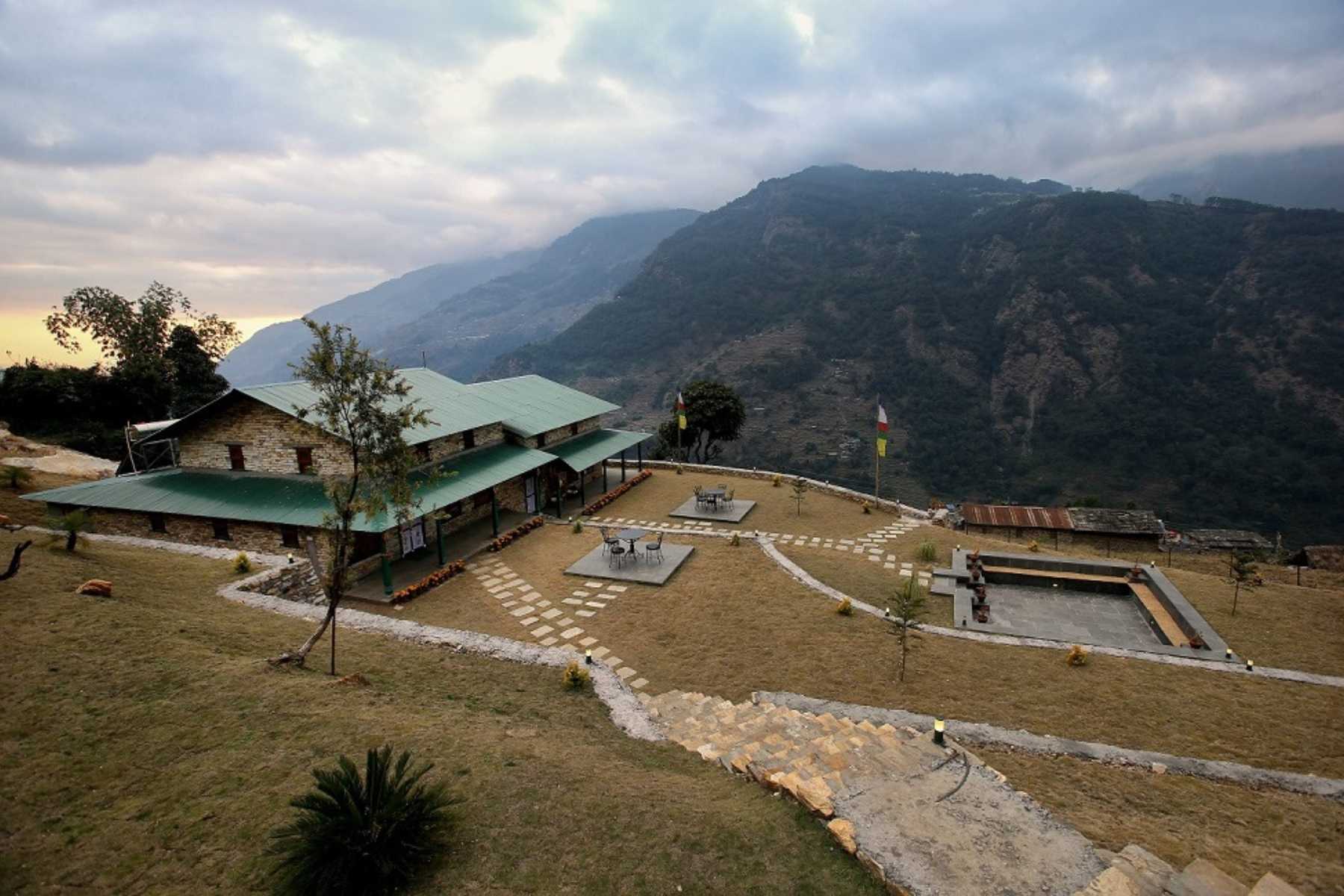
Landruk Lodge
Location: Landruk village, across the valley from Ghandruk
Style: Green-and-white bungalows facing the Annapurna range
Best for: Trekkers wanting quieter trails and honey-hunting stories
Across the valley from Ghandruk, reached by suspension bridge and a trail of stone steps through a flourishing rhododendron forest, are the green and white bungalows of Landruk Lodge. The 12 pretty rooms, terrace and dining areas are all orientated to face the peaks and the views are sublime – mist-swirled valleys, green, carpeted slopes and the mighty Annapurna’s snaking into the distance.
“The real draw is Landruk’s honey hunters, Gurung men who scale sheer cliffs on bamboo ladders to harvest honeycomb from the world’s largest honeybee, twice yearly in spring and autumn. Amazing to witness!”
– Carola Fresno, Latin America & Asia travel specialist
But even without the spectacle, dawn lighting up the Himalayas earns every step.

Remote retreats in Mustang and the Everest Region
For travellers willing to fly an extra leg (or two), Nepal’s most evocative luxury hotels sit in the country’s furthest corners – high above Jomsom in the Kingdom of Mustang, and tucked into the Everest Region. These are not casual additions: they require helicopter or small-plane transfers and a minimum-stay commitment, but they reward the effort tenfold.
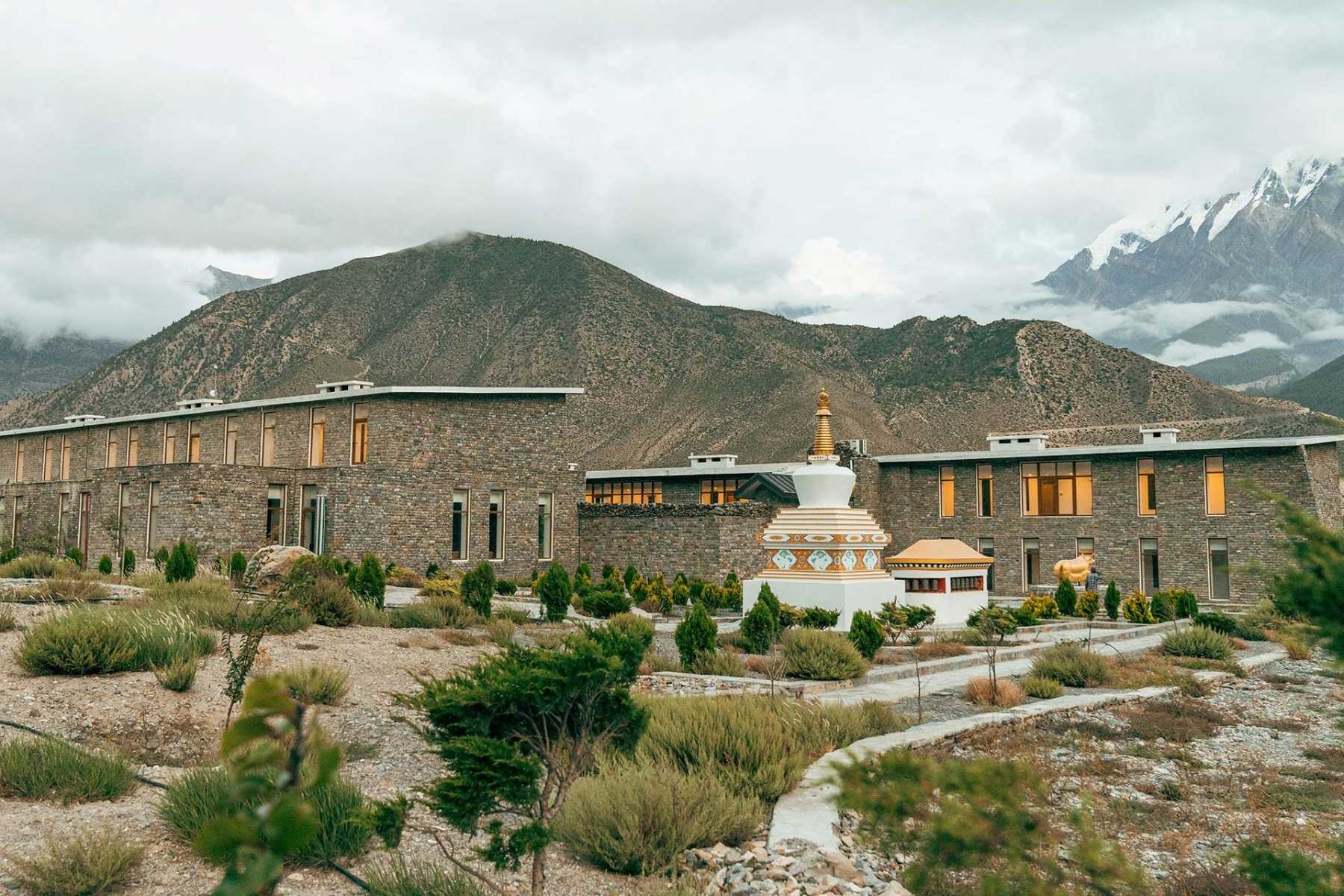
Shinti Mani Mustang
Location: Hillside above Jomsom, in the Kingdom of Mustang (the “Forbidden Kingdom”)
Style: Bill Bensley-designed all-inclusive mountain hotel
Best for: Design-led adventurers, wellness-meets-trekking, five-night-plus stays
Perched high in the mystical Kingdom of Mustang, just where the Kali Gandaki carves through dramatic, wind-sculpted cliffs, Shinta Mani Mustang is Bill Bensley at his most theatrical. From the outside it’s all fortress-like lines and earthy textures, but step inside and you’ll find saffron-hued textiles and tiger shaped rugs, floral-carved wood and yak-fur sofas, all set off by a serene rooftop terrace for cocktails and Himalayan sunsets. The 29 suites have floor-to-ceiling windows facing the Nilgiri range and the whole stay is all-inclusive on a minimum five-night basis.
“In between treks, pay a visit to Tsewang Gyurme Gurung, an 11th-generation practitioner of Tibetan medicine or ‘amchi’ based at the lodge. They’ll create a personalised wellness program using Himalayan plant and ancient, herb-based therapies for you.”
– Carola Fresno, Latin America & Asia travel specialist

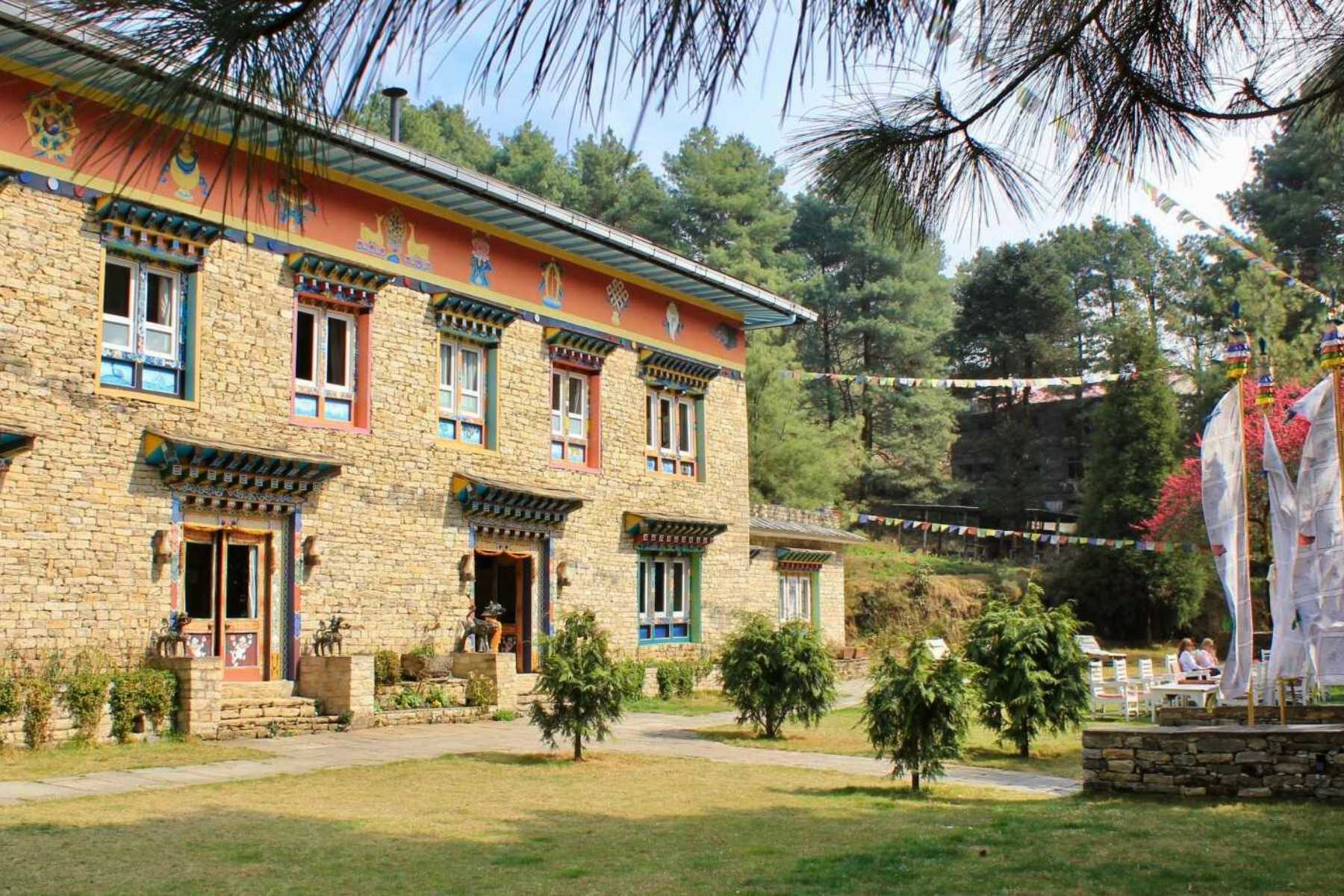
The Happy House
Location: Phaplu village, Everest Region – 45 minutes by helicopter from Kathmandu
Style: Restored traditional Sherpa home with hand-painted Thangka frescoes
Best for: Sherpa heritage, off-grid retreat, pre or post-Everest trek rest
Built in 1973 by an Italian count whose Everest expedition required 6,000 porters to carry his mountaineering kit and with a name coined by none other than Sir Edmund Hillary, who enjoyed staying during his return visits to Nepal, there are few properties in the world with a backstory quite like this one. Located in the teeny tiny village of Phaplu (45 minutes by helicopter from Kathmandu) and 2,500 metres above sea level, it’s actually a traditional Sherpa home, beautifully restored into a 10-room guest house. Inside, every wall is hand-painted with Buddhist Thangka frescoes by a Sherpa master and the roaring log fires and burning juniper, quiet meditation spaces, cosy treatment room and pretty garden complete with fluttering prayer flags all add up to make a place that is quite simply, heaven.

Frequently asked questions about staying in Nepal
Where should I base myself for a first-time trip to Nepal?
For most first-time visitors, we’d pair Kathmandu with one mountain destination and one jungle stop. The Dwarika’s in Kathmandu, Tiger Mountain Pokhara Lodge for Annapurna views, and Barahi Jungle Lodge in Chitwan is a classic three-stop itinerary that covers heritage, mountains, and wildlife without ever requiring you to lace up those trekking boots.
Do I have to trek to stay at properties in the Annapurna region?
Not at all. Tiger Mountain Pokhara Lodge and The Pavilions Himalayas both offer Annapurna views without any trekking required – you can drive (or paddle) right up to the door. Ghandruk and Landruk Lodge sit deeper in the mountains and do require some walking to reach, but they’re luxurious post-trek bases rather than rustic teahouses.
Which is the best heritage hotel in Kathmandu?
The Dwarika’s is the headline act – a 76-room living museum of rescued 13th-century Newari woodwork, with one of the best Nepali restaurants in the country attached. Nepali Ghar is a more boutique alternative in the heart of Thamel, and The Nanee in Bhaktapur is the choice for travellers wanting a slower, more immersive Newari town experience.
What’s the best lodge in Nepal for a honeymoon?
For sheer atmosphere, it’s hard to beat The Happy House in the Everest Region – it’s remote, intimate, and steeped in Sherpa heritage. Shinta Mani Mustang offers a more design-forward, adventure-laced experience. And for a softer landing with mountain views, Tiger Mountain Pokhara Lodge has been quietly hosting honeymooners since 1998.
Can you do a luxury safari in Nepal?
Yes. Chitwan National Park is the answer and Barahi Jungle Lodge is our personal pick. Expect dawn jeep safaris, river boat transfers, and the chance to spot one-horned rhinos, sloth bears, gharial crocodiles, and (with patience and luck) Bengal tigers. It pairs beautifully with a stay in Kathmandu and a mountain-view property in Pokhara.
How do you get to remote properties like The Happy House or Shinta Mani Mustang?
Both require an additional flight from Kathmandu. The Happy House is reached by a 45-minute helicopter transfer to Phaplu. Shinta Mani Mustang is accessed via a flight to Jomsom (with transfers included in the all-inclusive rate), often combined with helicopter or fixed-wing options. Both require a minimum stay – typically five nights for Shinta Mani Mustang – and are best planned with plenty of buffer for mountain weather.
When is the best time to stay at trekking lodges in Nepal?
October to November and March to May are the best time to visit with clear skies, comfortable temperatures, and reliable flight access to mountain airstrips. Properties like Tiger Mountain Pokhara Lodge typically close for the monsoon between mid-June and September. Winter (December to February) is cold but quiet, with crisp views; but the monsoon is best avoided unless you’re heading to Mustang, which sits in the rain shadow.
Are these properties suitable for families?
For the most part, they are. Barahi Jungle Lodge is particularly family-friendly with its jeep safaris and river activities, and The Pavilions Himalayas has space, pools, and a gentle pace. The Kathmandu hotels work well for older children interested in culture and food, while remote properties like The Happy House and Shinta Mani Mustang are better suited to couples or seasoned-traveller families given the altitude and transfer logistics.
From rescued woodwork in Kathmandu to a Bensley-designed mountain hut above Jomsom, Nepal’s hospitality scene matches its landscape for ambition and authenticity. Whether you’re soaking up a heritage hotel’s rescued woodwork or floating in an infinity pool with Manaslu in your sightline, you’ll find that Nepal does accommodation with the same thoughtful intensity it brings to everything else.
Whatever shape your Nepal trip takes, we can help you piece together the best places to stay along the way — get in touch and we’ll start planning.
Latest blogs


As seen in