The Capital of South Africa: Why There Are Three of Them (and How to Visit)
 With expert insights from Tessa Dancer, Travel Specialist
Here’s a pub quiz question that trips up almost everyone: what is the capital of South Africa? The honest answer to that is – well, it depends.
South Africa is the only country in the world with three capital cities, each responsible for a different branch of government. Pretoria handles the executive, Cape Town the legislative, and Bloemfontein the judicial. And no, Johannesburg – for all its size and swagger – isn’t one of them. South Africa’s three capital cities each have a distinct character, a distinct function, and a distinct place in the country’s history.
This unusual arrangement isn’t an accident or an oversight. It’s the direct result of a deeply fractured history, two bitter wars, and a hard-won compromise struck when the Union of South Africa was formed in 1910. Understanding how South Africa ended up with three capitals tells you a great deal about the country itself – its divisions, its diversity, and the careful balancing act that shaped modern democracy here.
Whether you’re planning a trip that spans all three or simply want to know what you’re looking at when you land in Cape Town, read on.
Why does South Africa have three capitals?
During the course of South Africa’s history, there were two significant wars between the British and the Afrikaners. Following the second – won by the British – the Union of South Africa was formed in 1910. The problem? Nobody can agree on where to put the capital.
Cape Town, with its long colonial history and established Parliament, had a strong claim. Pretoria, seat of the Transvaal government and the Afrikaner heartland, had another. Bloemfontein, capital of the Orange Free State, wasn’t about to be left out either. Rather than hand any single city, or its associated political faction, too much power, the newly formed Union struck a compromise: split the functions of government three ways, and give each region its own piece of the pie.
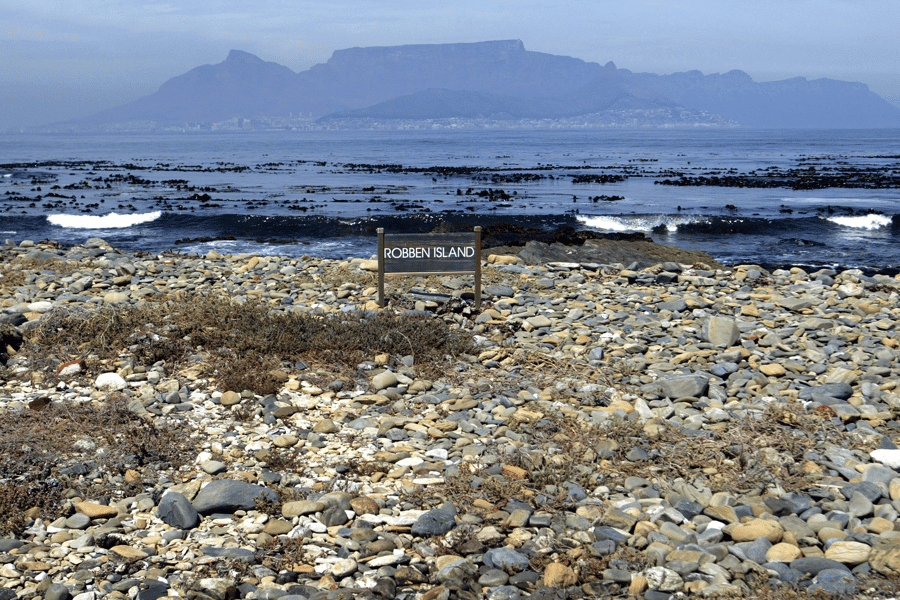
Take a tour on a visit to Robben Island, Cape Town
Cape Town: the Legislative Capital
Cape Town was already old when the rest of South Africa was still being mapped. Before the Dutch East India Company planted their supply station here in 1652, the Cape Peninsula had been home to the Khoisan people for thousands of years, trading with Arab and African merchants along the Indian Ocean routes. The Company’s arrival changed everything – and the influx of enslaved people from East Africa, India and Indonesia that followed gave Cape Town a deep cultural complexity.
During the Napoleonic Wars, Britain seized Cape Town and it became a strategic point for their control of sea routes. After it was briefly handed over to the Dutch, the British grew the city rapidly and it became a centre for settlers arriving in the country, especially during the 1820s. In 1834, slavery was abolished and freed slaves formed an important part of the city’s culture. During the 19th century, Cape Town was a base for Britain’s colonial expansion into the country’s interior, which led to numerous conflicts with indigenous peoples. The discovery of diamonds in Kimberley and gold in Johannesburg turned Cape Town into a gateway for fortune seekers. By 1910, it was the largest, most established city in the country – a natural home for Parliament, which has sat here ever since, and a prominent choice for the legislative capital.
In 1948, apartheid was instituted, a system of racial segregation that drastically changed the social fabric of Cape Town and majorly disadvantaged the majority of South Africa’s citizens. Following years of anti-apartheid activism, this regime finally ended in 1994, when South Africa’s first democratic elections were held.
Apartheid left its mark on Cape Town deeply and visibly. District Six, once a thriving, mixed community of 60,000 people, was razed and declared a ‘whites only’ area in 1966. The District Six Museum preserves what was lost and it’s one of the most moving visits in the city. Robben Island, where Nelson Mandela spent 18 of his 27 imprisoned years, is now a UNESCO World Heritage Site and an essential ferry ride across the bay.
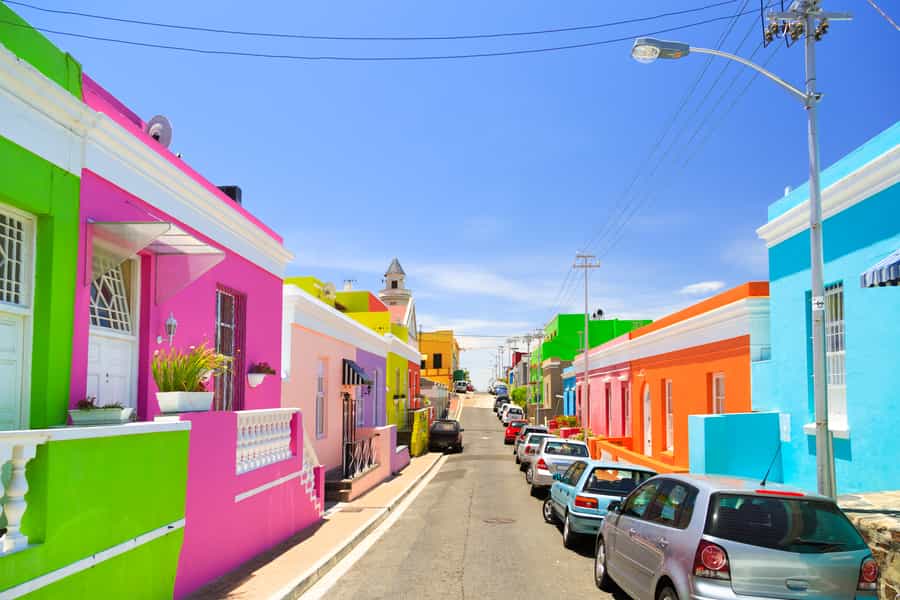
Colorful Bo-Kaap, also known as the Malay Quarter, Cape Town
Things to do in Cape Town
Today, Cape Town is one of the largest and most thriving cities in South Africa, drawing thousands of tourists to its shores every year. It is one of the best places to experience South Africa’s amazing diversity of scenery, activities and cultures. There is an endless list of things to do including fantastic hiking and watersports, award-winning dining and wine tasting, and a vibrant arts scene.
Explore the Bo-Kaap’s sherbet-bright houses and fragrant spice shops; the Castle of Good Hope – the oldest surviving colonial building in South Africa; and obviously, Table Mountain, because even in a city full of extraordinary things, this is still the one that stops you in your tracks.
The Company’s Garden is another significant spot that houses several historic landmarks including the South African National Gallery, Iziko South African Museum – one of the oldest in the country and home to extensive collections relating to South Africa’s natural and cultural history – and the Houses of Parliament.
“While you’re in the vicinity, it’s also possible (and encouraged) to add on a few days in the Cape Winelands, where you can enjoy wine tastings, cycles, beautiful scenery and sunny days galore.”
– Tessa Dancer, Africa travel specialist

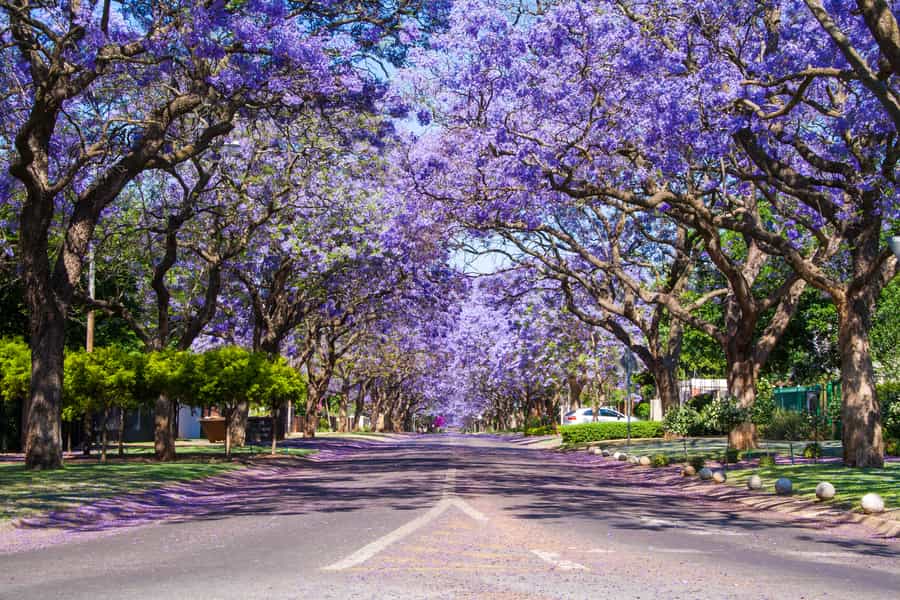
One of the many Pretoria streets lined with blooming Jacaranda trees
Pretoria: the Executive Capital
Pretoria is located in the Gauteng province of South Africa, about 45 minutes drive away from Johannesburg. Prior to the arrival of European settlers, the region was inhabited by indigenous peoples, predominantly the Ndebele and later, the Sotho-Tswana. Pretoria as we know it today was established in 1855 after the Voortrekkers (descendants of Dutch-speaking settlers also known as Afrikaners) migrated inland from the Cape Colony during the ‘Great Trek’.
In order to establish independence from British colonial rule, separate ‘Boer’ republics were set up like the Transvaal, of which Pretoria became the capital. Following the First Anglo-Boer War, the Afrikaners re-established the independent South African Republic. The discovery of gold in a nearby region led to an influx of British settlers, which resulted in rising tensions and questions of control once again, ending in the Second Anglo-Boer War.
In 1910, the Union of South Africa was formed and the inclusion of Pretoria helped appease Boer interests. When the apartheid era was ushered in, Pretoria was pivotal in the passing of many laws, while it was also the site of many anti-apartheid protests. The famous Rivonia Trial also took place in Pretoria, which led to the imprisonment of Nelson Mandela. It was a major area for negotiations between the ruling National Party and anti-apartheid leaders, and eventually, where Nelson Mandela was inaugurated at the Union Buildings.
Every October and November, something remarkable happens to Pretoria. The city’s 70,000-odd jacaranda trees erupt into bloom simultaneously, draping the streets in a canopy of violet and earning it the beloved nickname, Pretoria: the Jacaranda City.
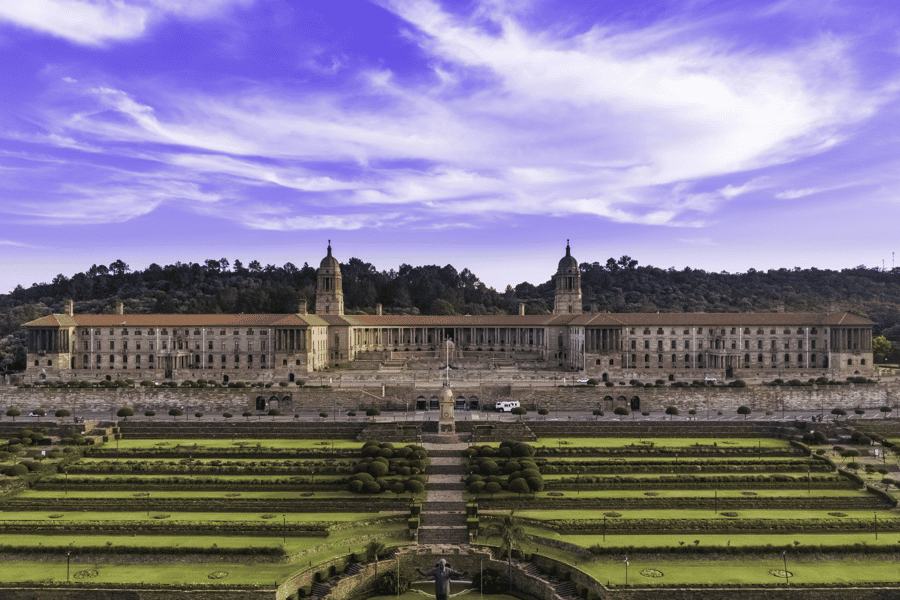
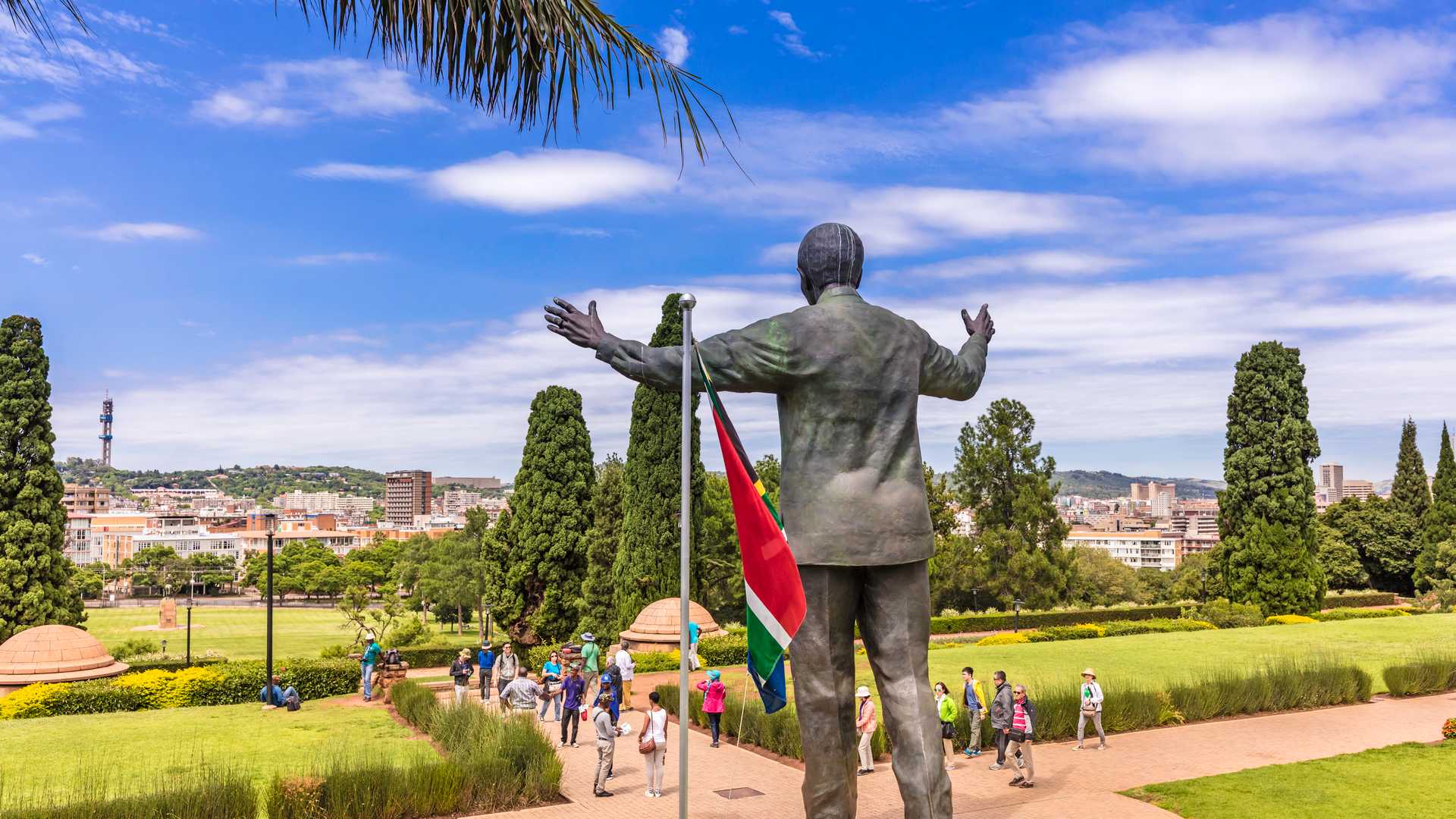
See the Union Buildings in Pretoria
Things to do in Pretoria
Perhaps Pretoria’s most prominent landmark perched on Meintjieskop Hill, the Union Buildings are well worth a visit to learn about their role in South Africa’s history and democracy, take a stroll around the beautifully manicured gardens, and admire the huge statue of Nelson Mandela. Church Square, in the city centre, surrounds you with the bones of another era entirely – the Old Raadsaal, Tudor Chambers and Palace of Justice, where the infamous Rivonia Trial took place. You can also pay a visit to the Transvaal Museum, home to an extensive collection of fossils including specimens from the nearby Cradle of Humankind – you can even go and see it for yourself.
“The buzzing city of Johannesburg isn’t far away (about 50km south), so why not combine Pretoria with a taste of Joburg’s art scene, learn a little more about South Africa’s past at the Apartheid Museum, and treat yourself to a meal at one of the city’s fine restaurants.”
– Tessa Dancer, Africa travel specialist

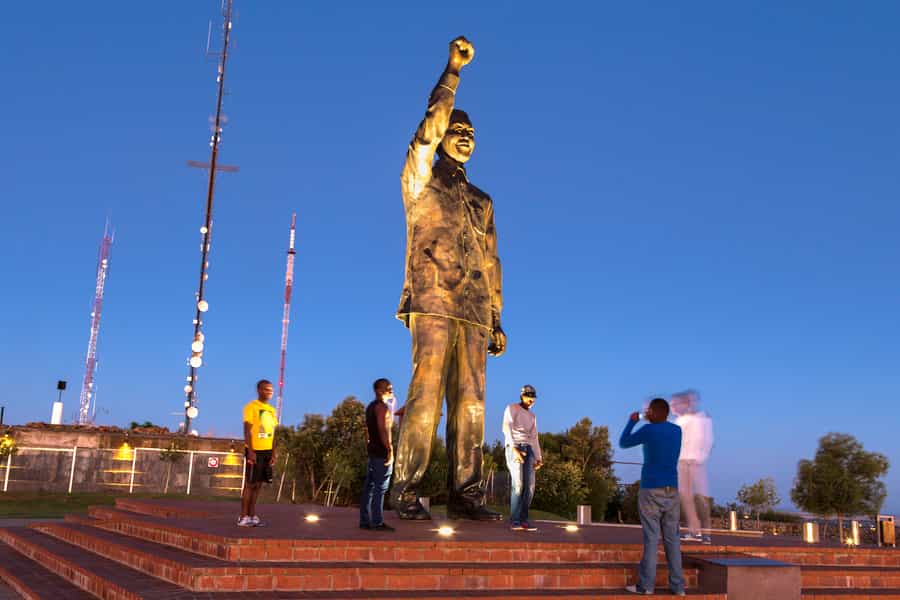
Statue of Nelson Mandela on top of Naval Hill
Bloemfontein: the Judicial Capital
In the centuries before Europeans arrived, the area around present-day Bloemfontein was inhabited by San hunter-gatherers and later, Sotho-Tswana peoples. Translated from Dutch, Bloemfontein means ‘Fountain of Flowers’ and refers to a natural spring that once flowed in the area. The city has also been called the ‘City of Roses’ and, in spring, the blooms are everywhere.
In 1846, the city was established as a British outpost, but by 1854, they had ceded control to the Boers. The region was declared as the independent Orange Free State and Bloemfontein became the capital. Bloemfontein played a critical role in the lead-up to the Second Anglo-Boer War and, after being captured by British forces, it was used as a base for their military operations. Following the establishment of the Union of South Africa, Bloemfontein has remained a predominantly Afrikaans city.
What to see in Bloemfontein?
Get to know South Africa’s history in even more detail at the National Museum, the Fourth Raadsaal (the former parliament building, which has some spectacular architecture) or the National Women’s Memorial, which remembers the women and children who died in British concentration camps. You can also pay a visit to the Naval Hill Planetarium or take a meandering walk through the Free State Botanical Garden, view the contemporary works at the Oliewenhuis Art Museum, and wander along the Loch Logan Waterfront.
Bloemfontein is centrally positioned – roughly equidistant from Johannesburg, Cape Town and Durban – making it a natural stopping point on a road trip rather than a destination in its own right. But it rewards the curious and it’s a great deal more interesting than most people expect.
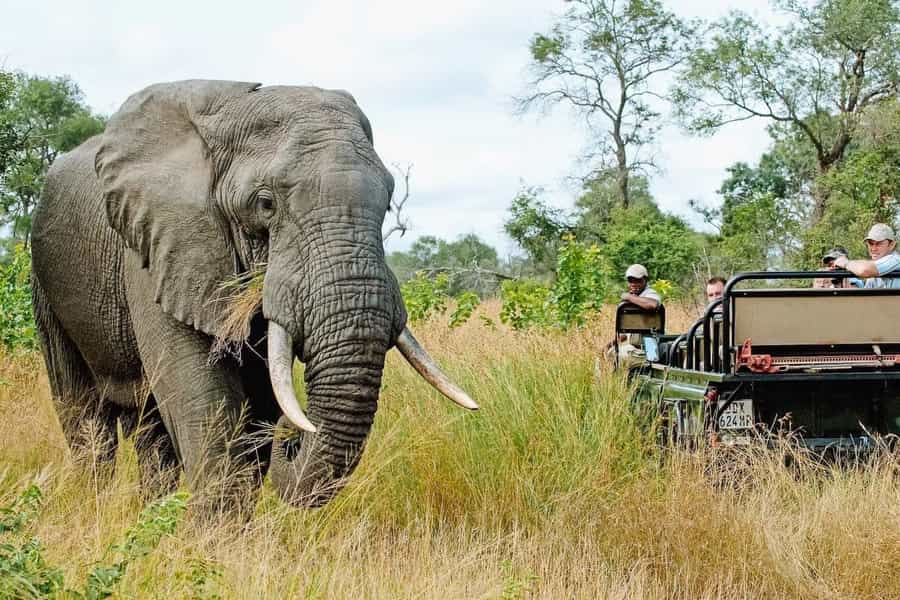
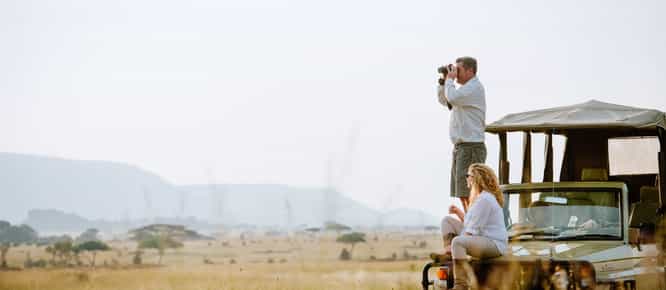
Spot elephants on a game drive in the Kruger
Combining all three: how to plan the trip
A trip that takes in all three capitals is essentially a greatest hits tour of South African history and it works very well as a road trip.
You could fly into Johannesburg, spend a day or two in the city (the Apartheid Museum is essential), then head north to Pretoria for two or three nights. Head south on the N1 through the Free State – it’s a long drive but a beautiful one – and spend a night or two in Bloemfontein. Then continue south to Cape Town, ideally with a stop on the Garden Route on the way (Knysna, Storms River, Plettenberg Bay are all excellent). If wildlife is the priority, make Kruger National Park your dazzling finale.

Frequently Asked Questions
What is the capital of South Africa?
South Africa has three capital cities. Pretoria is the executive capital (home to the President and Cabinet), Cape Town is the legislative capital (home to Parliament), and Bloemfontein is the judicial capital (home to the Supreme Court of Appeal). Constitutionally, no single city is designated as ‘the’ capital.
Is Johannesburg the capital of South Africa?
No, though it’s a very common assumption. Johannesburg is South Africa’s largest city by population and its economic centre, but it is not one of the three capitals. It does, however, host the Constitutional Court (South Africa’s highest court), which was placed there in 1994.
How many capitals does South Africa have?
South Africa has three capital cities – more than any other country in the world. Pretoria (executive), Cape Town (legislative) and Bloemfontein (judicial) each serve a different branch of government.
Why does South Africa have three capitals?
When the Union of South Africa was formed in 1910, following the Second Anglo-Boer War, distributing governmental functions across three cities was a political compromise designed to prevent any single region or faction from dominating. Pretoria got the executive, Cape Town the legislative, and Bloemfontein the judicial. It’s remained that way ever since.
Are Pretoria and Tshwane the same place?
Essentially, yes. Tshwane is the name of the Metropolitan Municipality that encompasses Pretoria and several surrounding areas. ‘Pretoria’ is still the common name for the city itself and you’ll see both used interchangeably.
Which capital city should I visit?
Cape Town for the full-fat experience: scenery, food, culture, wine and history all in one spectacular setting; Pretoria for its political history and proximity to Johannesburg and the Kruger; and Bloemfontein for something quieter and rather underrated.
Now that you’ve gotten to grips with South Africa’s capital cities, their history and major highlights, check out our guide to the best things to do in South Africa as a whole or read all about why you should visit now. Ready to plan your South Africa trip? Get in touch and we’ll help you put it all together.

Latest blogs


As seen in