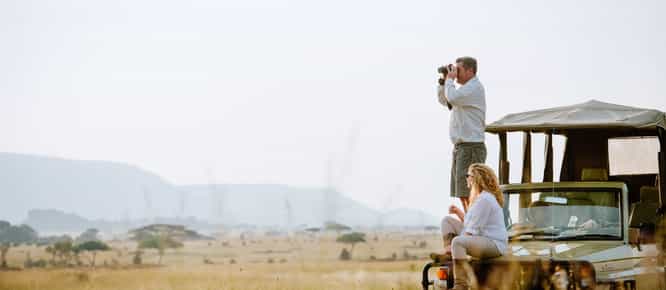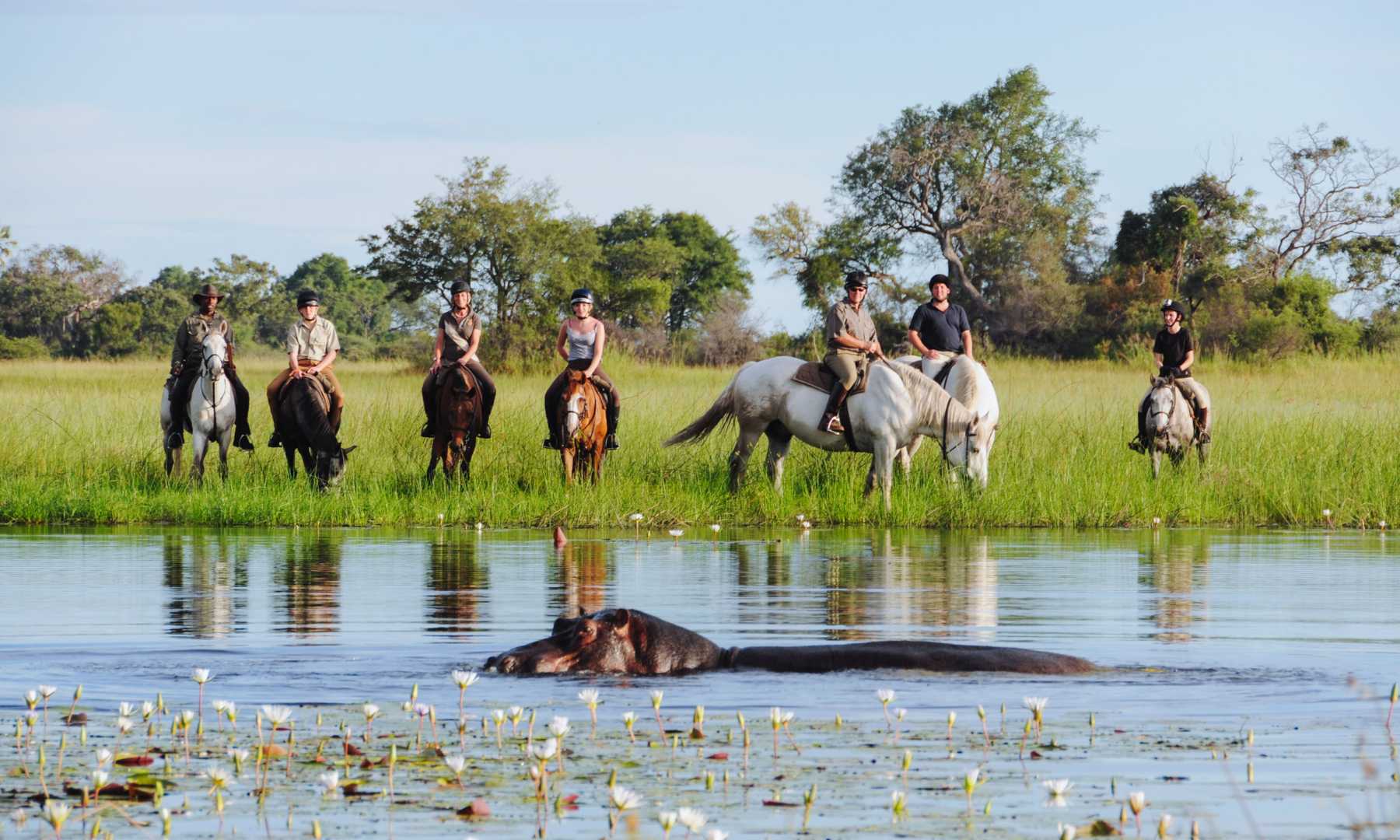
Why the shoulder season is a hidden-gem time for safaris in Botswana
Botswana’s shoulder season at a glance
- When is it? Roughly April to June, and again from late October to early November.
- What’s different? Fewer vehicles at sightings, lower rates (camps can drop prices by up to a third), and dramatic skies as the seasons shift.
- Who’s it best for? Photographers, birders, repeat safari-goers, and anyone happy to swap predictability for something a little wilder.
- The unexpected payoff? Front-row seats to one of Africa’s most spectacular and least-known wildlife events: the zebra migration to the Makgadikgadi and Nxai Pans.
Ask most people when to go on safari in Botswana and they will most likely declare July to October. And whilst it’s a beautiful time of year to travel to Botswana, full of those classic safari scenes of vast, shimmering floodplains, meandering river channels and lions lazing in the shade, it’s definitely not quiet – and it’s not particularly affordable sometimes either. In fact, it’s the in-between months, or the so-called ‘shoulder season,’ when things really get interesting…
Travelling in Botswana’s shoulder season is all about the drama – think spectacular stormy skies, fresh green grass, predators on the hunt and some of the most dramatic wildlife events on the continent. It also means fewer people and vehicles to contend with and, in many cases, lower rates. And in our eyes, this means a shoulder season safari definitely isn’t a consolation prize for those who missed the peak, but a completely different way to experience some of the most beautiful landscapes on the continent.
So, let us spill the beans on how the seasons actually work, why these supposedly “off” months are such a great time to travel, and where to be when the zebras, predators and thunderclouds roll in…
What are Botswana’s three safari seasons?
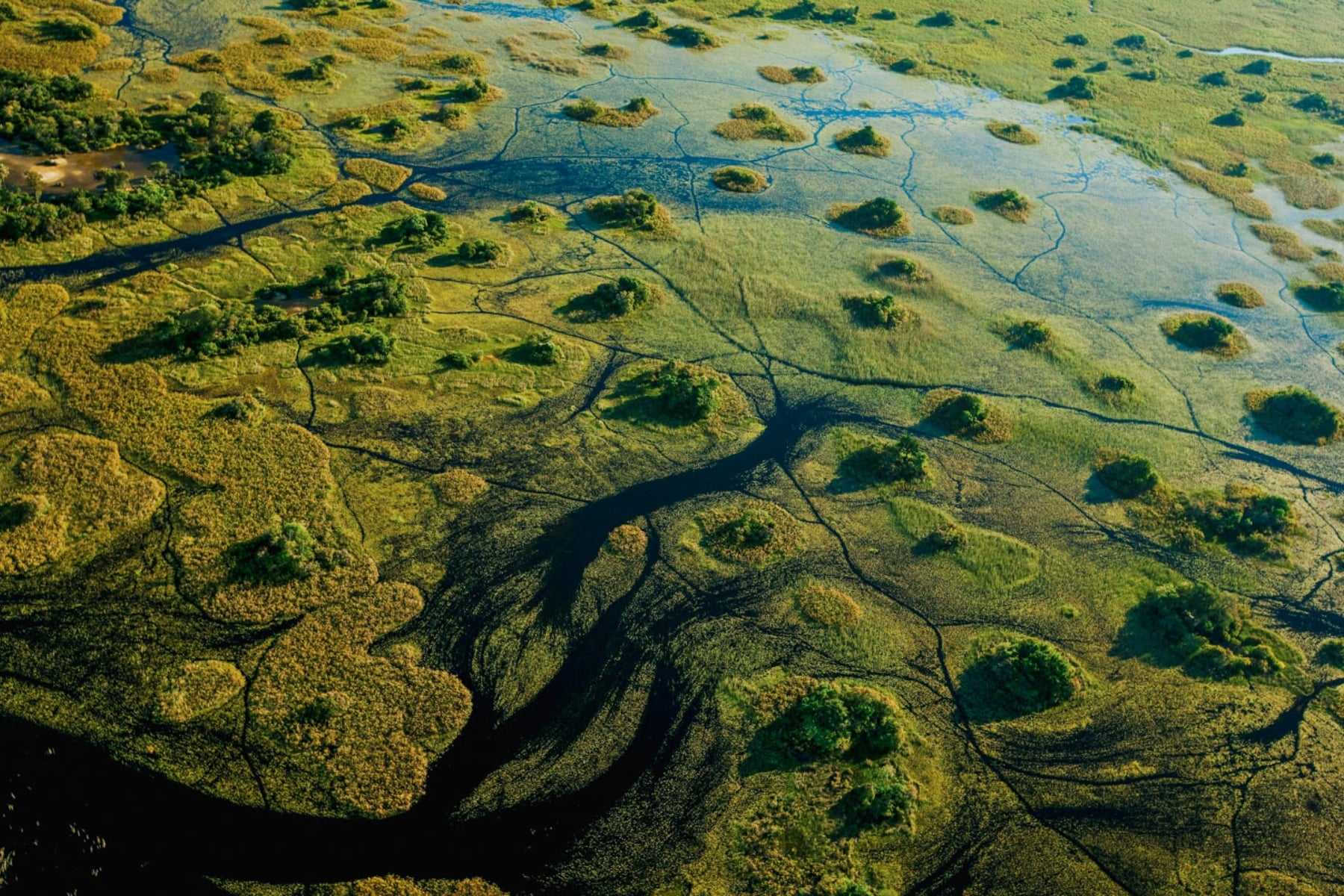
Botswana has three distinct seasons: the dry season (June to October), the green season (November to March), and the shoulder season that bridges them (April to June and late October to early November)
During the famous dry season, the rain is almost non-existent, waterholes shrink and animals flock to the rivers and watery channels making for fabulous photo opportunities and easy game viewing. It’s undoubtedly a fantastic time to visit, but it’s also when prices and visitor numbers are at their highest.
From November, the first big storms roll in and the green season begins. Landscapes turn electric green, pans fill with shallow water, migrant birds arrive, and afternoon clouds build into some of the most photogenic skies (and sunsets) you will ever see.
Botswana’s safari shoulder season slots between the two, so from around April to June and again around late October and early November. It’s best described as a transitional time when the grass has started to thin after the rains, game viewing is getting easier, temperatures are more comfortable, and visitor numbers are still much lower than in the peak dry months.
| Season | Months | Landscape | Wildlife highlight | Prices | Best for |
|---|---|---|---|---|---|
| Dry / High | June – October | Dry, sparse vegetation; animals cluster at water | Classic big-game scenes, river-front elephant herds | Highest | First-time safari-goers looking for iconic dry-season viewing |
| Shoulder | April – June, late Oct – early Nov | Transitional — drying grasses, comfortable temperatures | Excellent game viewing without the crowds | Often 20–30% lower than peak | Travellers who want value, quiet, and dramatic skies |
| Green | November – March | Lush, electric green, photogenic storm skies | Calving, migrant birds, zebra migration, predator action | Often 30%+ lower than peak | Photographers, birders, repeat visitors who’ve “done” peak |
Why choose Botswana’s shoulder season?
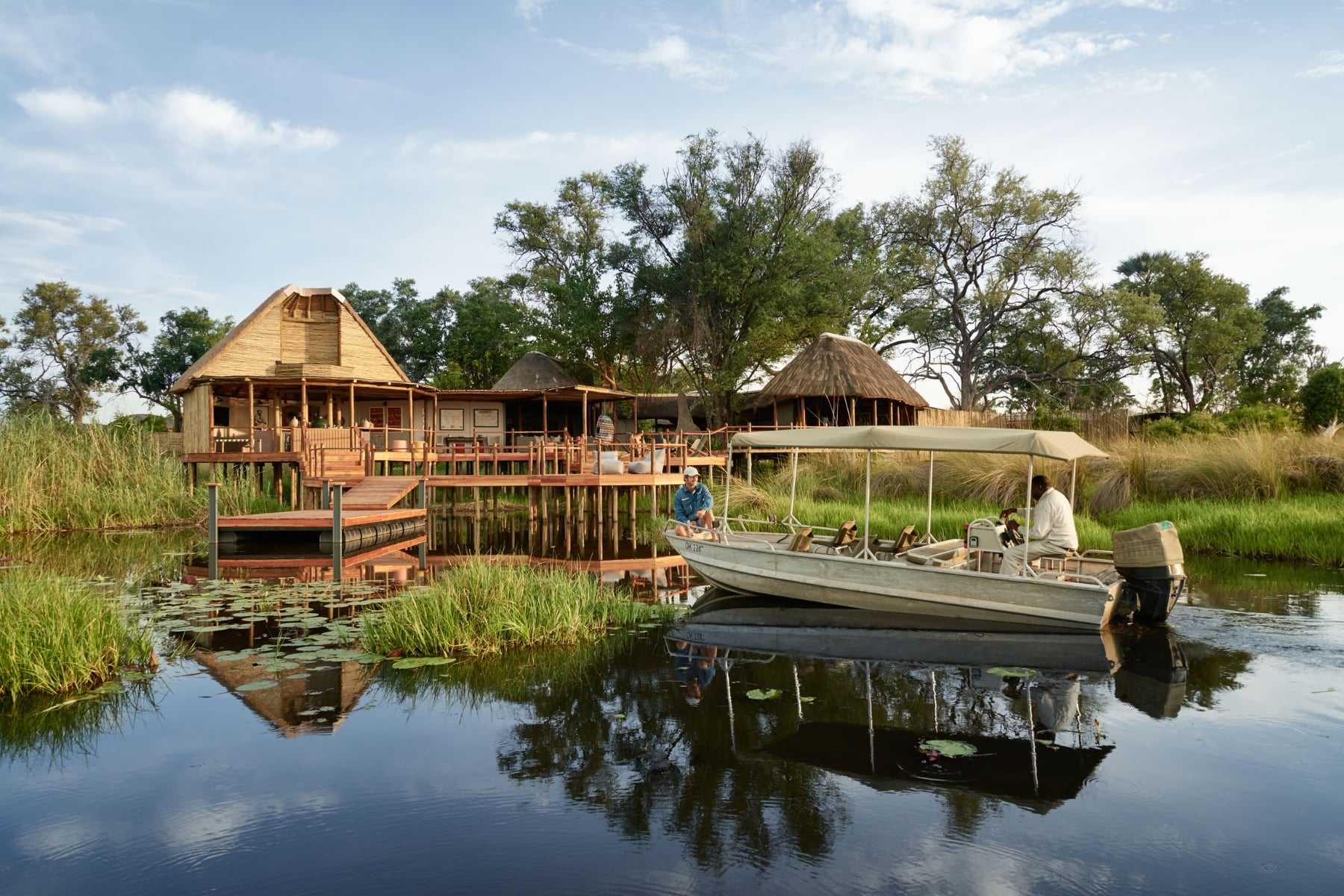
Botswana’s shoulder season is when the country feels at its wildest. There are fewer vehicles at sightings, more stretches of river or floodplain all to yourself, lower lodge rates, and some of the continent’s most spectacular wildlife events, without the high-season crush. Oh, and guides who have a little more time to spend over the best sightings.
Then there’s the cost. Botswana is famously one of the most expensive destinations on the continent (all those remote airstrips and tiny camps add up), but during the shoulder and green seasons, many lodges drop their prices (sometimes by as much as a third!) and waive single supplements. That saving can mean the difference between a three-camp itinerary and a one-camp compromise, or between a good lodge and the fabulous one that you had your heart set on.
Finally, the wildlife – Botswana’s green and shoulder seasons are certainly not dull! This is the time of zebra migrations and when babies are born in their thousands, predators roam in search of a good feast, and birding is the best you will ever find.

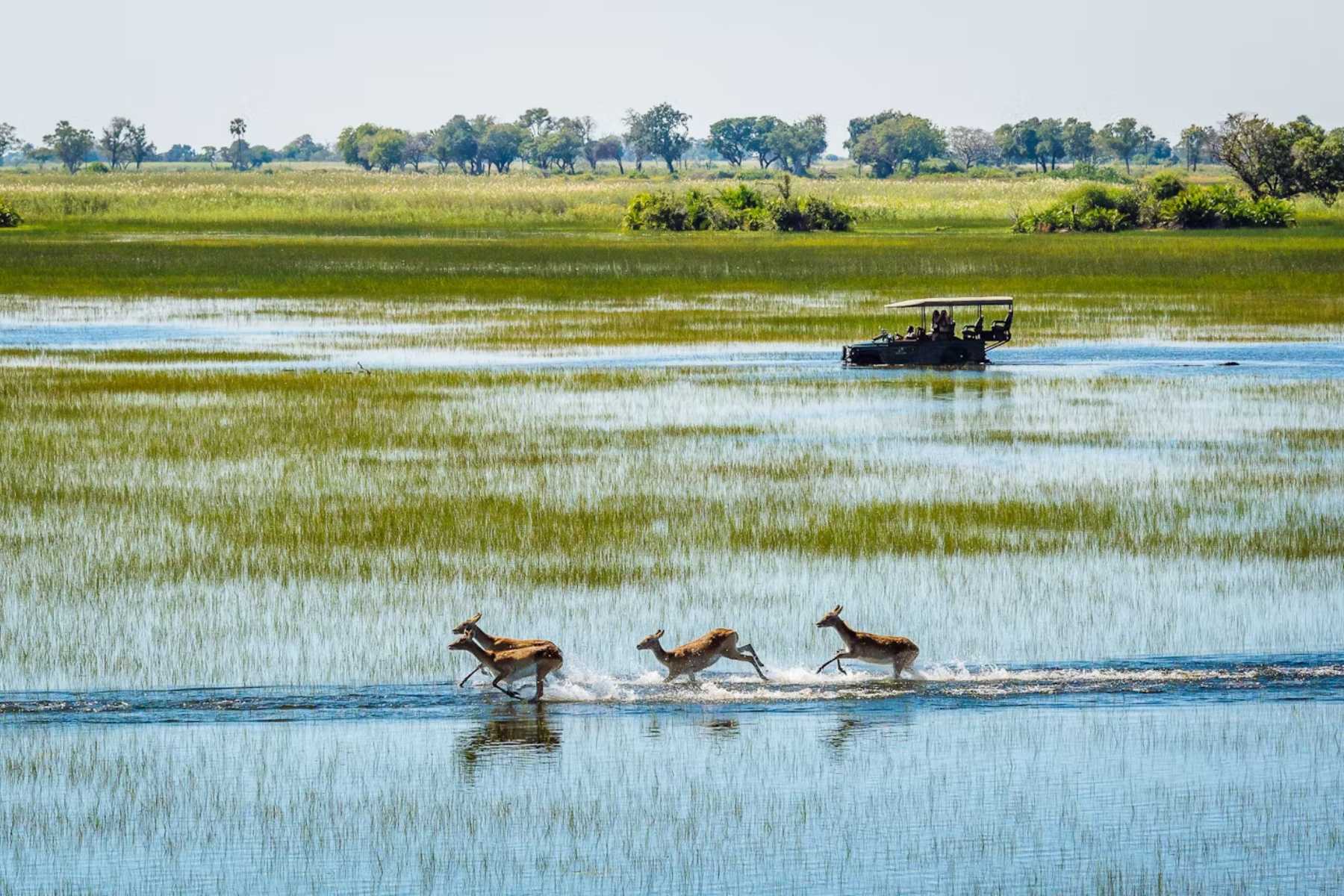
Where should you go in Botswana during shoulder and green season?
Each of Botswana’s main safari regions takes on a different character in the shoulder and green seasons. Here are our favourite picks for each, and what to expect when you get there…
When is the Okavango Delta best in shoulder season?
April and May are the Delta’s sweet spot in shoulder season. The channels are starting to fill, game viewing improves week by week, and you’ll have many of the waterways to yourself before the peak-season crowds arrive.
In the heart of the rains, the Okavango is as fresh as a recently opened water lily. Emerald green grass pushes through the dry, dusty ground, the seasonal pans fill up with water, frogs croak all night and migrant birds turn every tree into a kaleidoscope of colour. On the ground, the antelopes drop their young, and of course, the predators are never far away…
The Delta’s waters are a little counterintuitive in this sense. Local rainfall arrives in the green season, but the great flood from Angola only pushes into the inner Delta a few months later. That means early shoulder season months like April and May can be an excellent sweet spot, when the channels are starting to fill and game viewing improves every week, but before high-season crowds arrive.
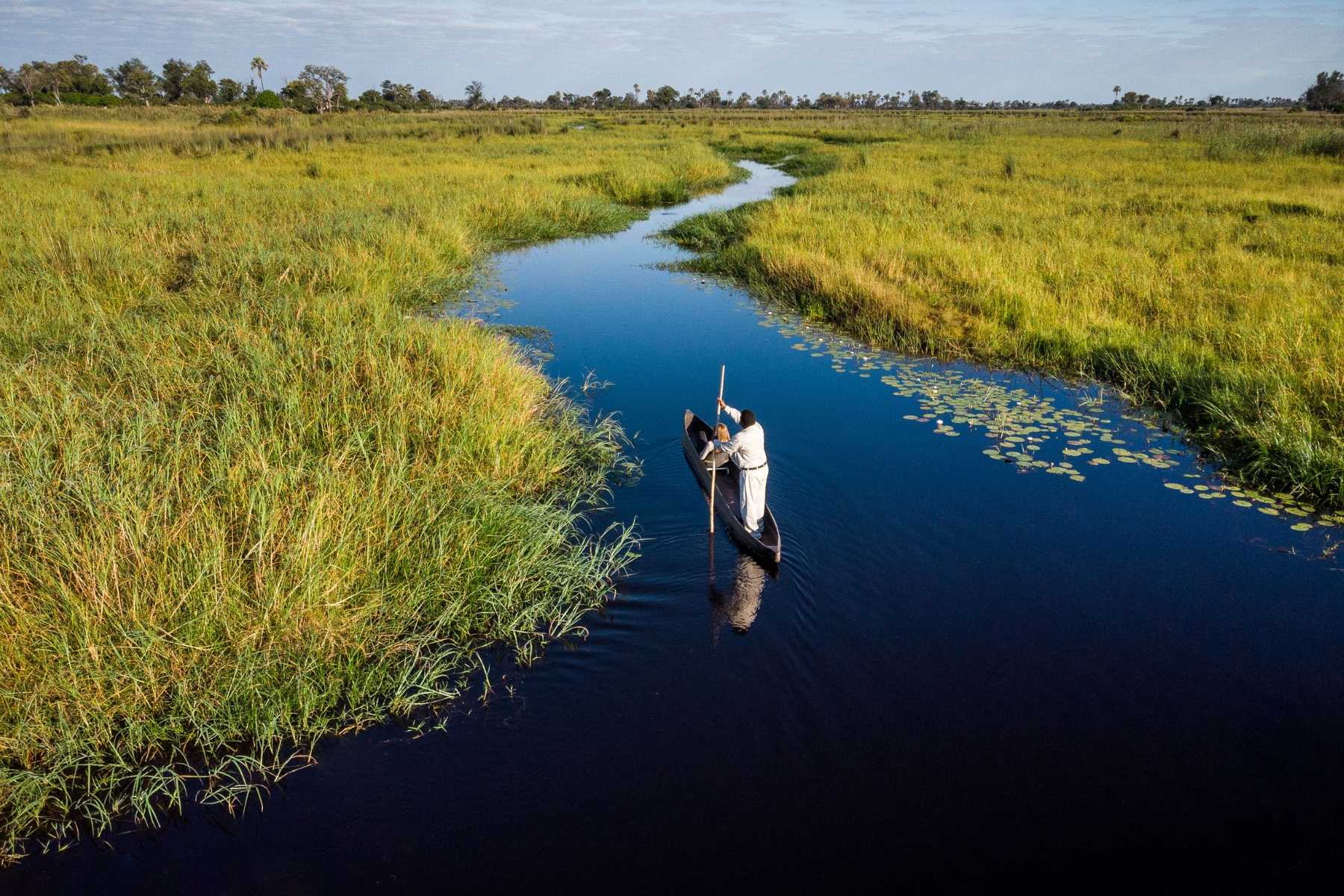
In terms of accommodation, a mixed-activity camp that offers both land and water experiences, or a permanent-water camp is a good choice. At places like Sable Alley, Xigera, Camp Moremi and Kwara, you can combine mokoro excursions and boating in the languid channels with land-based drives that make the most of the lush, green landscape and good resident game. In these camps that are open all year, you’ll often find excellent predator viewing with the added drama of storms and new life on the floodplains.
And, if you’re wrestling with the “When is the best wildlife period in the Okavango Delta?” question, the honest answer is that it depends what you want. Shoulder and green seasons swap the iconic dry landscapes of the BBC documentaries for saturated greens, clouds, babies, and far fewer people.

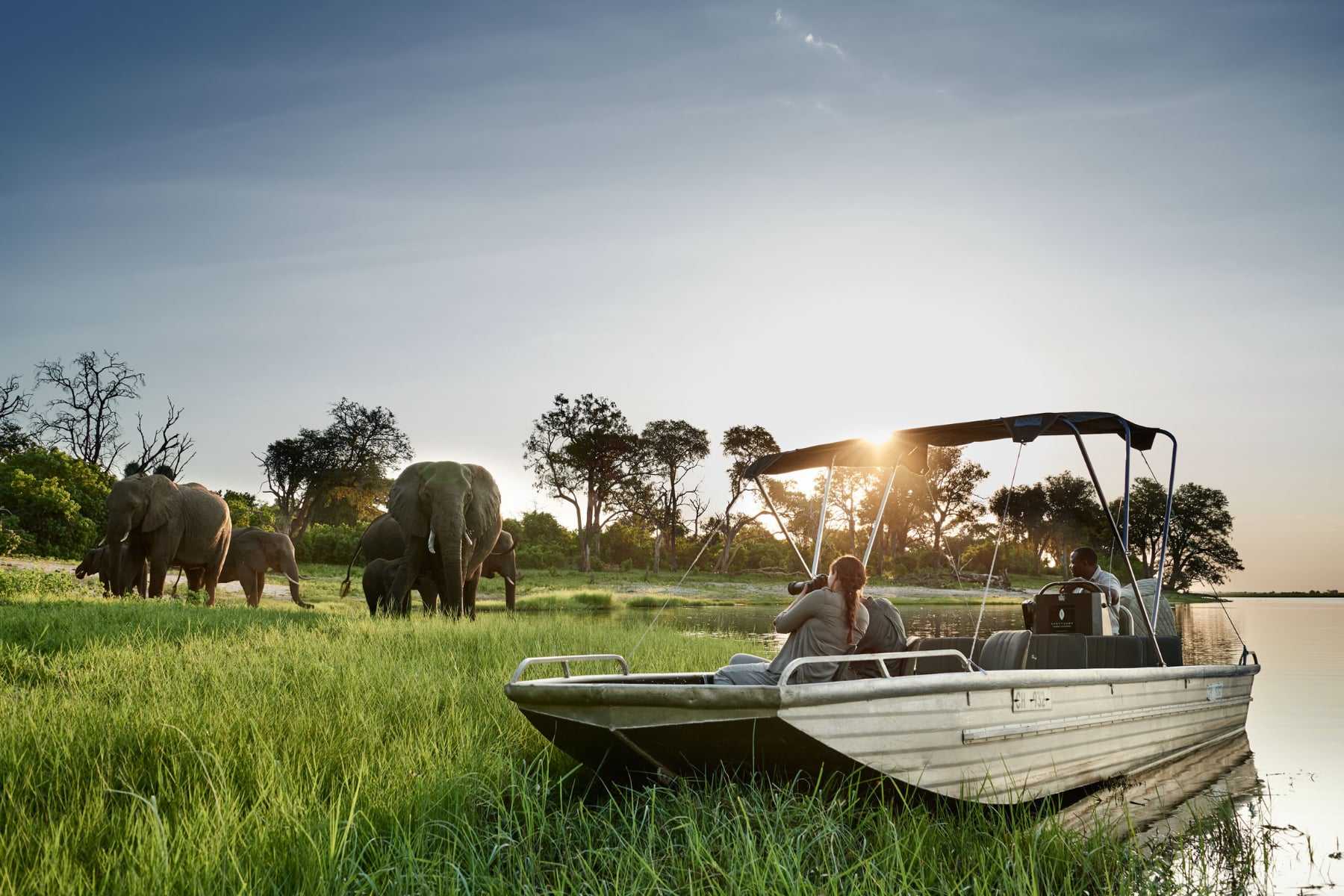
What are Chobe and Savuti like in green and shoulder season?
Most people know Chobe for its classic dry-season scenes: elephant herds packed along the river, boats floating through the channels at sunset, and big cats hunting in the dust. If you’re travelling in the high season, that is exactly what you’ll find, but visit during the green and shoulder seasons and you’ll find something slightly different.
From November onwards, the first rains appear and the riverbanks turn green, impala lambs appear in the thickets, migrant birds arrive, and the famous Chobe elephant herds begin to spread out. These early storms also kick-off one of the continent’s least-known yet utterly spectacular events: the zebra migration, in which the striped ungulates begin to move away from their dry-season haunts en-masse towards the Kalahari desert and the pans.
During the shoulder season in Chobe, we recommend basing yourself at a year-round lodge like Chobe Game Lodge. You’ll still see elephants, buffalo and plenty of predators, just without the high-season crush. The lodge itself also has distinct green, shoulder and peak season rates and there are good savings available outside the peak season.
Further south in Savuti, around Savute Safari Lodge and similar camps, short, intense summer downpours transform the marsh into a patchwork of water and grass. Zebra and other plains game pass through as part of their wider wanderings between the Delta, Chobe and the pans, and lions and hyenas are never far behind.

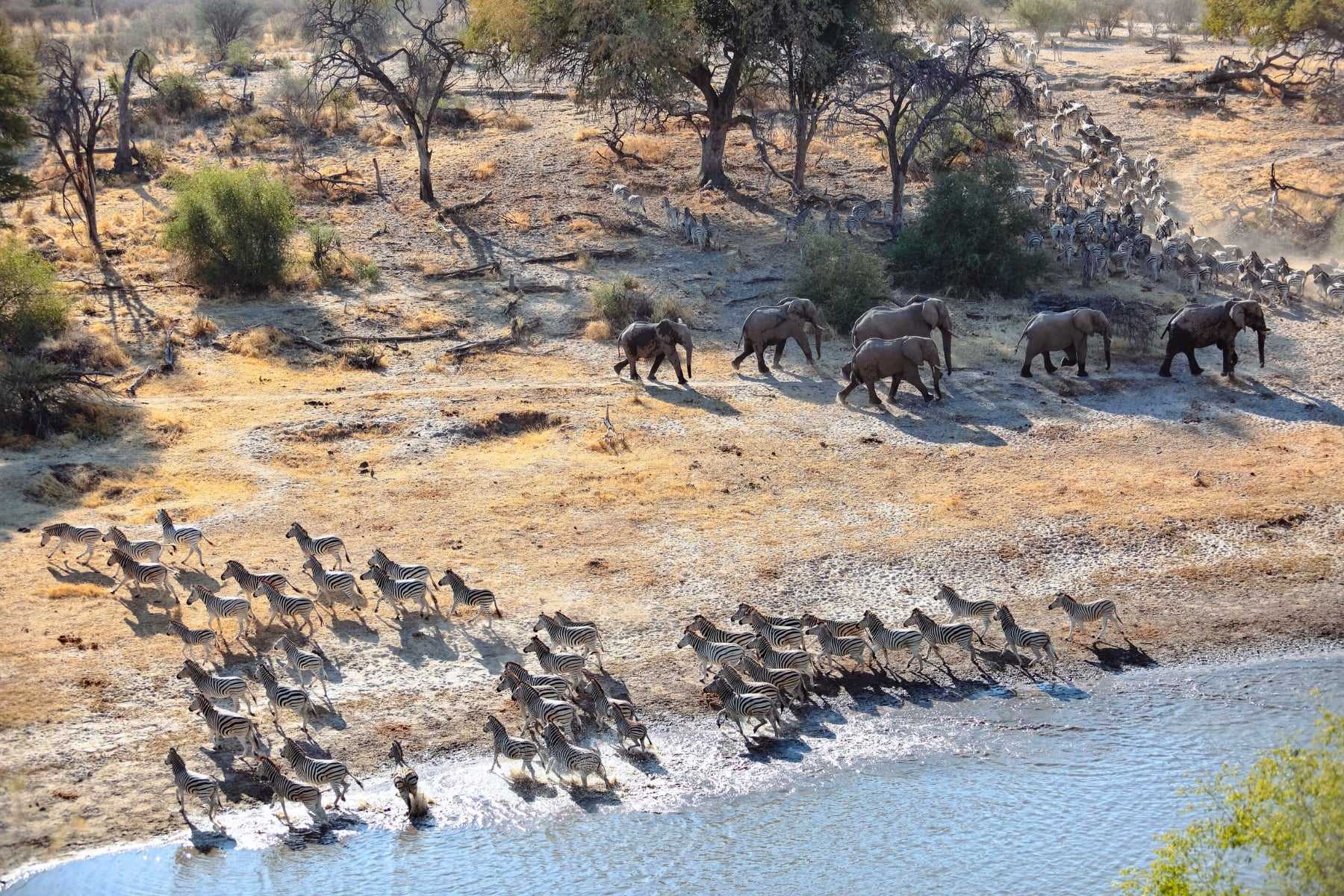
Makgadikgadi and Nxai Pan: Africa’s least-known migration
The Makgadikgadi and Nxai Pans burst into life with the first rains in November, drawing tens of thousands of zebra and wildebeest into the salt flats for one of Africa’s most overlooked migrations. The herds make the journey from the Chobe River region to the Makgadikgadi and Nxai Pans, lured by fresh grasses and shallow new water. It’s one of the longest linear land-mammal migrations on the continent, stretching hundreds of kilometres, and it happens almost entirely outside Botswana’s peak safari season.
Throughout the dry months, enormous numbers of zebra and other grazers spend their time around the Chobe River, the Boteti and the fringes of the Okavango. Then, at the onset of the first rains in November, the rains transform the blindingly-white salt flats into shallow, shimmering lakes and carpets of short, nutritious grass. As a result, tens of thousands of zebra – joined by wildebeest and other plains game – pour into the Makgadikgadi and Nxai Pan in search of these fresh grasses. The event is one of Africa’s longest linear land-mammal migrations, stretching hundreds of kilometres between Chobe and the pans, and it happens in the so-called “off-season,” when most people are looking the other way.
And the herds aren’t simply following their noses to the grass – they are also giving birth. Once the zebra have munched sufficient nutrients and the water is pooled in every hollow, foals, fawns and calves arrive in huge numbers in a synchronised birthing system designed to increase the odds of survival for the young. Even so, lions, cheetahs, hyenas and wild dogs all take advantage of the rich pickings, and many have their own cubs and pups at this time of year, so the drama runs both ways. It’s here, with storm clouds looming on the horizon and a melee of black-and-white stripes everywhere you look, that you start to understand why a Botswana safari in the quieter months can be the most spectacular of all.
Accommodation-wise, camps like Nxai Pan Camp and Migration Expeditions sit right in the path of the action, open specifically for this period, while Camp Kalahari on the Makgadikgadi side offers a relaxed, family-friendly base for watching the herds move and meeting the local meerkats. Jack’s Camp is also a fabulous choice – watching the storm clouds roll in from your private plunge pool is worth every raindrop!
Safari-wise, the pans reward people who are prepared for a bit of adventure. Roads can be muddy, storms can roll in with theatre-worthy speed, and you need a certain tolerance for getting slightly splashed. In exchange, you get front-row seats to a migration that most visitors to Africa never see.

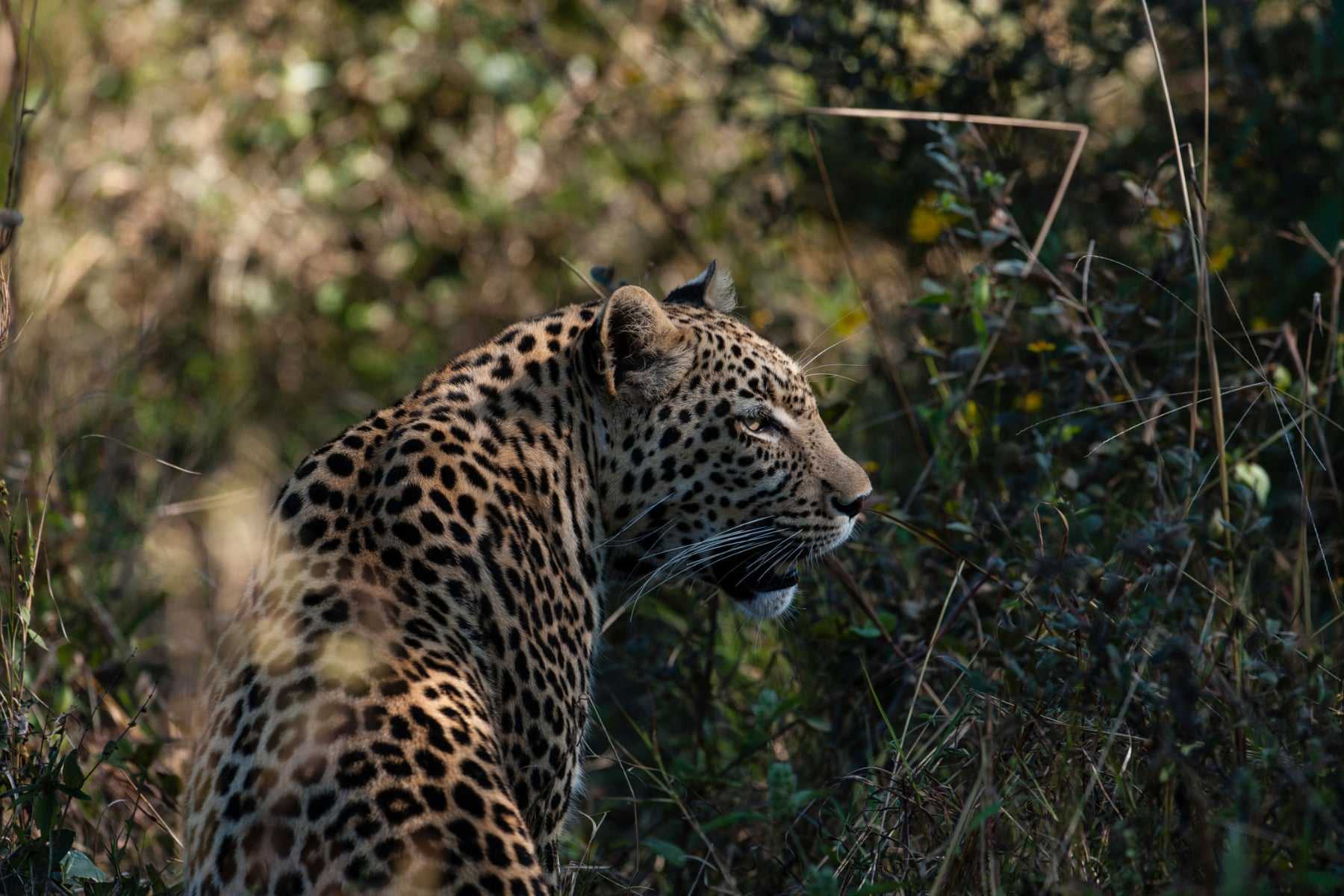
Is the Okavango Delta’s best wildlife period only during the dry season?
No. While the dry season delivers the classic big-game viewing the Delta is famous for, the shoulder and green seasons offer calving, birdlife, predator action, and dramatic skies, all with a fraction of the crowds.
It’s easy to assume that the dry season is always the best wildlife period in the Okavango Delta. And in many ways, it’s true… By August and September, the floodwaters are high, the vegetation is dry and low, allowing you to see for miles, and animals cluster around any permanent water, providing excellent spotting opportunities.
But “best” can mean different things for different people. In the early shoulder season months of April and May, the grass is just thinning after the rains and temperatures are dropping, but the migrant birds are still around and the floods are just beginning to arrive. Boat cruises and mokoro trips can be wonderfully peaceful, and game viewing improves week by week – all without the peak-season traffic.
In the heart of the green season, from roughly December to March, you trade density for drama. You might need to work a little harder to find animals in the thick, luscious vegetation, but when you do, you’ll often be alone at the sighting. Calving seasons for many species fall in this window, birding is truly fantastic and the moody skies and storm fronts create the kind of photographic conditions dry-season visitors never see.
The truth is that there isn’t one single “best” month for the Delta. There’s the dry season that everyone talks about, and then there’s the shoulder and green seasons that most fall in love with as soon as they’ve experienced them.

Who is Botswana’s shoulder season best for?
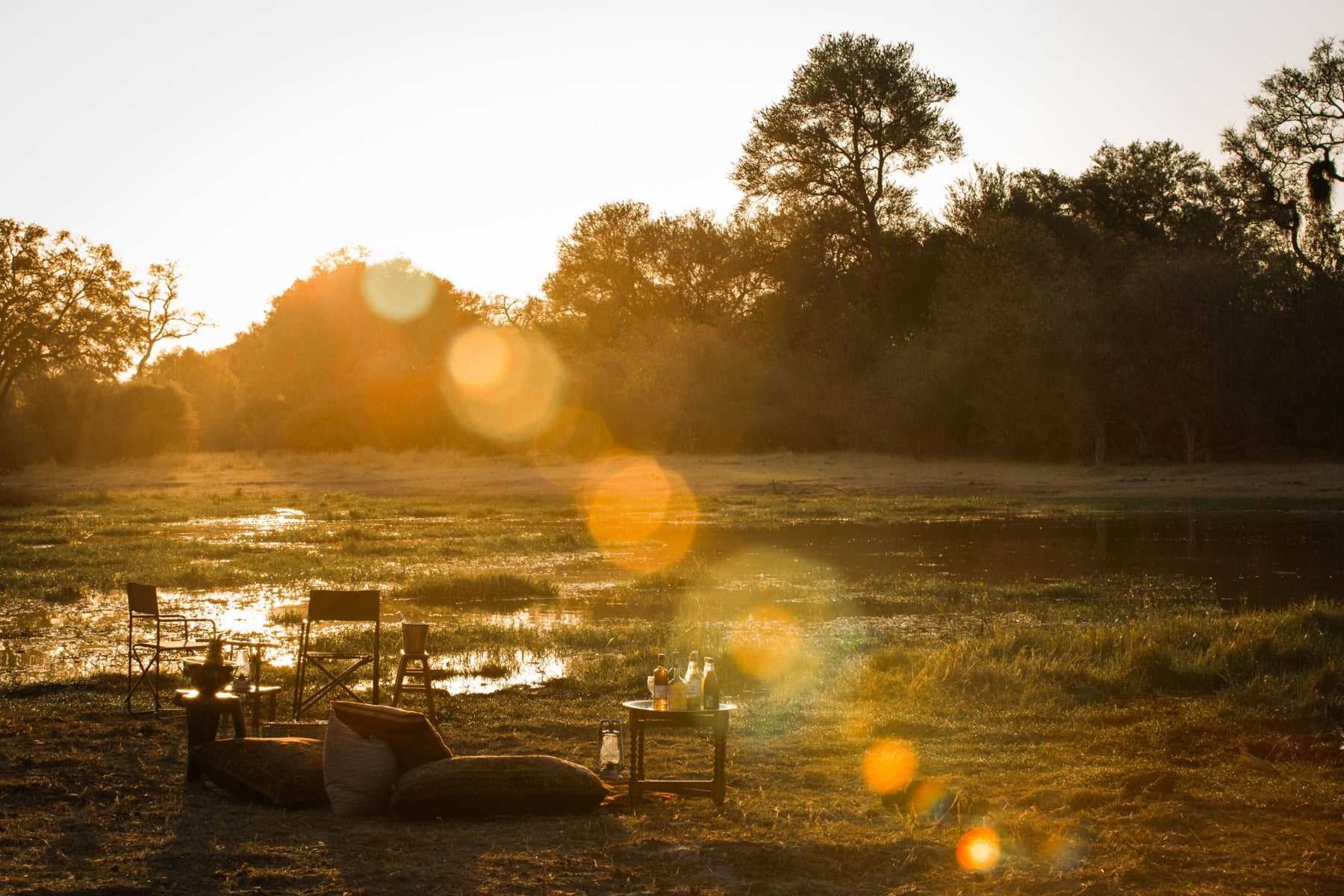
The Botswana safari shoulder season doesn’t suit everyone and these times tend to work best for travellers who like a little adventure and value solitude over certainty. Photographers looking for dramatic light and stormy backdrops, birders who want migrants in full breeding plumage, and repeat safari-goers who have “done” peak and now want something wilder all tend to thrive in these months. Families and couples who are flexible on dates often find that travelling in the quieter periods opens up camps and combinations that would be out of reach financially in high season.
If you can live with the idea that a shower might temporarily interrupt your sundowners, you’ll be rewarded with a Botswana that feels more intimate, more alive and, in many ways, more itself.
Planning a Botswana safari in the quieter months with Timbuktu
Planning a trip around flood levels, zebra movements and storm patterns can feel like a part-time job – and that’s exactly where we come in. We know which camps stay open in the green season, where the zebra herds are likely to be at different times, and how to link a Botswana safari in the quieter months to a journey that still feels totally seamless. For us, the aim is always to find the sweet spot where budget, weather, water and wildlife all line up, just the way you want it to.
Botswana shoulder season FAQs
When is Botswana’s shoulder season?
Botswana’s shoulder season runs roughly from April to June, and again from late October to early November. It sits between the peak dry season (June–October) and the green season (November–March).
Is it cheaper to safari in Botswana during shoulder or green season?
Yes, often substantially. Many camps drop their rates by 20–30% during shoulder season and by even more during the green season, and some also waive single supplements. In a country famously expensive to visit, this can be the difference between a one-camp trip and a multi-camp itinerary, or between a good lodge and the one you had your heart set on.
Can you see wildlife in Botswana’s green season?
Absolutely – and arguably some of the most dramatic wildlife events of the year. The green season brings the calving of antelope, hunting predators with cubs of their own, migrant birds in full breeding plumage, and Africa’s least-known land-mammal migration. The trade-off is thicker vegetation, which can make spotting trickier, but the rewards are spectacular.
When does the zebra migration happen in Botswana?
The Botswana zebra migration to the Makgadikgadi and Nxai Pans typically begins with the first rains in November and continues through to roughly April, with peak movement happening in December and January.
What’s the difference between shoulder and green season in Botswana?
Shoulder season is transitional: drying grasses, fewer vehicles, comfortable temperatures and a noticeable drop in price. Green season is the full wet season: lush landscapes, dramatic storm skies, the most photographic conditions of the year, and the lowest prices on the calendar. Both are far quieter than peak.
Will I get rained out on a Botswana safari in the green season?
It’s unlikely (but never say never!). Green-season rains in Botswana tend to arrive as short, dramatic afternoon storms rather than continuous downpours. The main practical consideration is the mud on remote roads, but reputable camps and guides plan around it.
Latest blogs


As seen in