We're one of the World's Best Tour Operators!
Named three years running in Travel+Leisure World's Best, including No.1 in 2024
Tokyo
Kyoto
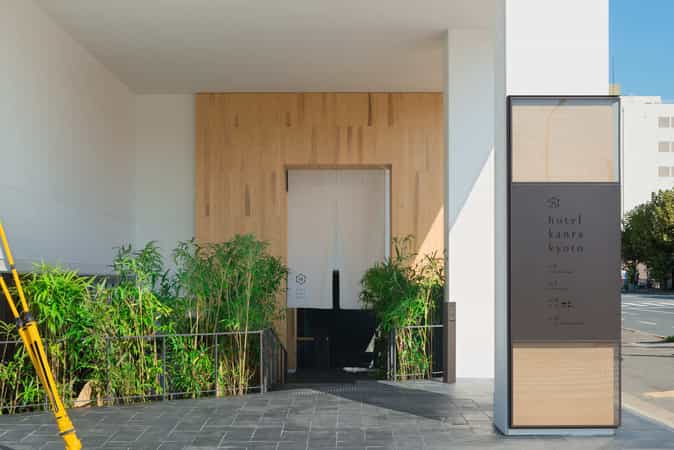
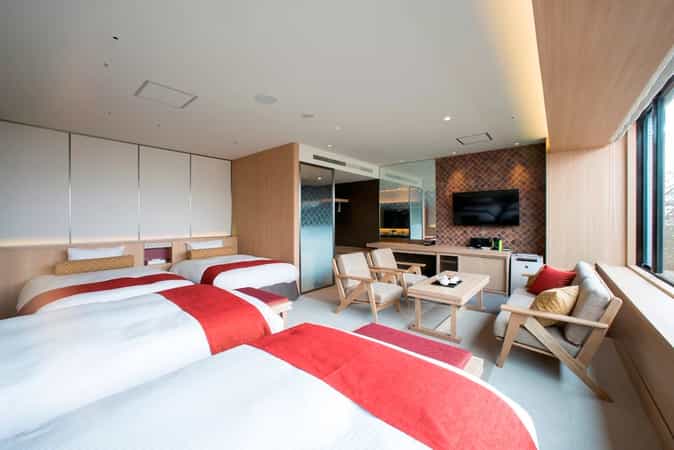
A historic and spiritual heartland, Kyoto invites you into a world of ancient crafts, ornate temples and the age-old Geisha tradition. Sitting on a major road in the centre of Kyoto, the Kanra Hotel is an oasis of calm, entered via a hallway lined with bamboo. This subtly chic aesthetic is woven throughout Kanra, from the serene spa to the minimalist rooms, which welcome you with a beautiful, lantern-lit entrance. Thanks to its fabulous location, you'll have no trouble exploring Kyoto from the hotel, including the ancient craft district, the flavours of Nishiki Market, and the city's many stunning temples.
Hiroshima
Anyone who's ever flipped through a Japan guide book will likely have heard of Hiroshima. Once the site of deep destruction, Hiroshima has risen, renewed, into the city it is today - and the Granvia is in the perfect spot for exploring the city. Situated along Hiroshima's main boulevard, Hiroshima Station is in fact just next door! At the hotel, there are plentiful dining options from teppanyaki to Chinese cuisine, and rooms are kitted out with every comfort including Tempura neck pillows and a deep hinoki tub for a good soak after a day of exploring the historic sites of Hiroshima.
Takayama
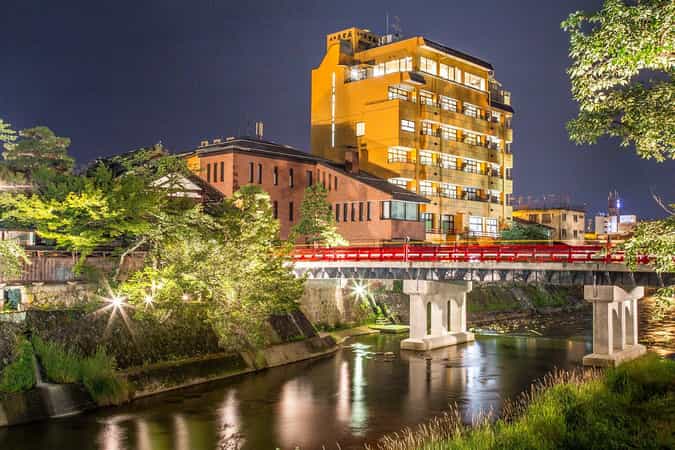
Nestled in the heart of Takayama, a town rich in history and cultural heritage, the Honjin Hiranoya Kofukan Ryokan invites guests into an enchanting realm of Japanese hospitality. A stone's throw from the captivating old town and the Miyagawa Morning Market, the ryokan exudes a calming ambiance with its Zen gardens and the soft murmur of flowing water. This ethereal atmosphere is evident throughout, from the steaming onsen baths to the meticulously designed rooms. Given its idyllic location, guests can easily navigate the winding streets of Takayama and explore the sake breweries, artisan shops, and historic buildings.
Tsumago
Hakone & Mount Fuji
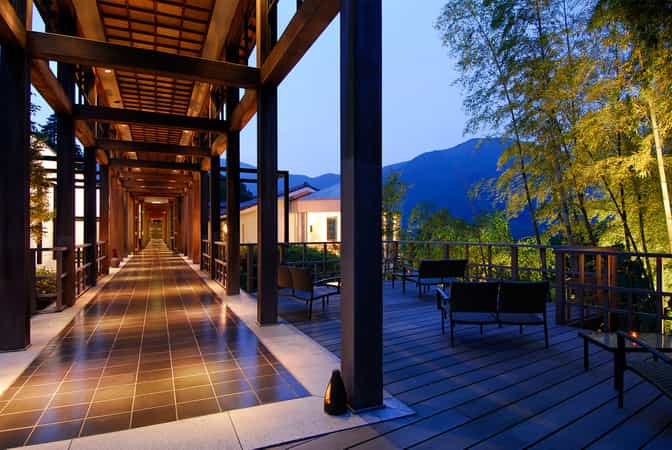
Hidden deep in the Fuji-Hakone-Izu National Park, one can easily see why Gora Kadan was once the Imperial Family's retreat. Every space at this refurbished ryokan (Japanese inn) makes you want to linger longer, especially whilst soaking in one of spring-fed baths. Gora Kadan invites you into a traditional way of life, evident in its walls of rice paper, silk textiles and the soothing waft of incense. When you're not immersed in this soulful atmosphere, take advantage of Hakone's many attractions, whether that means a trip to the open-air museum or a scenic ropeway ride above the trees. Immerse yourself in a blissful moment in the traditional Japanese atmosphere at Gora Kadan.
Miyajima Island
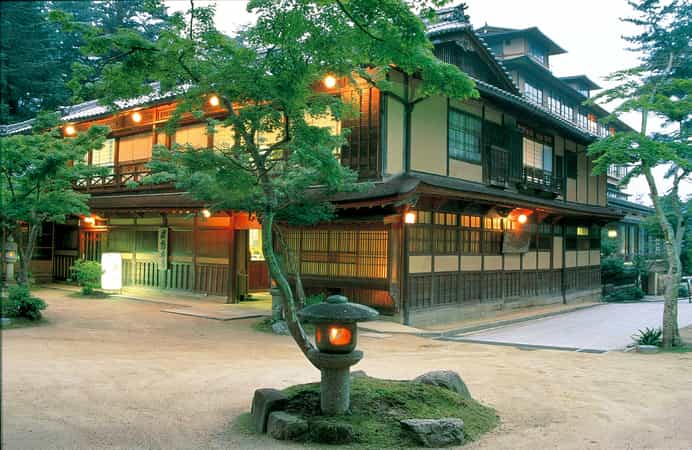
A boat ride across the aquamarine Bay of Hiroshima will transport you to the ethereal Miyajima Island, known as one of the most picturesque places in Japan. Just minutes away from its pretty shores, the Iwaso Ryokan is enveloped by lush gardens that change shades with the seasons. One of its best features is the bubbling onsen baths, which you can enjoy indoors or amongst the foliage, where deer wander by. The original ryokan opened in 1854, giving it a cherished heritage that remains at the forefront of the decor and atmosphere. When you're not soaking the day away, take in the island's famous sights including the striking Torii Gate.
Matsumoto
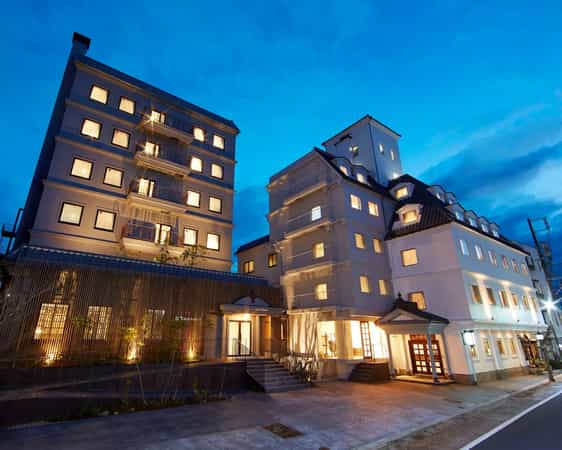
Founded in 1887, Kagetsu is one of those rare city hotels with genuine historical roots and a soul to match. Set on a quiet street barely five minutes' walk from Matsumoto Castle, it's steeped in the mingei philosophy that defines this old furniture-making town: the idea that everyday objects, crafted by unknown hands, hold a particular kind of beauty. That spirit runs through the Kagetsu, from the handmade Matsumoto furniture in every room to the restaurant serving Nagano's finest produce surrounded by original artworks. It's not flashy or particularly modern, but it's warm, authentic and lovely.
Osaka
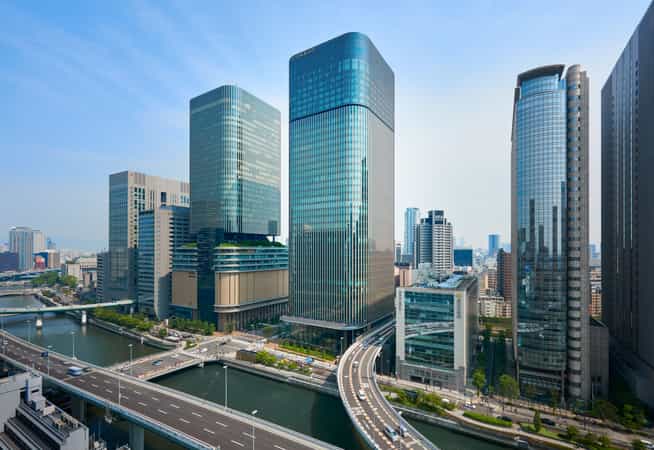
The Conrad occupies the topmost floors of one of the glossiest hotels on Nakanoshima, a bustling river island in the heart of Osaka. As soon as the lift doors open onto the 40th-floor lobby, you might think you've entered an art gallery by mistake. White orbs cascade from the ceiling like bubbles — the first of over 380 original works that fill the hotel — and set the tone for the Conrad's signature style. Further evidence can be found at the 40 Sky Bar, which serves the unique Takoyaki in the Sky, a mix of gin and blue curacao crowned with an octopus ball.
Kanazawa
Yudanaka
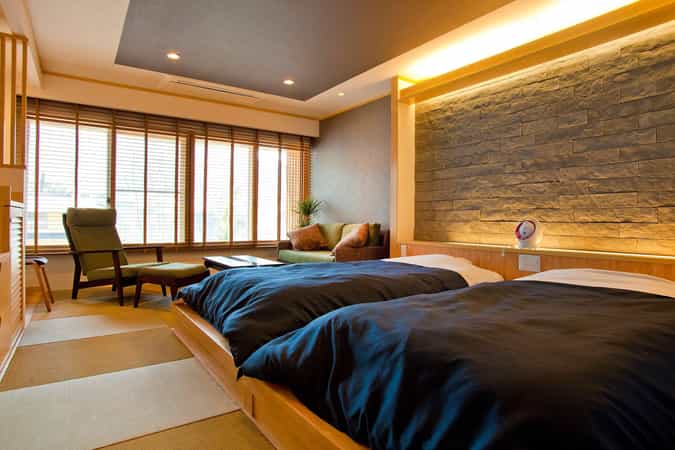
As soon as you arrive, Sakeaya's philosophy of nurturing connections with their guests is evident, beginning with a sweet treat and cup of green tea. From there, you'll be shown around the ryokan including the idyllic, steaming onsen, kept away from prying eyes by a grove of bamboo. This charming spot fits right into Yudanaka, where the onsen culture as been an integral part of daily life for centuries. The Snow Monkey Park is just a few minutes away, where the primates enjoy a soak of their own. In fact, the ryokan's onsen is partially fed by the very same spring.
Hokkaido
Sapporo
Naoshima Island
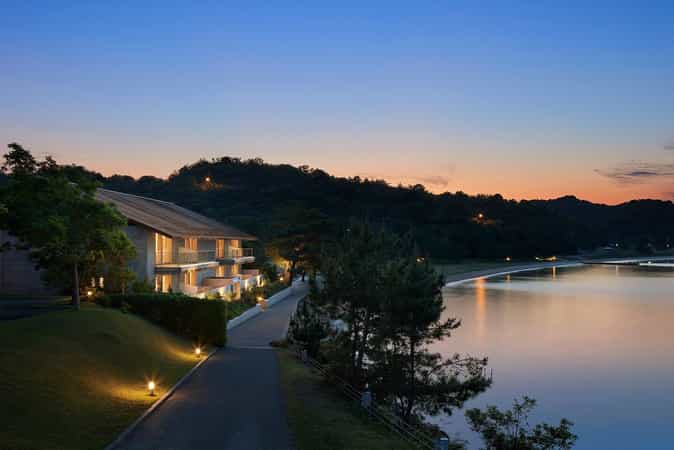
A tiny chunk of land in the Setouchi Inland Sea, aka the Mediterranean of Japan, Naoshima has become a living museum of sorts and its shores are scattered with striking art installations. Befitting of such a locale, Benesse House is the brainchild of noted architect, Tadao Ando, who has spent over 20 years crafting this unique hotel. It's actually four buildings in one, including the Park, Oval, Beach and Museum, all of which showcase works that wouldn't be out of place in the Guggenheim. Set right on the shoreline, you may never leave Benesse House, but the team is well-versed in island activities, just in case you do.
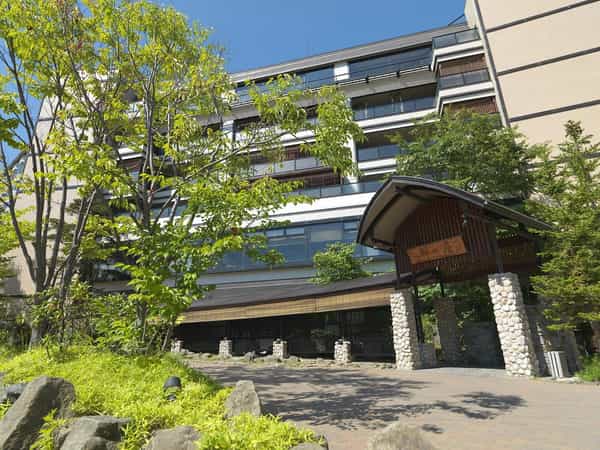
Akan-Mashu National Park
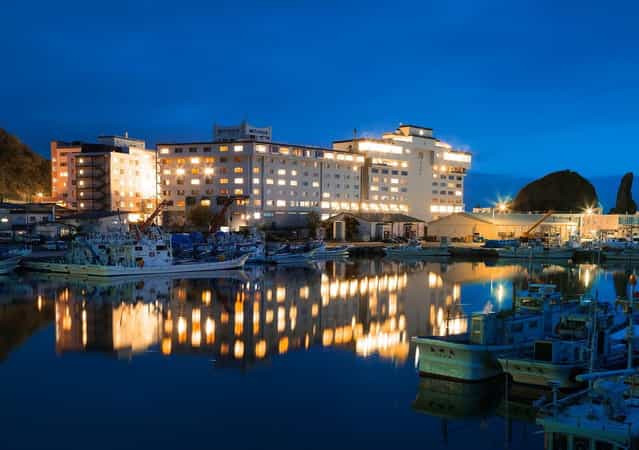
Shiretoko Peninsula
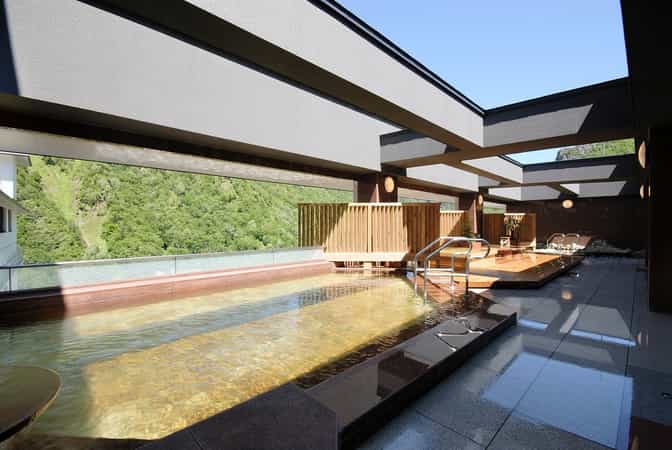
Sounkyo Onsen, Daisetsuzan
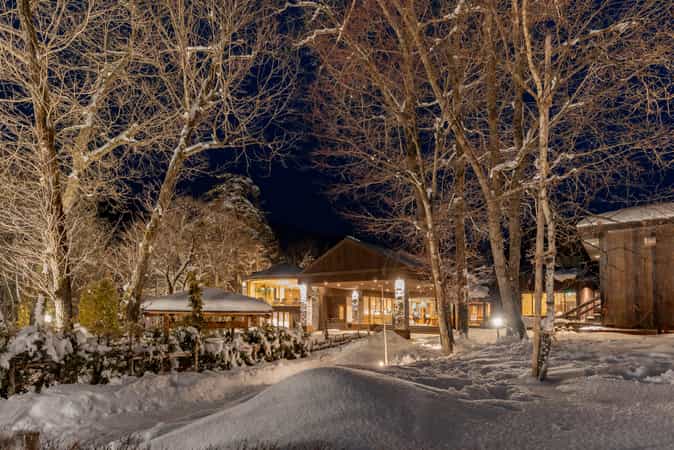
Hakuba
Nagasaki
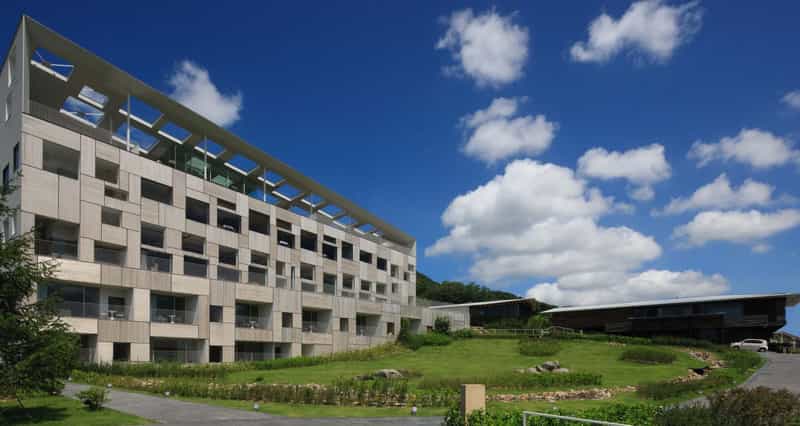
A port city with layers of Dutch, Portuguese and Chinese influence, Nagasaki has always been Japan's gateway to the outside world. Perched halfway up Mt. Inasa, Garden Terrace is a design-driven retreat by celebrated architect Kengo Kuma. With just 36 spacious rooms, four excellent restaurants and views that rank among the world's finest night-time panoramas, it's a hotel that rewards a slightly slower travel pace. Use it as a springboard for visiting the poignant Peace Park, the historic island of Dejima and the World Heritage-listed Oura Church, or simply stay put and watch the city lights flicker over the harbour below.
Fukuoka
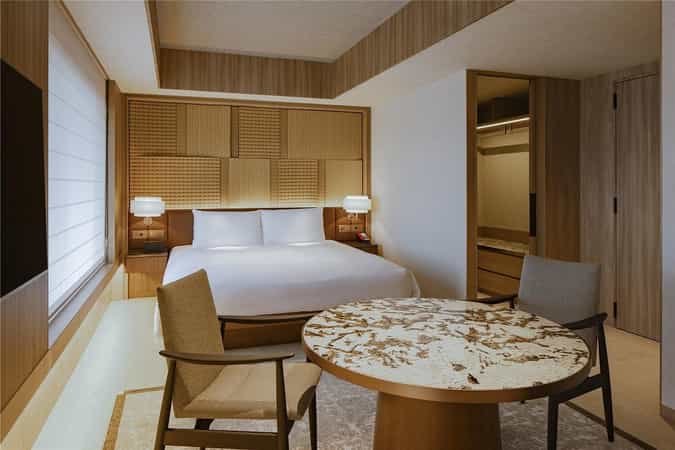
Fukuoka is one of Japan's great unsung cities — a place with possibly the best street food scene in the country and a location that makes it the perfect springboard for exploring Kyushu. Tucked into the Canal City Hakata complex, the Grand Hyatt brings a dose of calm to a city that thrives on its own buzz. Recently refreshed with 'Hakata Retreat' rooms that incorporate local craftsmanship into every detail (think in-room matcha bars and handwoven textiles), it's a hotel that takes its surroundings seriously. And its proximity to Fukuoka's famed yatai food stalls is the cherry on top.
Beppu
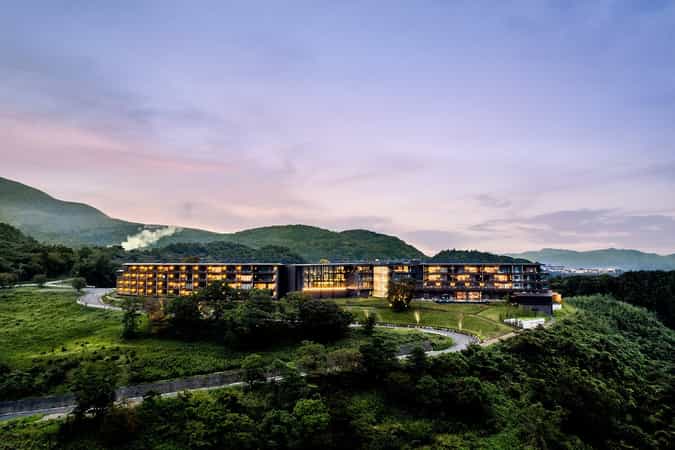
Perched above Beppu, Japan's undisputed hot spring capital, the sleek ANA Intercontinental was the first international luxury hotel to open in the region and it makes the most of its extraordinary setting. Floor-to-ceiling windows frame astonishing views of the bay, as well as the city's famous steam plumes and surrounding mountains. With beautifully designed onsen fed by Beppu's mineral-rich waters, a French-inspired chef's counter restaurant and local artisan touches woven throughout, this is a seriously polished base from which to explore Kyushu's geothermal heartland.
Takamatsu
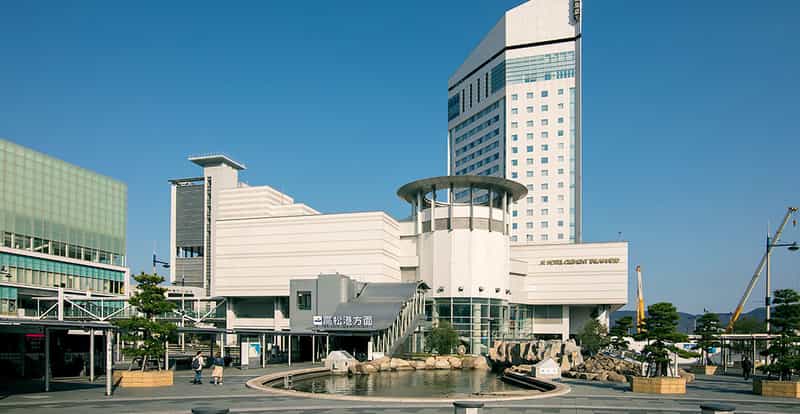
Takamatsu is one of Japan's best-kept secrets — a laid-back port city on Shikoku's northern coast that serves as the gateway to the extraordinary art islands of the Seto Inland Sea. Naoshima, Shodoshima and Megijima are all a short ferry ride away, and back on the mainland, Ritsurin Garden (arguably Japan's finest) and Kagawa's legendary sanuki udon scene await. The hotel itself is a full-service city property, polished rather than boutique, but its position couldn't be better: one minute's walk from JR Takamatsu Station and directly opposite the ferry terminal. For exploring this corner of Japan, it's hard to beat as a base.
Okayama City
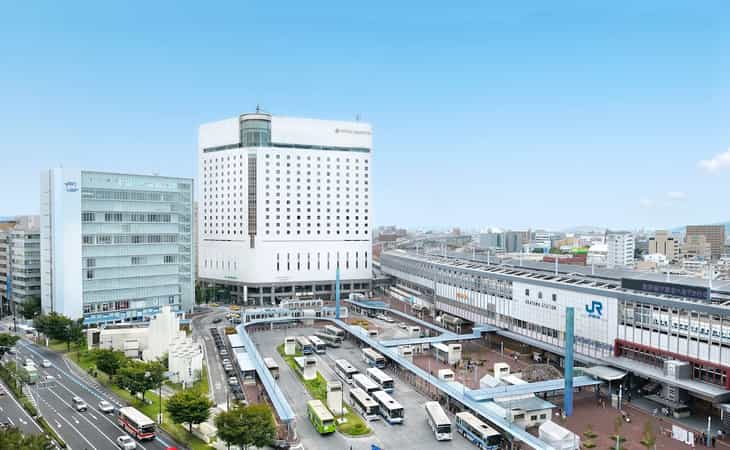
Okayama, the 'Land of Sunshine' sits between Osaka and Hiroshima on the Sanyo Shinkansen. Most travellers glide straight through without realising what they've missed, namely one of Japan's three great landscape gardens, a brooding black castle and the whitewashed canal town of Kurashiki, all just a ferry hop from Naoshima's contemporary art scene. Hotel Granvia Okayama, run by JR West, is the natural anchor for all of it. Attached to the station by a covered walkway, with nineteen floors of views over city rooftops and distant mountains, it's a large, reliable hotel whose greatest attribute is exactly where it stands.
Okinawa Main Island
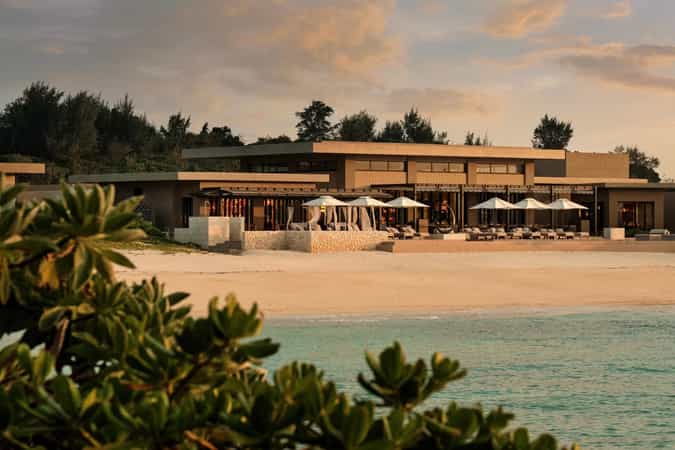
Right at the southernmost tip of Japan, where the country meets the azure waters of the East China Sea, is the sleepy Ryukyu Archipelago. The main island, Okinawa, is a blue zone known for its incredible quality of life, and it's a theme that runs throughout every stay at HOSHINOYA. After a scenic journey through fields of sugarcane and chrysanthemums, you'll arrive at the sanctuary and its lush gardens of cherry and papaya trees and colourful bougainvillaea. Step inside the high white walls, inspired by ancient Japanese castles, and discover sensational sea views around every corner — the perfect setting for a journey of discovery.
Kerama & Kume Islands
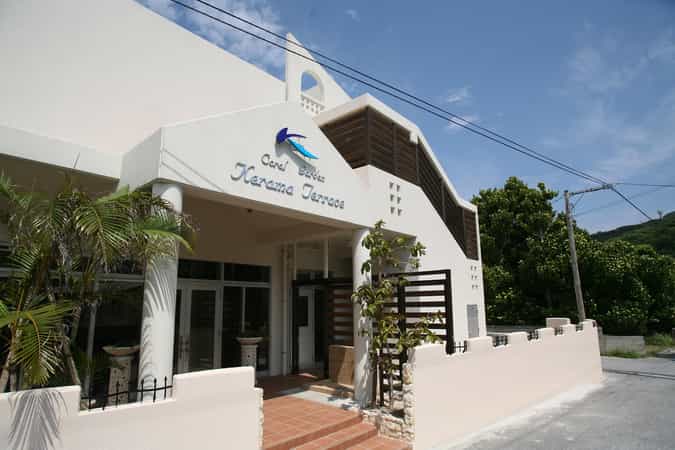
40 minutes by high-speed boat from Naha, Tokashiki Island barely registers on most Japan itineraries, which is rather the point. Kerama Terrace sits in the fishing hamlet of Aharen, a two-minute stroll from a beach so clear the locals gave the water its own name: Kerama Blue. Behind a Bali-inflected lobby (dark timber, palm shadows, low lighting), just seven adults-only rooms mean you'll recognise every other guest by breakfast. Founded by a former dive instructor, the hotel still arranges its own diving and snorkelling trips, sea turtles a near-certainty and, come winter, a fair shot at humpback whales offshore. This isn't Okinawa's resort strip. It's something smaller, and far better for it.
Miyako Islands
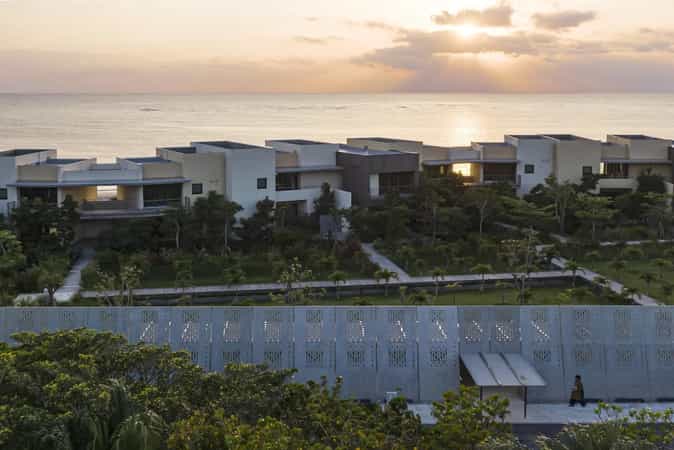
Miyako-jima sits at the southern edge of Japan's Okinawa Prefecture, a low, sugarcane-covered island ringed by water so clear that locals simply call it Miyako Blue. Rosewood's first Japanese outpost occupies a private peninsula here, its concrete villas (designed by Dutch architect Piet Boon) built from limestone quarried from the very shore they overlook. One beach faces sunrise, another (a short stroll away) catches the sunset, and between them sit four restaurants, an infinity pool split neatly between grown-ups and children, and a spa scented with shikuwasa citrus. Barefoot luxury, with a five-year masterplan behind every stone path.
Yaeyama Islands
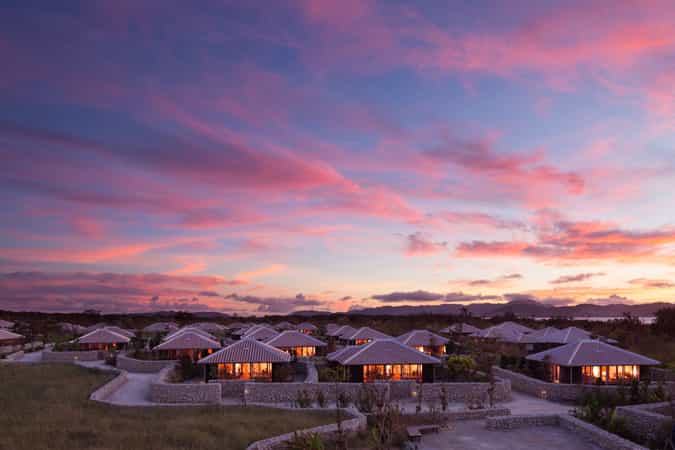
10 minutes by ferry from Ishigaki, Taketomi Island sits in Okinawa's Yaeyama archipelago and is home to just 400 people, a handful of red-roofed hamlets, and now a fourth village built specifically to match the others. HOSHINOYA Taketomi Island had to follow the same building code as its neighbours: Ryukyu limestone walls, coral-sand paths, terracotta roofs guarded by squat little shisa lions. Inside, though, it's all soft linens, deep soaking tubs and a 46-metre pool shaded by banyan trees. Chef Tatsuo Nakasu cooks Okinawan seafood through a French lens, and after dark, the island's Dark Sky status means the stars do most of the talking. Slow travel, done properly.
Hakodate
Tokyo
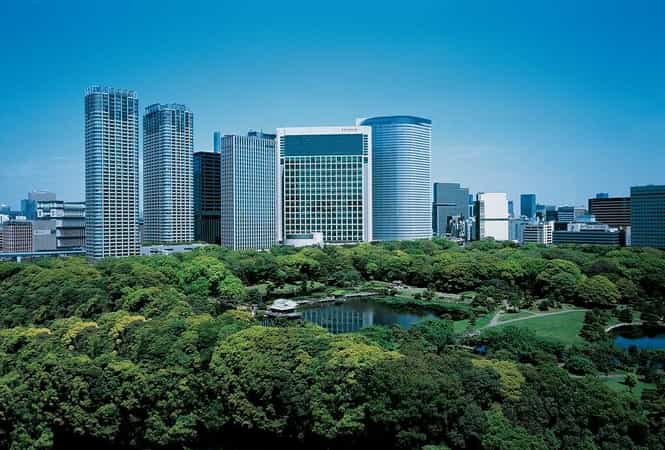
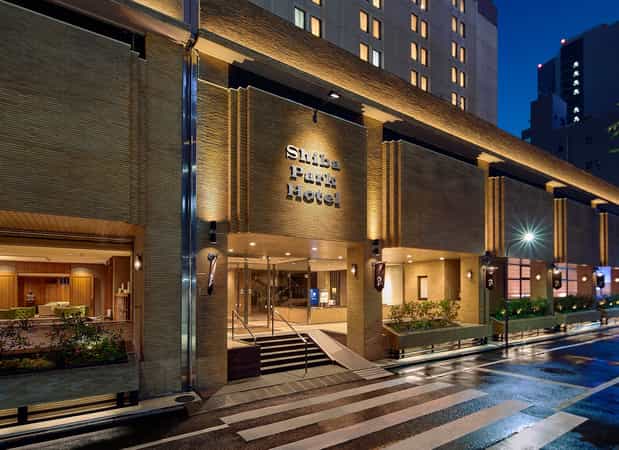
A unique blend of cosy hospitality and a rich literary atmosphere. Its distinctive library-themed concept, combined with its prime location in the heart of Tokyo, makes it an ideal retreat for both book lovers and urban explorers.

Kyoto


Namibrand, Namibia